Bruce Springsteen – Rockin Houston on the Darkness Tour

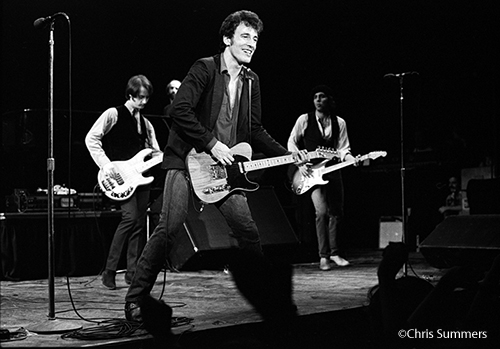
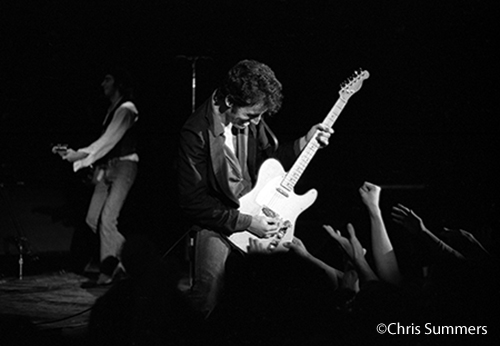
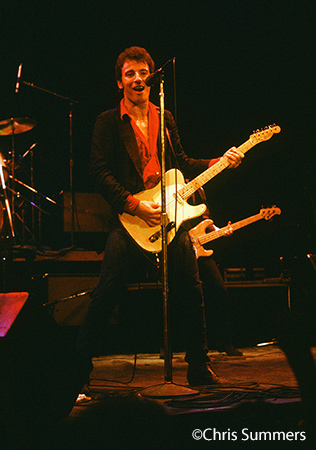
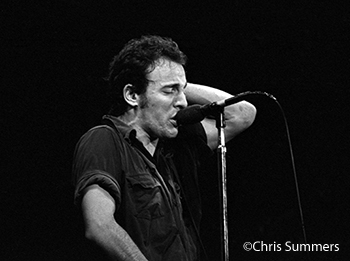
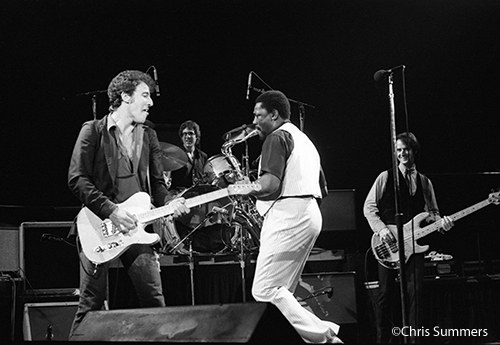
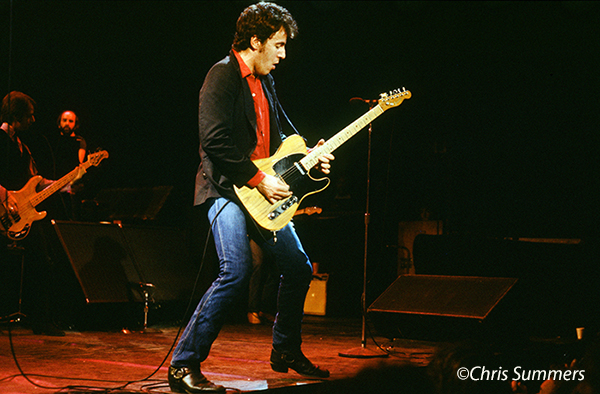
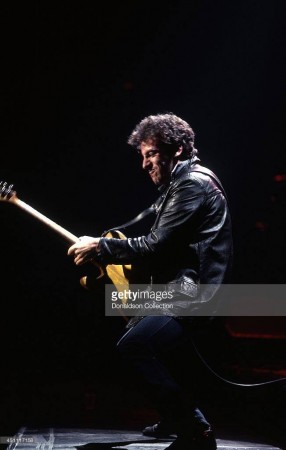
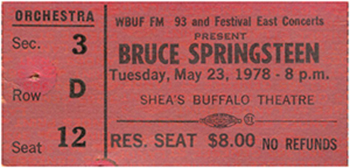
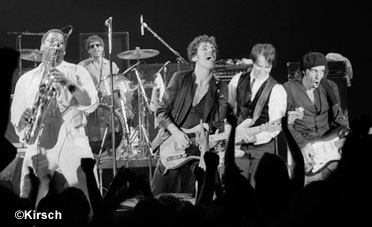
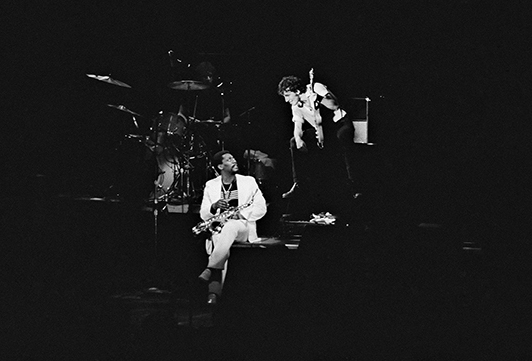
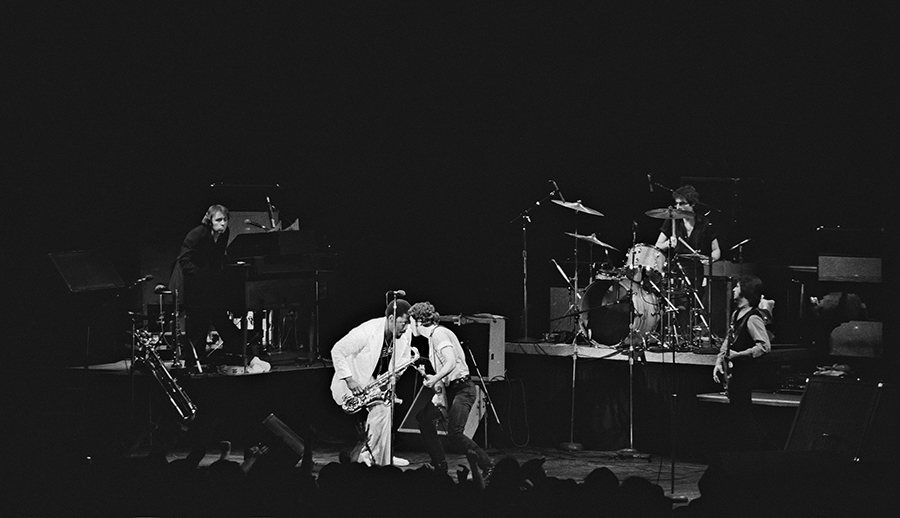
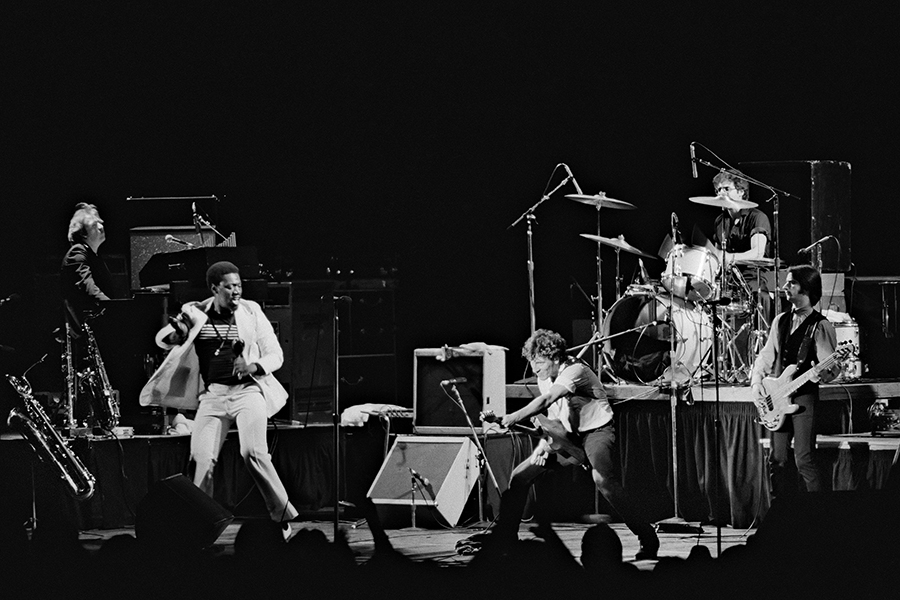
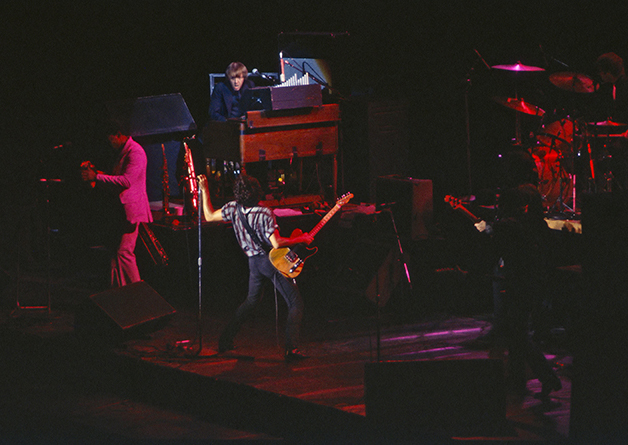
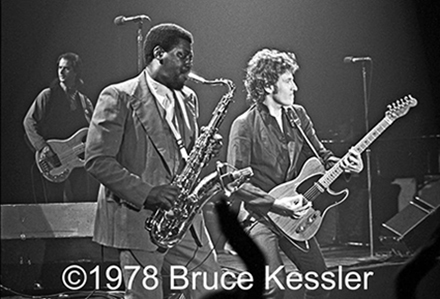
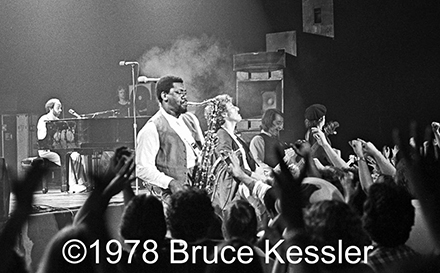
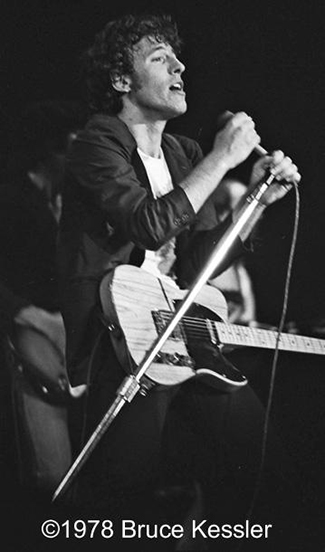
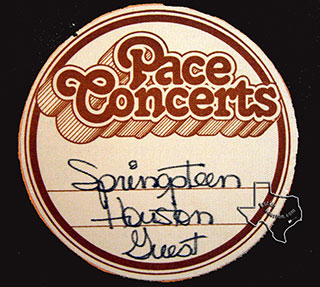
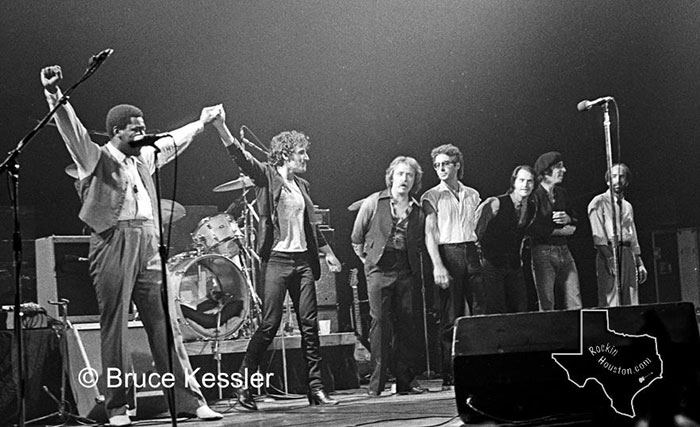
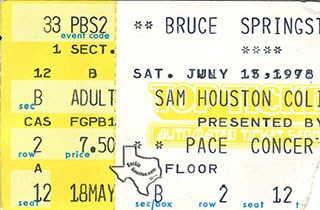
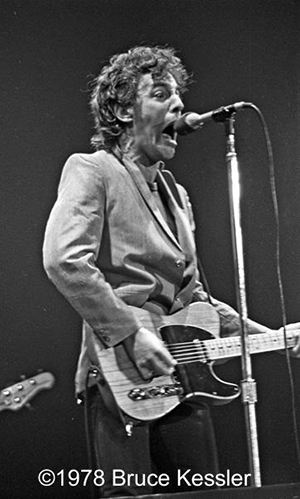
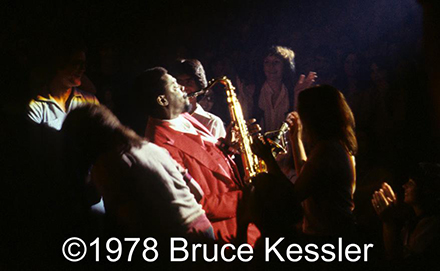
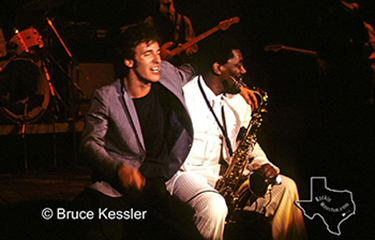
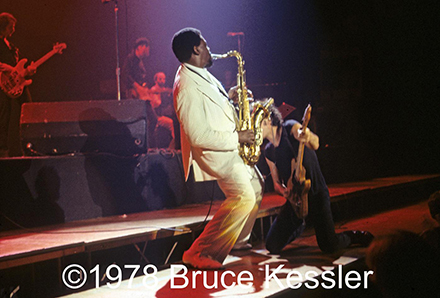
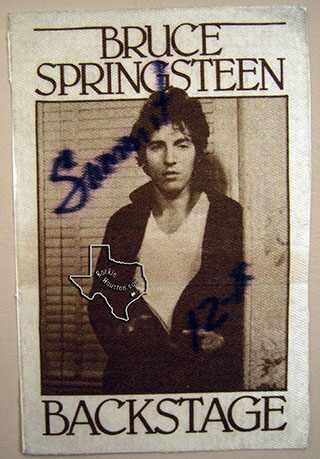
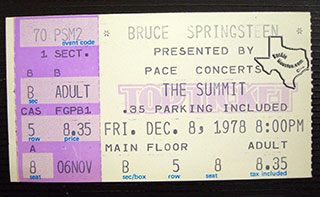
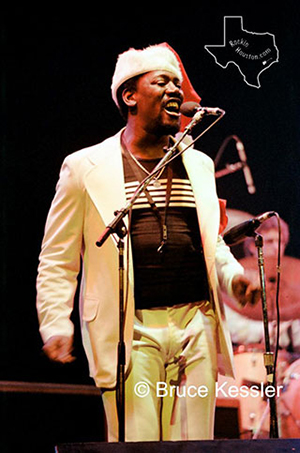
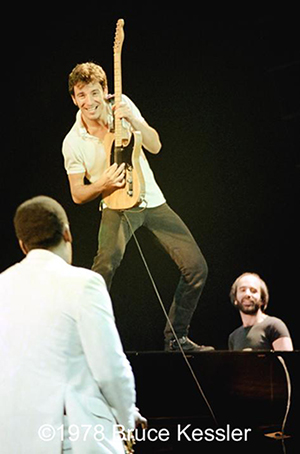
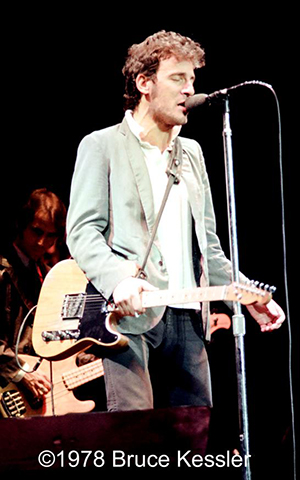
Springsteen played Houston twice on the Darkness tour: the first show was July 15, 1978, in the Sam Houston Coliseum, and the second show was December 8, 1978, at The Summit. The first show was less than one week before the Rolling Stones were to play the Coliseum on their Some Girls tour so it was one heck of a week for Houston concert fans.

It took some time to get used to his cleaned up image since it had been three years since Springsteen last played Houston next door at the Music Hall. There was some concern that as he changed his look maybe he had also changed his style of performance. But when he came onstage with the words “Gimme some lights. Houston long time, no see”, all doubt was gone. The show rocked — it was a classic multi hour show.

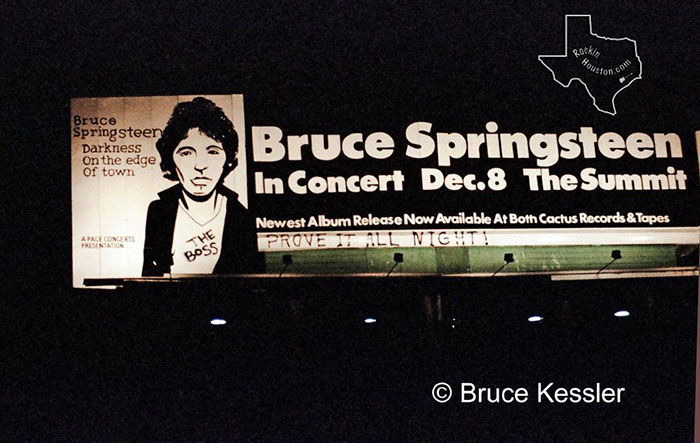
When he returned to Houston less than 6 months later playing to a much large crowd at the Summit, it felt as if the world was getting in on the secret. As a side note, a large billboard was erected over one of Houston’s freeways. Allegedly, Bruce and a few others scaled it in the middle of the night and added their own art work.

Bruce Kessler
rockinhouston.com
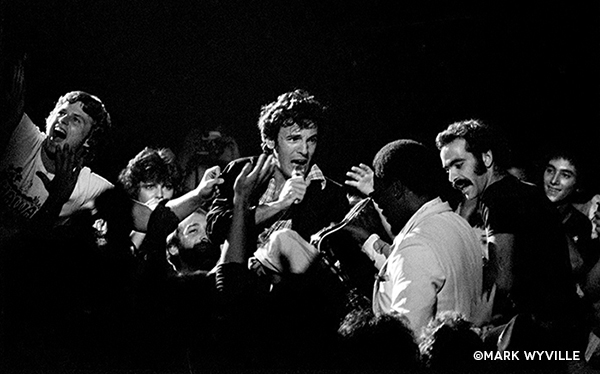

Bruce Springsteen 1978 - SAM HOUSTON COLISEUM, HOUSTON, TX

Bruce Springsteen SAM HOUSTON COLISEUM

July 15, 1978- SAM HOUSTON COLISEUM, HOUSTON, TX
Set list

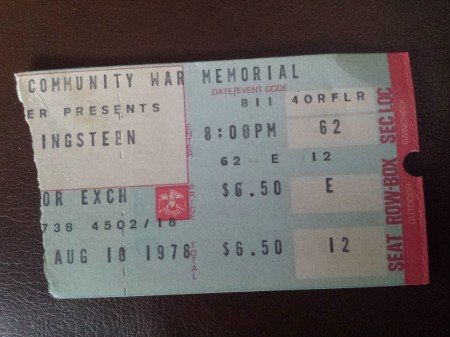
Bruce Springsteen ticket 1978 - SAM HOUSTON COLISEUM, HOUSTON, TX

  1. BADLANDS
  2. NIGHT
  3. SPIRIT IN THE NIGHT
  4. DARKNESS ON THE EDGE OF TOWN
  5. FOR YOU
  6. THE FEVER
  7. THE PROMISED LAND
  8. PROVE IT ALL NIGHT
  9. RACING IN THE STREET
  10. THUNDER ROAD
  11. JUNGLELAND
  12. PARADISE BY THE “C”
  13. FIRE
  14. CANDY’S ROOM
  15. ADAM RAISED A CAIN
  16. NOT FADE AWAY – SHE’S THE ONE
  17. GROWIN’ UP
  18. BACKSTREETS
  19. ROSALITA (COME OUT TONIGHT)
  20. THE PROMISE
  21. BORN TO RUN
  22. BECAUSE THE NIGHT
  23. QUARTER TO THREE

Bruce Springsteen - July 15, 1978 - SAM HOUSTON COLISEUM, HOUSTON, TX


December 8, 1978 – THE SUMMIT, HOUSTON, TX
Set list

December 8, 1978 – THE SUMMIT, HOUSTON, TX

  1. BADLANDS
  2. STREETS OF FIRE
  3. IT’S HARD TO BE A SAINT IN THE CITY
  4. DARKNESS ON THE EDGE OF TOWN
  5. SPIRIT IN THE NIGHT
  6.  INDEPENDENCE DAY
  7. THE PROMISED LAND
  8. PROVE IT ALL NIGHT
  9. RACING IN THE STREET
  10. THUNDER ROAD
  11. JUNGLELAND
  12. THE TIES THAT BIND
  13. SANTA CLAUS IS COMIN’ TO TOWN
  14. THE FEVER
  15. FIRE
  16. CANDY’S ROOM
  17. BECAUSE THE NIGHT
  18. POINT BLANK
  19. MONA
  20. PREACHER’S DAUGHTER
  21. SHE’S THE ONE
  22. I GET MAD
  23. BACKSTREETS
  24. ROSALITA (COME OUT TONIGHT)
  25. BORN TO RUN
  26. DETROIT MEDLEY
  27. TENTH AVENUE FREEZE-OUT
  28. YOU CAN’T SIT DOWN
  29. QUARTER TO THREE

December 8, 1978 – THE SUMMIT, HOUSTON, TXDecember 8, 1978 – THE SUMMIT, HOUSTON, TX


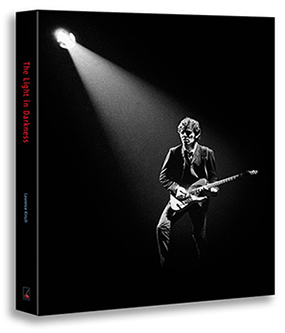
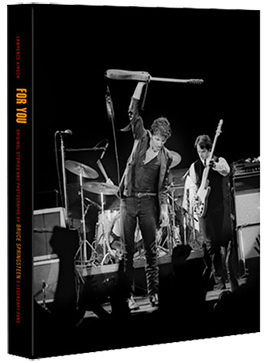
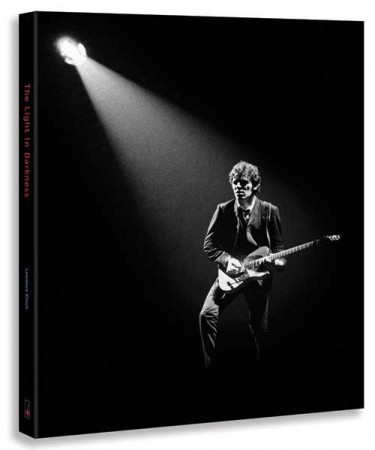
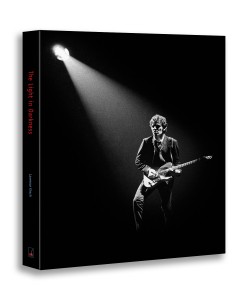
Discover the limited edition Bruce Springsteen book, The Light in Darkness.
The Light In Darkness is a collector’s edition, we are almost sold out. Less than 200 copies remain. A great companion piece to The Promise box set, it focuses on the 1978 Darkness on The Edge of Town album and tour.
Read about the iconic concerts from fans who were there – the Agora, Winterland, Roxy, MSG, Capitol Theatre, Boston Music Hall, The Spectrum and over seventy more!
Click Here to Order Now and Save on Shipping: During the Wrecking Ball Tour 2013:The Light in Darkness

Share on TwitterShare on TumblrSubmit to StumbleUponDigg ThisSubmit to redditShare via email
Link to this post | Leave a comment

Counterbalance No. 112: Bruce Springsteen’s ‘Darkness on the Edge of Town’

Jason Mendelsohn and Eric Klinger
PopMatters: The Magazine of Global Culture

Klinger: For nearly 40 years, Bruce Springsteen has given countless rock critics a reason to get out of bed in the morning. His sincere sound is fully rooted in rock traditions, and his lyrics are usually reaching for Big Statements (except when they’re not, in which case they’re considered knowing riffs on party rockery). In fact, Springsteen is such a darling of the criterati that it’s more than a little surprising to me that it’s taken The Great List this long to get back around to one of his albums. The mathematical vagaries could have delivered us to the mega-hit Born in the U.S.A. or the grim, acoustic Nebraska (the Springsteen album that’s OK for indie types to like), but somehow we landed on 1978’s Darkness on the Edge of Town, Springsteen’s hard-earned follow-up to Born to Run.

I’m inclined to say that this choice seems about right. Darkness on the Edge of Town to me sounds like Springsteen in quintessence, what we talk about when we talk about Bruce Springsteen. The twinkly piano of Roy Bittan playing off the golden-toned organ sounds of Danny Federici, the lyrics chronicling the travails of blue-collar life, and the comfort we take in knowing that there’s a Clarence Clemons saxophone solo just around every corner. And epic conceptual pieces like “Jungleland” were given the old heave-ho. For years, when anyone did a Springsteen parody, loving homage, or blatant rip-off, this is the sound they drew from. So having said all that, Mendelsohn, your past experience with Bruce left you cold, but that was a long time ago and I’m sure you’ve grown considerably since then. Are you on the trolley this time around?

Mendelsohn: I can’t find my ticket. Well, that’s not entirely true. I just didn’t buy one. I spent all of my money on candy and whiskey. So . . . I’m just going to drunkenly chase the trolley down the street, jump on the back, and hope no one notices while I hang off the platform and wash down the rest of these Pixie Sticks with whatever is left in this bottle.

My appreciation for the Boss has increased since our last go around over two years ago. And while I have enjoyed my time with Darkness on the Edge of Town, I found myself going back and forth between real exuberance for this record and something registering slightly above complete apathy. What it really came down to was what song was playing at the time. I think I only really like certain things the Boss does while I can’t stand other aspects of Springsteen’s songwriting nature. I have a hard time taking Springsteen as a whole. I’m much more apt to really enjoy the raw energy of “Adam Raised a Cain” as opposed to the soaring melodrama of “Something in the Night”. In between those two aspects of Springsteen I find something like “Badlands”, and I’m trying to figure out if it’s the Springsteen I like or the Springsteen I could do without. Why do I have such a problem seeing the Bruce from the Springsteens?

Klinger: OK, let’s start out by saying “Badlands” is the Springsteen you like. Trust me.

But I think I see what you’re saying. Darkness on the Edge of Town marked the point where Springsteen started moving away from romanticizing his experience (and the experiences of the people he grew up with) and began more actively chronicling it. Born to Run was all mythology and the notions of a young man who was breaking free. And there are still some vestigial elements of that here on this album—“Something in the Night”, which you mentioned, “Streets of Fire”, maybe the title track.

Those numbers that are lyrically unvarnished are, I agree, the strongest, though, and that may be a function of the process by which this album came into being. After the success of Born to Run, Springsteen ended up embroiled in a protracted legal battle with his manager, Mike Appel. As a result, he was effectively barred from recording, and that artistic (and financial) frustration had to have taken a toll on him just as he was surely hoping to take a victory lap. There’s nothing romantic about endless contractual disputes, and that dismal drabbery had to be informing his approach.

Mendelsohn: Darkness on the Edge of Town is indeed a much bleaker album than Born to Run. I think that’s what I like about this record. Born to Run was too glossy in its over-romanticization of suburban escapism. The escapism is still present in Darkness on the Edge of Town, but it has taken on a much darker tone as the harsh truths of reality start to creep in around the seams. I find it sad in a way that real life beat the untarnished, optimistic escapism out of most of his songs. But those songs that move away from the mythology into the darker side of real life feel much more true to my ears. “Candy’s Room” is one of those songs that cuts closer to the truth, as Bruce details a young man’s naive love of the damaged Candy.

For me though, the true masterpiece on this album is “Factory”. There is something Dylan-esque about Springsteen’s take on the working life, and like all good Dylan songs, there is a twist at the end of “Factory”, that hits me every time I hear it. I like that dose of realism, I like the fact that Springsteen has muddied his escapism with the sadness and desperation of reality. Like real life there are the high and lows, the desperation and redemption. I know that’s what Springsteen was ultimately trying to achieve, and I like it much more than I thought I would.

Klinger: Well, good. For a long time I had been worried that younger generations were having trouble seeing past Springsteen’s baggage (the terrible ‘80s videos, the fact that people seem to want to call him “the Boss”). But Darkness on the Edge of Town might actually be a pretty good point of entry for the uninitiated. For one thing, Bruce made a conscious decision to favor guitar solos on this album—he felt they were less in your face than sax solos, and it also helps dispel some people’s preconceptions.

I must disagree with you, though, and state for the record that the album’s defining moment is in fact “Racing in the Street”. I’ve been listening to this album for going on 30 years, and it’s only recently hit me how powerfully constructed that song is. It’s a straightforward enough drag racing ballad at first, but then at 2:37 (right after the Martha and the Vandellas drop), there’s a joyous little interlude. Then thirty seconds later, it’s gone and we’re in a tale of a sad young couple—two people who bought into the beautiful sucker myth of “Thunder Road”. Suddenly the same Martha and the Vandellas reference at 4:43 takes us into a mournful build-up as these people solemnly make their way toward some form of redemption. And it’s all the sadder because you kind of know they aren’t going to make it. Springsteen and the E Street Band create those little moments throughout the album (the constant escalation of tensions in the first part of “Candy’s Room” is a great example), but I was taken aback by the subtlety on “Racing in the Street”. Now if you’ll excuse me I’m a little choked up right now.

Mendelsohn: Dry your eyes, Klinger. Seeing a grown man weep at the beauty of rock ‘n’ roll makes me feel weird.

It’s not that I don’t agree with your interpretation of “Racing in the Street”—I do, I agree wholeheartedly. “Racing in the Street” is the song that anchors this album. As the last song on side one, it will leave you thinking as you pull yourself from the chair to flip the record, questioning whether or not you want to continue living in Bruce Springsteen’s world (even if there is much less saxophone). But then all of that sadness seems like a distant memory as Springsteen tears into the optimistic “The Promised Land” (and its sweet, sweet guitar solo—followed by the obligatory sax solo—followed by a surprising harmonica solo).

I will maintain, however, that the song “Factory” remains the true emotional centerpiece on this album. After the uplifting “The Promised Land”, “Factory” starts off with what sounds like an ode to steady employment, but ends with the realization that the monotony of such jobs can be soul crushing while breeding disdain, desolation, and violence. And if you want to talk about a great little moment created by Springsteen and the E Street Band, I would direct your attention to the last verse of “Factory” when Springsteen sings, “And you just better believe, boy, somebody’s gonna get hurt tonight”. On the word “hurt” Max Weinberg hits the crash cymbals to add just enough extra emphasis to send shivers down my spine. Every time I hear it, Klinger, every time.

Klinger: Well with all the shivering and welling up, this has turned into a curiously emotional Counterbalance. But that’s not surprising, I reckon. The 1978 Springsteen was a raw nerve, coping with the frustrations that arise when romantic dreams become day-to-day realities. That’s what comes through on Darkness on the Edge of Town—that realization that even when you do get what you want, you still got to live it every day.

Discover the limited edition Bruce Springsteen book, The Light in Darkness.
The Light In Darkness is a collector’s edition, we are almost sold out. Less than 200 copies remain.
A great companion piece to The Promise box set, it focuses on the 1978 Darkness on The Edge of Town album and tour.
Read about the iconic concerts from fans who were there – the Agora, Winterland, Roxy, MSG, Capitol Theatre, Boston Music Hall, The Spectrum and over seventy more!
Click Here to Order Now and Save on Shipping:
The Light in Darkness

Share on TwitterShare on TumblrSubmit to StumbleUponDigg ThisSubmit to redditShare via email
Link to this post | Leave a comment

John Gorman on … Springsteen at the Agora, August 9, 1978

On Aug. 9, 1978, Bruce Springsteen & the E Street Band played the Agora in a performance broadcast live on WMMS. It has since become the most famous Springsteen bootleg of all time. The show was part of a free small-club tour Columbia Records hoped would revive The Boss’ fame, after it began to fade following Born to Run. The man who made WMMS into an FM rock giant, John Gorman, brought Springsteen to town for that show and was in the audience.

The Agora was the best rock club in America. I’ve been to rock clubs in a lot of cities during the same period of time and nothing compared to what we had at East 24th Street.

Cleveland was in chaos at the time. City services were falling apart, the crime rate, everything. … 1978 was the best of times and the worst of times. But the one thing that was happening — the most positive thing in Cleveland — was rock ‘n’ roll. If you were young, you knew you were living in the hotbed of rock ‘n’ roll.

Springsteen played much longer than he was supposed to. You can always tell a person who was really at that show because they get so passionate they’ll talk your ear off. I’ve seen many, many, many concerts over the decades, and nothing compares to the electricity I saw that night. It was one of those things where the audience and the band were in a mind meld. Watching that show, it was just like one high after another. It just kept building and building, and building and building. … Max Weinberg, the drummer, said it was the best concert they’d ever done in their life.

The only thing that went wrong that night is Springsteen did a second encore, which was “Twist and Shout,” that did not get broadcast originally. Luckily, they ran tape on it. If you listen to the bootlegs, you’ll hear that it’s slightly different fidelity than the rest of it.

In those days, radio ratings were different. … We were only rated for 16 weeks out of the year and this Springsteen concert happened outside of ratings. I remember it being a hot, sticky, rainy, kind of terrible August evening. So, people weren’t outdoors. They were inside. Those radios had to be cranking everywhere.
We were already calling ourselves the rock ‘n’ roll capital of the world. But that night with that Agora concert, we proved it. The only thing I could say after that concert was: “What are we going to do next? How do we top this thing?”

— as told to Jim Vickers
Clevelandmagazine.com
Discover the limited edition Bruce Springsteen book, The Light in Darkness.
The Light In Darkness is a collector’s edition, we are almost sold out. Less than 200 copies remain.
A great companion piece to The Promise box set, it focuses on the 1978 Darkness on The Edge of Town album and tour.
Read about the iconic concerts from fans who were there – the Agora, Winterland, Roxy, MSG, Capitol Theatre, Boston Music Hall, The Spectrum and over seventy more!
Click Here to Order Now and Save on Shipping:
The Light in Darkness

Share on TwitterShare on TumblrSubmit to StumbleUponDigg ThisSubmit to redditShare via email
Link to this post | Leave a comment

Darkness on the Edge of Town Trivia Quiz- How Did You Score?

A quiz on Bruce Springsteen’s 1978 classic fourth album, Darkness on the Edge of Town. Questions are gleaned from the album itself, the 2010 documentary on its composition, and several other sources.

Click here to take the quiz now: Darkness Quiz

Discover the limited edition Bruce Springsteen book, The Light in Darkness.
The Light In Darkness is a collector’s edition, we are almost sold out. Less than 200 copies remain.
A great companion piece to The Promise box set, it focuses on the 1978 Darkness on The Edge of Town album and tour.
Read about the iconic concerts from fans who were there – the Agora, Winterland, Roxy, MSG, Capitol Theatre, Boston Music Hall, The Spectrum and over seventy more!
Click Here to Order Now and Save on Shipping:
The Light in Darkness

Share on TwitterShare on TumblrSubmit to StumbleUponDigg ThisSubmit to redditShare via email
Link to this post | Leave a comment

Drinkable Tunes: Darkness on the Edge of Town

I connected with Darkness on the Edge of Town, Bruce Springsteen’s 1978 follow-up to Born to Run, before I ever heard a note.

The album cover grabbed me while I was thumbing through a sea of records I inherited from my father. I wasn’t a Bruce Springsteen fan at the time — I had heard a few choice hits like “Born to Run” — but I hadn’t connected with him, his music or his vision of the American Dream.
But Darkness grabbed me before I heard a single note. Springsteen’s eyes, dog-tired-but-intense, stare defiant from the cover. That feeling, of fatigue and resilience, of exhaustion and heart, set the tone for my first listen.

I sat down on my floor with headphones on, drink in hand, and spun the record. It was love at first listen — it felt older and wiser than Run. It sets up Bruce’s later body of work; his first ode to an unromanticized working class with big dreams.

Darkness tells stories about troubled people who never quite make it — they all want to get out of their current situation because they think life has more to offer, but they’re struggling to get where they want to be. Instead of whining, they spit in misfortune’s face and hit the road to finally find a little more of whatever they’re looking for.

The opening track, “Badlands,” is my favorite. It’s the perfect example of a twenty-something who knows life isn’t perfect or fair, but who still has the youthful heart and drive to change. It’s hard not to roll down the windows and sing it at the top of your lungs.

My friends pick on me — they say I filter everything out for the positive. I’m sure there are plenty of people who hear Darkness as a record of sad stories, but I can’t help but be inspired. I love the grit of the characters. I love their defiance.

We peek in on these characters in the middle of their “American Dream” story; they haven’t achieved it, but they’re doing the best they can. You can see that as sad, but I see it as inspiring. It’s nice to hear stories about people who are trying their best to better themselves rather than giving up — Bruce’s characters rarely give up.

patrick mears

Discover the limited edition Bruce Springsteen book, The Light in Darkness.
The Light In Darkness is a collector’s edition, we are almost sold out. Less than 200 copies remain.
A great companion piece to The Promise box set, it focuses on the 1978 Darkness on The Edge of Town album and tour.
Read about the iconic concerts from fans who were there – the Agora, Winterland, Roxy, MSG, Capitol Theatre, Boston Music Hall, The Spectrum and over seventy more!
Click Here to Order Now and Save on Shipping:
The Light in Darkness

Share on TwitterShare on TumblrSubmit to StumbleUponDigg ThisSubmit to redditShare via email
Link to this post | Leave a comment

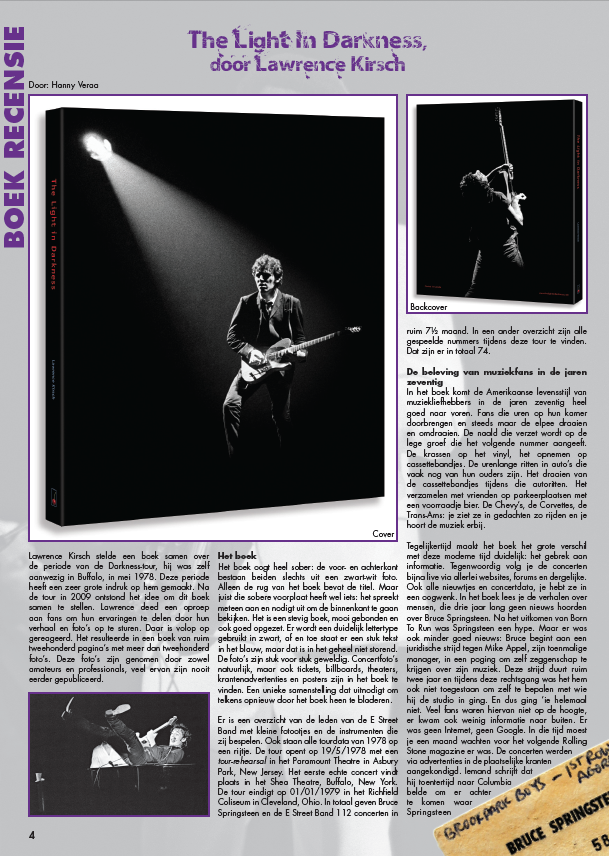
The Light in Darkness – Bruce Springsteen Book Review

In 1978 Bruce Springsteen embarked on a grand tour that would prove legendary; a tour that would create a mark for all other tours to reach. The 29 year-old Springsteen had just released his fourth album, Darkness on the Edge of Town, a bleak and darkly realistic version of his breakthrough previous album Born to Run. Unlike its predecessor, Darkness on the Edge of Town did not capture youthful spirits and set them alight. It took youthful hopes and dreams and turned them into ashes. There is to this day speculation as to why his next album was such a departure from the album that cast him into the limelight; whether it was his legal dispute with former manager Mike Appel or if it was something more personal and private no one knows for sure. What is certain, however, is that Darkness on the Edge of Town was not only a wild departure but a dangerous one. After the unheard of success of Born to Run (putting him on the cover of both Time and Newsweek in the same week, the first non-world leader to do so) he disappeared for 2 years and several where-are-they-now articles were published. But during the latter stages of those 2 years he was moulding a masterpiece.

In 1978 he finally released his long awaited (and at the time, almost forgotten) album. And the fans were… confused. Where was the young man of Born to Run who wanted to take life at the collar and make it his own? Where was the boy who knew that two lanes could take him anywhere? The boy who would run with his lover until they dropped, who knew there was a place where he’d walk in the sun? He was gone, dead, buried. Fans and critics alike couldn’t understand why this kid would so dramatically change his image when it had so dramatically propelled him to success. But change it he did. And thank God.

Lawrence Kirsch’s 208 page epic documents the now legendary Darkness Tour from May ’78 to January ’79. Each date and venue has their own heading in bold blue letters to give an easy-to-follow and clear lay out. The entire book is neatly compiled and formatted almost like an encyclopaedia of the 1978 tour. Under each heading are usually 3, perhaps 4, fan-written accounts of their personal experiences at each individual venue. Springsteen is famous among fans for doing something new every performance, making every show unique. From reading these accounts it is clear that this really started on the Darkness Tour. Many of the accounts talk of how sceptical rock fans shambled into small theatres to see what the fuss was about and then how they left the theatre shaking and buzzing with adrenaline. There are certainly more than one mentions of Springsteen entering the crowd and blasting them with a guitar solo, shredding energy from the strings and propelling it through the room and through the fans.

Although I greatly enjoyed reading these fan accounts, and was excited myself by their insight, it is only a book for real Springsteen fans. More specifically than that though, fans of Darkness on the Edge of Town. Casual fans of either Springsteen or the album perhaps will not enjoy reading about what other people have to say. Understandably, it can be quite tedious to read about an experience you wish you saw but couldn’t have. It is easy to get jealous of these fans and I found myself irritated at some points of the book because some accounts are so incredible to read about that I was filled with envy. That is not necessarily a bad thing because I always went back to the book and continued reading, as many people will. Being 18 years old, I obviously could never have seen the ’78 tour and am eternally disappointed. After reading the book however, and then seeing Springsteen at Hyde Park in July 2012, I was able to see that he is the most consistent performer in rock history. A bold statement but one lined with truth. At 62 he paraded around the stage with the same vigour and enthusiasm as the fans describe in Kirsch’s book.

It is a fascinating book to read, especially as a younger fan. While reading it for the first time I felt like I was reading a history text book in conjunction with an enjoyable novel. It contains the facts and the true events but also some mythical elements that some of the more imaginative fans bring to it. Stories which are maybe exaggerated by memory are told of Springsteen singing or playing guitar directly to them, or how a simple twist of fate placed life-changing tickets into their hands. Whether these small details are fact or fiction is irrelevant as it proves for an interesting read with several passages making me genuinely smile.

As well as accounts of the shows themselves, some of the most enjoyable passages in the book are the ones about how the particular fans first got into Springsteen’s music or the journey they went on to acquire tickets. I was forever reminded that they “didn’t have the internet in those days” and how tickets were much harder to come by. But, what I found most novel of all, how much cheaper the tickets were. My ticket to see Springsteen earlier this year cost me close to 70 pounds (roughly 114 dollars) yet there are stories of fans paying a mere 8 dollars. Obviously, Springsteen wasn’t as huge as he is now but it’s so difficult to imagine now that I couldn’t help but grin at the novelty of it all.

Other than the accounts themselves, the book is beautifully presented. I own several Springsteen books and have researched several others yet I have never seen one that contained so many quality photographs. Some of the photographs in the book are rare while others have become iconic over the years but all of them are incredible to look at. The high quality photos are printed on photographic pages which give the book a glossy and highly professional appearance. After reading the book, you could easily go back through it one hundred times over just to look at the pictures. Pictures of Springsteen rocking, having fun, teasing the audience, saddling up to Clarence and many more.

Without a doubt, I enjoyed the photos most of all in this book. The book is A3 in size and so contain several photos on almost every page. I cannot praise the photos in this book highly enough and would recommend the book solely based on them. The book, of course, is so much more than just pictures and words though. Like any book, whether it be fiction or non-fiction, this tells a story. It’s a story that most readers of the book will already have heard in one form or another but seems so much fresher and touching when it’s a first-hand account.

This is perhaps the perfect time to purchase this book, not just because of Christmas but because Springsteen seems to have come in a complete circle. On his most recent tour (the Wrecking Ball Tour) he has reintroduced the extended introduction for Prove It All Night which debuted on his ’78 tour. The themes that run through Darkness on the Edge of Town can also be found on Wrecking Ball and the economic and social troubles from ’78 are now present once more. Springsteen even wore some of the same clothes then and now, notably a black tie, waistcoat and blue shirt. Springsteen is fully aware of his fans, what they want and what they expect and reading this book only drives home the fact that he has always been aware.

All in all, this book is simply a must have for any Springsteen fan anywhere. I’m 18 and live in England yet I feel fully connected to the 63 year old Jersey-dweller. This book not only enforces that connection to Springsteen but strengthens invisible bonds between you and the fans who help write the book. Lawrence Kirsch should be commended for compiling all of these fan accounts, some found on blogs, others elsewhere. The accounts are detailed and sometimes amusing and inspiring but always interesting. The photos are beyond amazing to look at, as are the pages themselves. The book is jam-packed with information, stories, rarities, pictures and Springsteen. All of this is found inside the beautiful, glossy black cover found with this special limited edition book. You like Springsteen? You’ll like the book. It’s that simple.

The book The Light in Darkness is only available on line and printed in a limited edition. Less than 200 copies remain.

Aaron Gillie
fromunderthestairs

Bruce Springsteen in crowd at Madison Square Garden, August 1978

Share on TwitterShare on TumblrSubmit to StumbleUponDigg ThisSubmit to redditShare via email
Link to this post | Leave a comment

Springsteen’s Greatest Albums’ excerpt: Darkness on the Edge of Town

For the next two months we’ll be posting an excerpt from Peter Chianca’s eBook Glory Days: Springsteen’s Greatest Albums, which analyzes eight of Springsteen’s most groundbreaking albums and then argues which one should be considered “the greatest.” This week, a selection from the chapter on Darkness on the Edge of Town:

On side 1, “Racing in the Street” was and remains a towering achievement for Springsteen. It’s a story song that takes its time to introduce its sad characters, moving from the narrator’s car – the famous “’69 Chevy with a 396” – to his friend Sonny, and eventually to the “little girl” whose dreams will die a slow, hard death. It’s unyielding in its utter realism and its depiction of the choices most of us face, one worse than the next – and it fastidiously avoids a happy ending.

Instead, it moves into an extended instrumental conclusion that’s held together by the gloriously intertwined keyboard work of Danny Federici and Roy Bittan. It’s a masterful, slow-building coda that takes the character’s hard and complicated emotions and somehow wordlessly builds on them. You can imagine the narrator and his girl, the one who “hates for just being born,” slow-dancing to it at dusk, for just those few minutes managing to stave off the pain.

That song’s counterpart on side 2, the album-closing title track, is more allegorical but equally uncompromising. Its narrator has lost his money and his marriage, and has a dark secret that he may cut loose, or that may drag him down – either way, the price of wants and dreams of any kind seems too great to bear.

Musically, like a lot of the other songs on Darkness, it builds and ebbs, then builds again, the thump of Garry Tallent’s bass giving way to Weinberg’s masterful, deliberately punctuated percussion and Bittan’s powerful piano. Through it all, Springsteen yells and grunts – “huh!” – and his distant groan is the last voice you hear as the album fades.

But maybe even more telling are the songs that follow “Racing” and lead into “Darkness.” First, “The Promised Land” picks up where “Badlands” leaves off, its hero promising that he’s “gonna take charge,” and sounding like he means it when he talks of taking a knife to the pain in his heart. And “Prove It All Night,” the album’s penultimate track, comes closest to breaking Springsteen’s promise to leave the album bereft of love songs. That edict benefited Darkness as a whole, but at the same time it serves to make “Prove It” even more resonant in its faith in the redemptive power of love and human relationships. It argues that such redemption is possible if you want it enough to take it – and that it can be worth the price if you do.

You can download Glory Days: Springsteen’s Greatest Albums at Amazon or Amazon UK. And if you don’t have a Kindle, don’t worry: You can download free Kindle software.

Celebrate the Holiday Season with Bruce Springsteen.
Discover the limited edition Bruce Springsteen book, The Light in Darkness.
The Light In Darkness is a collector’s edition, we are almost sold out. Less than 225 copies remain.
A great companion piece to The Promise box set, it focuses on the 1978 Darkness on The Edge of Town album and tour.
Read about the iconic concerts from fans who were there – the Agora, Winterland, Roxy, MSG, Capitol Theatre, Boston Music Hall, The Spectrum and over seventy more! And for a limited time, we are offering a Bonus color 8″ x 10″ photo from the Wrecking Ball tour with every book purchase.
A perfect gift for the holidays!
Click Here to Order Now and Save on Shipping:
The Light in Darkness

Share on TwitterShare on TumblrSubmit to StumbleUponDigg ThisSubmit to redditShare via email
Link to this post | Leave a comment

ALBUMS OF OUR LIVES: BRUCE SPRINGSTEEN’S DARKNESS ON THE EDGE OF TOWN

Colin Rafferty

Elizabeth and I took our first road trip a few months into our relationship. As the miles went by on the interstate, I changed CDs, one hand on the wheel while the other one slid the discs into and out of the 24-disc wallet I’d used for a decade.

Elizabeth fidgeted in her seat, a move that I’d come to recognize as signifying agitation and discomfort.

“What is it?” I asked.

“You keep changing the music,” she said. “On trips, I just leave the same CD in the whole time.”

“The whole time?”

“The whole time.”

***

As we went on, from dating to engagement to marriage, I learned this about Elizabeth: she would listen to the same CD, sometimes the same song, over and over and over. For me, a former record store employee with a music collection that overtook an apartment wall, music was about discovery, the chance to hear something before anyone else, the chance to love a band or singer-songwriter at ground level, to say you heard them first.

But Elizabeth taught me there was beauty in repetition. Listening three times in a row unlocked nuances in albums I thought I already knew. A fourth listen made the experience transcendent; a fifth sent it back down to its most human core.

Elizabeth loved Bruce Springsteen more than any other artist. She’d go through phases with single albums; for a long time, she played Born to Run. (Once, as the CD started over, I reached for the eject button. Over piano and harmonica, Elizabeth grabbed for my hand. “You don’t fuck with ‘Thunder Road,’” she said.) On a trip to Arizona, she discovered our rental car had satellite radio, and we listened almost exclusively to E Street Radio. For birthdays and anniversaries, I bought her CD copies of the albums she’d grown up listening to, and we’d listen to them together, arguing about whether the live version’s energy surpassed the studio version’s precision. We decorated our first Christmas tree while the video of Hammersmith Odeon, London ’75 played, Springsteen in his stocking cap our version of Saint Nick.

***

Bruce Springsteen Darkness on the Edge of Town

For our second wedding anniversary, I bought her 1978’s Darkness on the Edge of Town, Springsteen’s first album after his breakthrough with Born to Run.

Elizabeth loved the album, and it took up permanent residence in our car. We sung along wherever we went, sometimes skipping ahead to our favorite tracks: “Badlands,” the album’s opener, with its “whoa-whoa-whoa-whoa” lead-in to the chorus; “Racing in the Street,” a sad lament of lost hopes and dreams denied. “Candy’s Room” was my favorite song, because the rush I felt when Max Weinberg’s drums kicked in as Springsteen sang, “We kiss / my heart’s pumping to my brain” reminded me of the first time Elizabeth and I had kissed, a moment all nerves and passion, the kind of chance for glory that so many of the songs strove for and never found.

Going by number of plays, the final and title track, “Darkness on the Edge of Town,” was Elizabeth’s favorite. Springsteen had followed his “four corners” approach, in which each side started out bright and hopeful, and then closed with that hope unraveled. In the dark, as we drove home, hope twice unraveled, Elizabeth would softly sing. “Now some folks are born into a good life / Other folks, they just get it anyway, anyhow,” she whispered over Springsteen. She claimed she had no talent for song, but as the miles of the interstate slipped by on our return to our home, I loved the sound of her voice more than anything else in this world.

***

I got the phone call about her brother at a departmental end-of-semester party on a Wednesday afternoon. Unconscious, the voice on the other end said. We don’t know what will happen. By the time we’d gotten packed and shuttled the dog to the kennel, we knew that we were driving down to say goodbye to him, that at the end of that road from Virginia to Alabama was a bed surrounded by machines to be switched off one by one.

We loaded our suitcases into the trunk and laid the garment bag with a black suit and black dress on top of it. I sat in the driver’s seat, and as I turned the key, I pressed the button to switch from CD to radio. I knew that whatever we listened to for the drive would forever be the Music We Listened To On the Way There, and I wanted not to ruin the album for Elizabeth.

From the passenger seat, her voice tiny, she whispered, “Thank you.”

We drove, our soundtrack the top-40 stations of the Southeast, I-95 to I-85 to I-20, hoping to stay ahead of a winter storm coming in from the west. We listened to music that would vanish in six months. I had never been more grateful for the disposability of pop music. We pulled into the hospital parking lot at three in the morning, and in the moment between shutting off the car’s engine and opening the door to her waiting father, there was a brief moment of silence, the first I’d heard in hours.

***

We sold that car a few months ago. We hadn’t really driven it since it developed some problems that no mechanic seemed able to diagnose, and we’d bought a new car. I cleaned out the old car, pulling out the detritus of a hundred trips. Dozens of maps, brochures from historical sites and national parks, stale Cheetos. I found four pens between the passenger seat and door, lost as Elizabeth worked on trips while I drove.

Under the center console, I found Darkness on the Edge of Town, the CD case sticky with spilled soda. Springsteen still stared out from the cover, white T-shirt and black leather jacket, window behind him. We hadn’t listened to it since the day before the phone call, seventeen months earlier.

We haven’t listened to it since, either.

Colin Rafferty lives in Virginia, where he teaches nonfiction writing at the University of Mary Washington. Recent essays have appeared in Witness, Utne Reader, and elsewhere. He’s currently at work on a series of essays about the Presidents.

Share on TwitterShare on TumblrSubmit to StumbleUponDigg ThisSubmit to redditShare via email
Link to this post | Leave a comment

Bruce Springsteen’s Concerts: 1975-2012 A Journey of Shooting the Boss

Bruce Springsteen, Palace Theater, Albany, NY, 1978

Bruce Springsteen, Palace Theater, Albany, NY, 1978

Bruce Springsteen’s show at the Music Hall in Boston on December 3, 1975, is what I remember the most. I still think it might have been the best concert I ever witnessed from over 1000 shows I’ve attended and photographed. I was an admirer since Greetings from Asbury Park was released. I did see him as “the new Dylan” with all the words and content. I connected to it the same way I did to Dylan. My college buddies didn’t care for it, even made fun of it and ridiculed me for liking it. One day there was a contest by DJ Ellen at Midnight on WQBK in Albany to win a copy of the just released LP. All you had to do was call up. Nobody did for over an hour. I was working in my darkroom in my apartment and finally, after many pleas from Ellen over the air, I just called up and claimed the album. Boy, am I glad I did.

Bruce Springsteen, RPI Fieldhouse, Troy, NY, 1978

Bruce Springsteen, RPI Fieldhouse, Troy, NY, 1978

My friends dissed it entirely – “trite, too wordy, stupid, immature” is what they thought. Walter, Don, Larry, and Dennis are the same guys that couldn’t stand Jackson’s “Late For The Sky” or Neil’s “Harvest” and preferred the first Led Zeppelin, Mott The Hopple, Slade and NY Dolls. This was eventually funny because one night a few years later they called me from their new digs in Swampscott, Massachusetts and offered me a ticket to Bruce at the Music Hall the next night. They had scored tickets and Dennis had to work and couldn’t attend. I dropped everything and headed to Boston.

I remember Bruce ending that show being carried off the stage on a stretcher by medics after collapsing on stage [damn, it seemed real], only to throw back the sheet at the curtains, leap up and go full speed ahead into another string of songs. When the show finally ended the doors opened to the streets of Boston, but many fans held their ground and kept making noise. As the hall was emptying out and with the house lights on, Bruce came bounding back again and shouted, “Don’t believe everything they tell you” and launched into second extended encore. Fans ran back into the theater accompanied by others who had not even been to the show but saw the pandemonium on the street and the open doors and ran in. He manically plunged into his Detroit Medley and played another 30 minutes.

Bruce Springsteen, RPI Fieldhouse, Troy, NY, 1978

Bruce Springsteen, RPI Fieldhouse, Troy, NY, 1978

When the show was announced for Albany in 1978 I had started shooting music concerts for local publications, but learned that no photographs were allowed and cameras were not permitted to any Bruce show for this tour. I don’t recall much about the show, except stuffing a Leica M4 in my jeans and my companion hiding a 135mm lens in hers. I think the tour had started the night before in Buffalo and was heading to Philadelphia and Boston after Albany. The show was mildly disappointing to me, since I was unfamiliar with the new Darkness album material that had not been released yet. I still wanted to see the 1975 Bruce! I snuck taking my photos and got one really good one of Clarence and Bruce, shoulder to shoulder, jamming. The next day I called the Village Voice to offer the photograph, but they said their photographer would shoot the show in NYC. Knowing that no photographers were being given credentials and people were being searched for cameras I just sent the photo to the Voice anyway. The next Thursday when I got the paper up in Albany my picture was published. It was my first nationally published photograph and the beginning of my business RockShots® which has continued on to now, photographing music concerts for the last 35 years.

Martin Benjamin Village Voice Photo Pass

Martin Benjamin Village Voice Photo Pass

Later in the fall, The Darkness tour came back through, playing at Rensselaer Polytechnic Institute in the RPI Fieldhouse on November 12, 1978. The night of the show I felt bummed I wasn’t going so I just grabbed my camera and drove over to Troy, NY and bought a $5 ticket from a frat guy selling lots of them outside the arena. With my Nikon FM camera and 200mm lens under my jacket, I just walked in. I never went to my seat. I just kept heading up to the stage from all angles where the same guy would scream at me from the edge of the stage to stop, move back and go away [Jon Landau?]. I managed to photograph the show from much closer, figuring if I got thrown out it was worth the $5. I shot the whole show. I remember it more vividly than the May show in Albany. Bruce was flying around the stage, leaping in the air over and over, and the show had much more energy. Maybe it was a bigger stage than Albany, or it was just much later in the tour and the performances had skyrocketed. I knew the material by then and it did blow me away.

Bruce Springsteen, RPI Fieldhouse, Troy, NY, 1978

Bruce Springsteen, RPI Fieldhouse, Troy, NY, 1978

This summer I photographed Bruce in Fenway Park, and that concert was a throwback to 1978 – a nice touch for everyone attending, but especially to me, over thirty years later.
For me, the two best Bruce shows, out of about 8 or 9 I’ve seen, are ironically the first and last ones – December 3, 1975 at the Music Hall in Boston and August 15, 2012 – the second night in Fenway. Not that any of the others ones were ever disappointing, but the bookends 38 years apart were, by far, the best for me!

©Martin Benjamin

You can view a selection of Martin Benjamin’s original photography here:
www.martinbenjamin.com


Celebrate the Holiday Season with Bruce Springsteen.
Discover the limited edition Bruce Springsteen book, The Light in Darkness.
The Light In Darkness is a collector’s edition, we are almost sold out. Less than 225 copies remain.
A great companion piece to The Promise box set, it focuses on the 1978 Darkness on The Edge of Town album and tour.
Read about the iconic concerts from fans who were there – the Agora, Winterland, Roxy, MSG, Capitol Theatre, Boston Music Hall, The Spectrum and over seventy more! And for a limited time, we are offering a Bonus color 8″ x 10″ photo from the Wrecking Ball tour with every book purchase.
A perfect gift for the holidays!
Click Here to Order Now and Save on Shipping:
The Light in Darkness

Share on TwitterShare on TumblrSubmit to StumbleUponDigg ThisSubmit to redditShare via email
Link to this post | Leave a comment

Bruce Springsteen – Meeting in Detroit 1978

David Levenson

“Those jokers in the front row were so close I thought I’d have to introduce them with the band”.
The quote was from Bruce Springsteen in a review printed in the Detroit Free Press Oct. 5. 1975, the day after I had witnessed the single greatest live event of my life.

Thanks to my job as a ticket taker at the Michigan Palace and my father’s insistence that we see Bruce live, we ended up as one of the lucky few sitting in that front row. From the moment Bruce literally flung himself into the audience and on top of my father, I was hooked. Thirty-seven years and more than thirty shows later, I’m still hooked.

Bruce_Springsteen_Painting.jpg

Original 1978 Bruce Springsteen Painting by David Levenson

I had been studying and practicing art since early in high school when I saw Bruce again in February of 1977. Once more in the front row, I decided to shoot some photographs that I could use as reference for a painting. My earlier works had been encouraging, and in fact I had already sold six portraits to the rock-soul group WAR who I had been a fan of since 1973. Not even the fact that one of the members of the group had bounced two checks on me could deter me from a career in art!
The reasons for doing a portrait were obvious to me. Bruce was the one artist-musician who captured everything I thought an artist should be. He was passionate, hard working, dramatic, moral, and topped it off with a tremendous sense of humor.

The ’77 show supplied me with enough good photos to compose my painting of Bruce. I started working on it later that year while attending college at Wayne State University in downtown Detroit. I wanted to have it completed by the next time the E Street Band came through town.
The “Darkness on the Edge of Town” tour had begun in May of 1978 and it wad announced that the band would play the Masonic Temple auditorium on September 1. This would be my best opportunity to show Bruce my work. After phoning around, I finally located the bands hotel, the Renaissance Centre, along Detroit’s waterfront.

On the day of the concert I went to my parents’ home to borrow their car so that I could transport the large painting to the hotel. My dad took one look at the clothes I was wearing, raggedy jeans and a paint stained shirt, and demanded that I put on something nice if I expected to meet Bruce Springsteen. My protests unheeded, I relented and ended up wearing a pair of dress paints and a freshly pressed shirt.

It was late afternoon by the time my friend Leo Yassy arrived to help me get the painting to the hotel. The crate I had constructed for transport was over 65″ long and stuck halfway out of the trunk. As we pulled into the hotel parking space another auto backing out rear-ended my dad’s car, smashing the crate in the process. Leo screamed at the driver of the other car while I stood by in shock, staring at the mangled crate imagining the damage inside to my painting. However, my fears were groundless because luckily, the painting was unharmed.

We finally hauled the 75lb. crate into the hotel lobby and word spread rapidly that there was a great Springsteen painting waiting for the “Boss” to see. One by one, members of the band and crew filed down to the lobby to get ready to depart for the nights show. They each shook my hand and told me how much they liked my painting.

Bruce and Jon Landau were the last to come down to the lobby. I was sure that by that time they had heard I was there with my painting. As Bruce finally arrived in the lobby, he could see the painting propped up against the wall as he approached.

“How come you’re so dressed up,” he asked as he shook my hand. I could only laugh to myself.
We talked for a short time and he told me how good he thought my painting was. He asked if I was coming to the show that night and I informed him that I had been unable to get tickets. Bruce immediately responded, “Don’t worry about that”.

Note-From-Jon-Landau

Note From Jon Landau

Jon Landau approached me as Bruce and I were finishing our conversation and asked me if I was selling the piece and, if so, for how much. I had not been prepared for this question. Without time to think, I responded,” $500.” Landau said he would need time to think about it. He told me that he would leave me four tickets at the box office for the nights show. At that time I was to come around to the side of the stage to see if he would be interested in purchasing the work. I was walking on air.
I phoned two more friends to meet me at the Masonic Temple for the concert. When I arrived at the box office, my tickets were waiting along with a note from Jon Landau informing me that they were not interested in purchasing the painting, but Bruce and he greatly appreciated my showing it to them.
The seats and the show were fantastic. I was feeling great about the whole experience. One of the roadies who had been at the hotel saw me at the show and told me that Bruce never buys artwork of himself. That eased my disappointment.

Three months later I entered the painting titled “Religious Rock” in an art show at the Detroit Artists Market. Within days Stuart Eisenberg, an attorney and Bruce Springsteen devotee, purchased the painting. It was my first painting sold out of an art gallery.

Having lived in Chicago now since 1980 I occasionally find myself coming back to Bruce as a subject matter for my work.

Hopefully with each new canvas I have captured another facet of what Bruce Springsteen has meant to me.

Celebrate the Holiday Season with Bruce Springsteen.
Discover the limited edition Bruce Springsteen book, The Light in Darkness.
The Light In Darkness is a collector’s edition, we are almost sold out. Less than 225 copies remain.
A great companion piece to The Promise box set, it focuses on the 1978 Darkness on The Edge of Town album and tour.
Read about the iconic concerts from fans who were there- the Agora, Winterland, Roxy, MSG, Capitol Theatre, Boston Music Hall, The Spectrum and over seventy more! And for a limited time, we are offering a Bonus color 8″ x 10″ photo from the Wrecking Ball tour with every book purchase.
A perfect gift for the holidays!
Click Here to Order Now and Save on Shipping: The Light in Darkness


Share on TwitterShare on TumblrSubmit to StumbleUponDigg ThisSubmit to redditShare via email
Link to this post | Leave a comment

Bruce Springsteen New York, New York 1978

Darkness on the Edge of Town: A Concert Revisited

Bruce Springsteen, Madison Square Garden, New York 1978

Your admission to this story is a ticket to a time machine. If you’re a latter-day Bruce Springsteen fan who became an aficionado of the man’s music and live shows in the decades following the ‘Darkness’ tour and you think you have an idea of what one of his live shows is like, sit back: you’re about to discover the exciting truth. If you were there in ’78, you are about to be transported back to a brief moment in time.

The ‘Darkness on the Edge of Town’ Tour: “History is Made at Night”… That was then. This is now.

Bruce Springsteen, Madison Square Garden, New York 1978

Sound engineer Bruce Jackson during sound check.

SOUNDCHECK – Do you hear what I hear?

Much has been made on recent tours about the varying quality of sound at Springsteen concerts from venue to venue, and sometimes within the same venue in different locations. The ‘Darkness’ tour was distinguished for the now-legendary two-plus hour sound checks, where Springsteen himself would tour the arena while the E Street Band played in order to judge the sound. Much of this practice was no doubt a vestige of his initial reluctance to play hockey arena-sized venues in light of his audience intimacy and sound concerns, but in truth, the sound on that tour was great – it had to be, as the spoken song intros and stories played a major role in that tour’s message. You had to be able to understand what was being said.

OPENING ACT - Getting in the Door.

We all know the progression of ticket acquisition. Some of us remember Ticketron, sleeping out on the sidewalk the night before an on sale date, box office lines, then the advent of jammed phone lines, onsite venue scalper transactions, and, ultimately, internet sales. In 1978, you found out about a Springsteen appearance through your local FM radio station. You had no idea where the tour was the week before, or the week after your show. Tickets for the August 1978 shows at Madison Square Garden were made available via lottery by clipping a coupon in an ad that appeared in the New York Times Arts and Leisure section in late June. The coupon was mailed and you crossed your fingers that you would win the jackpot. Three weeks later two tickets arrived in the 8th row, Clarence’s side of the stage, for night two of the three show stand. Yes, things were different back then.

Bruce Springsteen, Madison Square Garden, New York 1978

THE FANS - Same cast, different demographic.

A stateside Springsteen show these days probably has a median age of about 38, with half the audience above, and half below that age. In 1978, the median age was about half that. Looking around a Springsteen concert in 1978, you saw an audience of people ranging from about 16, to about 28 years of age. There were the “veterans”, and by “veterans”, you’re talking about people who went back as far as the Upstage Club, and instant converts, in many cases people who had been dragged to the show by someone who had already seen the light. The conversation in that era used to go something like this: “Do you like Bruce Springsteen?” “No, not really.” “Have you ever seen him live?” Nowadays you’ll hear someone at a show wax poetic about the ‘River’ tour, and it’s a true oracle moment for a younger fan. I’ll never forget a conversation I heard during intermission at the Garden in ’78. It was between two guys who were comparing notes from the Upstage Club and the Student Prince in Asbury Park, back when Springsteen was essentially a guitar slinger sitting in with jam bands. To put it in perspective, ten summers ago we were all at the Meadowlands for the reunion tour shows. “Ten summers ago” in 1978 put you on the Jersey shore in 1968 in the era of the Bruce Springsteen Band, Dr. Zoom and the Sonic Boom, and Steel Mill.

Bruce Springsteen, Madison Square Garden, New York 1978

THE FIRST SET - Just waitin’ to get blown away.

The best way to describe what you felt when the band walked out onto the boards and ripped into the opening number (whether it was ‘Good Rockin’ Tonight’, ‘Summertime Blues’, ‘High School Confidential’, or ‘Badlands’) is to harken back to the old Maxell tape ads, where the guy puts a Maxell tape into his stereo and the sound that comes out of the speakers blows his hair and his scarf back, and sends his drink skidding across the table through the sheer force and power of its volume and energy. Much has been written and said over the years about the sense of desperation and emotion driving Springsteen on that tour – it’s all true, and then some. Trying to explain it can sometimes seem as daunting a prospect as the challenge put forth by John Sebastian in the Lovin’ Spoonful’s “Do You Believe in Magic?” in that “It’s like trying to tell a stranger about rock and roll.” Bruce and the E Street Band, compared to now, played fast. And they played loud. Not “The Who loud”, but loud enough to trash your ears for a day after the show, regardless of your rock show-going experience. The opening set was heavy on ‘Darkness’ album material, and the songs were augmented, enhanced, and accessorized in a way that doesn’t happen these days. The organ/piano intro to the title track, the extended harmonica/piano intro to ‘Promised Land’, the now-legendary piano/guitar intro to ‘Prove It All Night’, the extended piano coda to ‘Racing in the Street’, the ‘Not Fade Away’/'Mona’/'Gloria’ lead-in to ‘She’s the One’, along with the instrumental break in the middle of it – these flourishes made the songs even more special, and these types of reworkings are not seen much anymore. By the time ‘Jungleland’ closed the first set, some first-timers in the crowd thought the show was over, such was the quality and quantity of what was delivered in the opening set.

Bruce Springsteen, Madison Square Garden, New York 1978

THE SECOND SET - Are you ready for round two?

About ten songs long, the second set usually included “story time” in the midst of ‘Growin’ Up’, where we would learn that Springsteen was once a teenage werewolf, had contact with aliens, and as the product of a Catholic school upbringing, got to meet God himself in choosing a vocation, where he was told to “Let it Rock!” by the Big Skipper on a Clarence-organized trip to heaven. Second sets often opened with the unreleased instrumental gem ‘Paradise by the C’, and, later in the tour, with another as-yet unreleased song, ‘The Ties that Bind’. This, in and of itself, is illustrative, that Springsteen would play songs with which the audience was unfamiliar, including Springsteen-penned songs like ‘Fire’ and ‘Because the Night’, which became show staples and highlights even though they were associated with other artists. By the time ‘Rosalita’ closed the second set, and you’d screamed yourself hoarse during the band intros, you were wondering if you had anything left for the encores.

Bruce Springsteen, Madison Square Garden, New York 1978

THE ENCORES – Don’t make me have to hurt you!

The encores are really the third set, and by the time the show proper ended with ‘Rosalita’, it was hard to imagine that the energy could be taken to another level. It was, of course…the usual midsummer encore was ‘Born to Run’ (with a heartfelt “thank you to the fans for sticking with the band during the tough times”), ‘Because the Night’, and ‘Quarter to Three’ (those were the three encore songs for the three night stand at Madison Square Garden). The ‘Detroit Medley’ would work its way into the rotation for the fall, along with an occasional ‘Raise Your Hand’ or ‘Twist and Shout’. The feeling as you left the building was one of utter exhaustion. You had nothing left as a fan, and it almost seemed as if Springsteen was on a mission to outlast you, to prove that he had more energy than the collective reservoir of the assembled mass. If the first set was your apps and the second set was your main course, the encores were dessert. The arc of the show was no accident, and by its end it had peaked, leaving people high-fiving each other on the way out, “Broocing” themselves in the street, and literally sharing in a communal celebration of what they had just witnessed.

Bruce Springsteen, Madison Square Garden, New York 1978

THE RIDE HOME - Can you believe that leap he made from the speakers?

The ‘Darkness’ era had no online chat rooms, instantaneous set list dissemination, or Internet vehicles upon which to discuss Springsteen’s music or career. Your ride home was your debrief, and in that ride home, one of the major topics of discussion was the physicality of a Springsteen show. He was on top of the piano during the ‘Thunder Road’ outro before stage-sliding into Clarence. He was ten rows deep into the audience during ‘Spirit in the Night’. He was on top of the speakers, on top of the drum kit, and careening across the stage during the encore ‘Quarter to Three’ or ‘Detroit Medley’. His leaps at the end of songs could be measured by their verticality. In short, he was a force of nature, with energy emanating from his very being as if he were supercharged by lightning. Springsteen had been away for three years, and in that primitive media era, he may as well have been on the dark side of the moon. The sense of desperation, release, exhilaration, and resurrection engendered by the album’s release and its subsequent tour were once-in-a-lifetime occurrences for the man and his fans, and comprised a 7-plus month moment in time never to be repeated.

Anthony Fischetti, New York

Celebrate the Holiday Season with Bruce Springsteen.
Discover the Limited Edition Bruce Springsteen book, The Light in Darkness.
The Light In Darkness is a collector’s edition, we are almost sold out. Less than 225 copies remain. A great companion piece to The Promise box set, it focuses on the 1978 Darkness on The Edge of Town album and tour.
Read about the iconic concerts from fans who were there- the Agora, Winterland, Roxy, MSG, Capitol Theatre, Boston Music Hall, The Spectrum and over seventy more!
A perfect gift for the holidays.
Click Here to Order Now: The Light in Darkness

Share on TwitterShare on TumblrSubmit to StumbleUponDigg ThisSubmit to redditShare via email
Link to this post | 1 Comment

The 1978 Radio Broadcasts of Bruce Springsteen’s Darkness Tour

In modern popular culture, you know you’ve “made it” when you can be referred to by just your first name and it is assumed it is yours they’re talking about.  In the 70s, there was Farrah and Mick.  In the 80s, it was Michael, Ronnie, and Bruce.  Over the last 15 years, we’ve seen Britney, Paris, and Tiger.

Bruce Springsteen has played over a thousand shows over the last four decades, nearly all of which will live forever in the hearts and memories of the fans who were there, as those nights have been to known to change, or even save lives.  As fans talk about those shows, shows are referred to in a multitude of ways, such as by their date (“That July 18, 2003, show had a phenomenal encore”), their placement within a lengthy stand (“I thought the last night of the Los Angeles shows in ‘81 was better than the first”), by the venue and year (“The best version of ‘Incident’ ever was the Main Point ‘75”), or just by the city and tour (“That Detroit Darkness show had some cool chestnuts in the set list”).

However, there are a handful of shows that are so well-known and legendary that they are referred to simply by one name:  Agora, Passaic, and Winterland.  These shows have become part of a Springsteen fan’s vernacular and used as a point of reference when discussing just about every aspect of Bruce’s career.

To make sure we’re all on the same page:
1. Agora: The Agora Ballroom, Cleveland, OH, August 9, 1978
2. Passaic: Capitol Theatre, Passaic, NJ, September 19, 1978
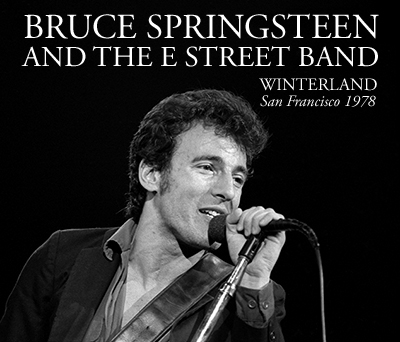
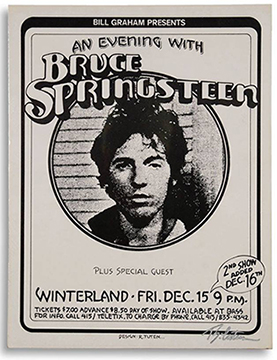
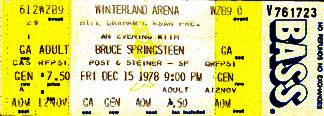
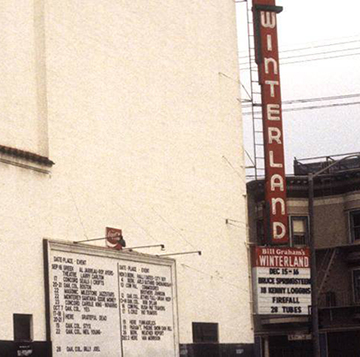
3. Winterland: The Winterland Ballroom, San Francisco, CA, December 15, 1978

springsteen capitol poster

In addition to all being from the same tour, the legendary Darkness on the Edge of Town tour of 1978, they were also broadcast live on the radio.  And they weren’t broadcast just in the city of origin, but throughout the surrounding areas — the Agora show was heard throughout the Mid-west; Passiac was heard up and down the Northeast, and Winterland was broadcast in Northern California up through Seattle, Washington — all areas that had supported Bruce in the first five years of his recording career, including the extended time between the Born to Run album and its 1978 follow-up, Darkness on the Edge of Town.

Bruce Springsteen ROXY tickets

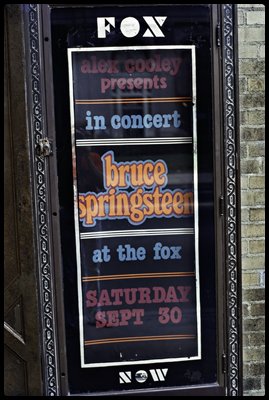
There were two other radio broadcasts in 1978:  July 7 from the Roxy in Los Angeles, CA, and September 30 from the Fox Theatre in Atlanta, GA.

However, the Roxy didn’t receive its proper due because it was never properly represented on a vinyl bootleg, but the bootleg CD is considered one of the best around; and the Southeast United States was hit by a wave of thunderstorms on the night of September 30 that caused interference in the radio reception.

FOX theatre poster

And what has became evident is that more than just a handful of the thousands of listeners at home were recording the broadcasts to be listened to over and over again.  It didn’t matter if the recording was made using expensive, state-of-the-art stereo equipment or by holding a Radio Shack cassette player up to the speakers of a transistor radio, those tapes were treated like gold by many of those home-tapers.  There have been countless stories posted to various online Springsteen forums over the years of how people played those tapes until they literally disintegrated.

But not everyone rolling tape on each of the broadcasts were doing so for completely altruistic purposes.  Within months, vinyl copies of each broadcast were available for purchase at independent record stores and mail order outlets that advertised in the classified section of Goldmine magazine and similar publications.  This development enabled even more fans to hear these amazing shows in the same outstanding quality — give or take some vinyl degradation — as they originally aired, which was quite a change from most bootlegs at the time.  We’ll pass on the ethical discussion concerning these non-sanctioned releases at this time, though.

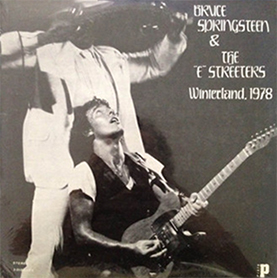
Over time, the titles given these original vinyl pressings quickly became part of the Springsteen discussion.  The Cleveland, OH, show from August 9 was released with the title, “I Was a Teenage Werewolf”; the September 19 show in Passaic, NJ, “Piece de Resistance”; and December 15 from San Francisco “Live in the Promised Land.”  Some fans didn’t know the dates of the shows, but just the title of the vinyl bootleg.  Of course, it didn’t hurt that the first bootleg CD releases of these shows in the early 1990s carried the same title.

WMMS Poster

In addition to the great sound on those vinyl bootlegs, the packaging of those releases bordered on professional quality.  Each was released in a cardboard box, much like the one in which “Live 75-85” was initially released, with cover graphics that, while not fancy, were certainly beyond the black and white inserts included with many bootlegs of the time.  And “Live in the Promised Land” featured a small poster featuring a photo of Bruce and Clarence taken at the actual show.

Between the excellent sound quality and the solid-if-unspectacular packaging, these vinyl bootlegs became the unofficial and de facto Springsteen live albums, and remained as such until “Live 75-85” was released in late 1986.  And as live albums go, you really couldn’t do much better than those releases; the 1978 tour was Bruce at his most intense, emotionally baring all each night, and then releasing all that angst in a ten-minute version of “Quarter to Three” that neither Bruce nor the crowd wanted to end.  And the recordings of those shows, whether they were on vinyl or cassette (or, later, CD), were treasured like the Holy Grail.

While most items treated like gold are put away in a safe place, the tapes of those shows were played repeatedly, until the songs and, more humorously, the between-song banter had became burned into the collective memory of Springsteen fans worldwide, even if each fan was listening separately.  That shared, but separate, listening experience has become a bond for Bruce fans over the years; who else would know about Dominic, Eddie, and Matty, to each of whom Bruce dedicated a song during the Passaic show, or that vomiting in your girl’s purse was allowed during “Sherry Darling” in Cleveland, or that Bruce revealed himself to be a private detective during the December 15 broadcast and was searching for the girl who jilted him after they ran away together?  And, of course, there’s Kid Leo’s intro from the Agora:  “Round for round, pound for pound, there ain’t no finer band around,” a description of the band that described them in 1978 and still describes them today.

Then, of course, there are the songs, many of them in their definitive arrangement: the surging start to “Badlands,” the slow harmonica intro to “The Promised Land,” Danny’s sad but beautiful organ before the band kicked into “Darkness on the Edge of Town,” and, of course, the extended piano and guitar jam that segued into “Prove It All Night.”  The album may have been nearly perfect, but Bruce improved upon them on-stage, and it’s those live ‘78 performances from the radio broadcasts that many fans hear when they play those songs in their heads.  Even songs unreleased by Bruce at the time — “Fire,” “Because the Night,” and “The Fever” — were performed in what easily could have been their definitive arrangements.

For many fans, these songs weren’t just the definitive versions or their favorite versions of the songs, they were The Songs.  The songs just didn’t sound “right” when heard from any other source, including the album and subsequent live performances.  Hearing “The Ties That Bind” when the piano after the opening drum beats was replaced by guitar was jarring; if the fading music of “Racing in the Street” didn’t include Bruce talking about driving in the dessert and an old Robert Mitchum film before segueing into “Thunder Road,” something was missing; and if “Streets of Fire” opened with anything other than that searing guitar solo as played in Passaic, well, then, the world was just off-kilter.

One particular trait of Springsteen fans is their evangelical desire to spread the Gospel of Bruce, and the tapes of those shows were always Exhibit A when a non-believer was met.  We could safely speculate that thousands of copies of those radio broadcasts were made in dorm rooms or basements in the months and years after the original broadcast dates.  Now whether or not Passiac, Agora, or Winterland converted thousands of non-believers into Bruce Tramps is another story, but it is hard to imagine that no further copies of those tapes were made.

Or maybe it’s not another story as to whether those copied tapes converted fans.  Less than a year after the Darkness tour ended, Bruce Springsteen and the E Street Band were added to the already-lengthy list of performers at the Musicians United for Safe Energy (MUSE) concerts at Madison Square Garden in New York City, and what had been shaping up to be the bastard cousin of Woodstock turned into Bruce’s coming out party to the rock world.  The media attention generated by Bruce’s participation far out-weighed what the shows had been receiving when the Doobie Brothers and Crosby, Stills, and Nash were the headliners.  Bruce and the E Street Band played two of the five nights, with the “Bruuucing!” from the audience leaving both Chaka Khan and Bonnie Raitt wishing his mother had named him something else.  Of course, 13 months prior to the MUSE shows, Bruce sold out three nights at the same venue by himself, but things were clearly on a different level when Bruce was the media focus of the multi-artist bill.  The resulting live album and concert film from MUSE also contributed heavily to Bruce’s popularity growth prior to the release of his fifth album, but the momentum from the Darkness tour, and the radio broadcasts, put him squarely in the position to explode.

And explode he did.  Through his first four albums, Bruce’s highest position on Billboard’s singles charts with one of his own songs (the Pointer Sisters hit the Top Ten with “Fire” and Patti Smith hit the Top 20 with “Because the Night”) was 23 (with the “Born to Run” single) although both the Born to Run and Darkness LPs peaked in the Top Ten on the album charts.  However, in the fall of 1980, the lead single from “The River” album, “Hungry Heart,” hit the Top Ten on the singles charts, the first of nearly a dozen times that would happen over the ensuing decade.
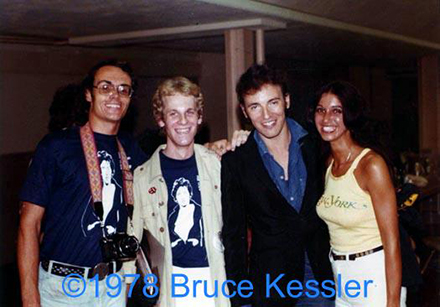
Winterland

From a touring standpoint, the explosion was even bigger.  Most of the 1978 tour was spent in mid-sized arenas and theatres, only playing the major arenas on the East Coast.  However, the 1980 tour was booked in major arenas nearly all across the country, often multiple nights.  In May 1978, Bruce played three nights at the Boston Music Hall, but in December 1980, he played two nights at the Boston Garden.  He played two nights in Pittsburgh at the end of the 1978 jaunt at the Stanley Theatre, and he played two more nights there in 1980, but at the Civic Center, the same place the professional hockey team called home.

In the 32+ years since the Darkness tour, several generations of Springsteen fans have discovered the world of “fan-based recordings” through one path or another.  If the fan has already seen a live Bruce show, their first show to track down is the one(s) they’ve seen, but next on the list are the 1978 radio broadcasts, with the stellar sound quality and amazing performances.  And when a fan, especially one just discovering Bruce’s music, hears the “Prove It All Night” with the long guitar intro or experiences (there’s really no other way to describe it, even through “just” a recording) the emotionally raw “Backstreets” interlude for the first time, they’re hooked.  It’s not difficult to see why these particular shows — the Agora, Passaic, and Winterland — have played such a huge role in the Springsteen fan community.

While we’ll never be able to quantify how much of a role those radio broadcasts had in the wave momentum that took Bruce from Northeast Cult Artist to Top Ten Rocker, it’s a component that certainly cannot be ignored.

Flynn Mclean

Discover the limited edition Bruce Springsteen book, The Light in Darkness.
The Light in Darkness is a collector’s edition, we are almost sold out. Less than 200 copies remain.
A great companion piece to The Promise box set, it focuses on the 1978 Darkness on The Edge of Town album and tour.
Read about the iconic concerts from fans who were there – the Agora, Winterland, Roxy, MSG, Capitol Theatre, Boston Music Hall, The Spectrum and over seventy more!
Click Here to Order Now and Save on Shipping:
The Light in Darkness

Share on TwitterShare on TumblrSubmit to StumbleUponDigg ThisSubmit to redditShare via email
Link to this post | Leave a comment

Proving It Every Night

It was in high school in the early 1990s. A friend of mine and I had pooled our resources and bought an interesting import CD at a local record show in the Florida panhandle. It was called Smalltown Boy and it featured the kind of performance that seemed to go against everything I knew about Bruce Springsteen, which was admittedly very little. I had only recently started to listen to his studio albums, borrowing them from my friend’s older brothers who got them from the Columbia Music Club. Needless to say, this album was different than anything I had heard so far. First of all, I only recognized the names of about half of the songs listed. Secondly, there was an immediacy to these performances on the disc that brought you right into the venue, a seemingly small club that might be just around the corner. But it wasn’t; it was in a strange place called Bryn Mawr, which for all I knew was a small Welsh community. The fact that there were a few audio distortions in the recording made the sound seem even better, like tasting a bit of salt in between licks of an ice cream cone. It really emphasized how live and real it was. And then there were the stories, the asides and the songs I’d never heard before. This was our own little treasure, our forbidden fruit, and a secret Bruce Springsteen that was miles away from the flag-waving muscleman that most of my friends associated him with. The person I heard on this CD was greasy and funky, had friends with funny names, told stories about ducks and metal flake upholstery, sang for his girlfriend’s sister and had the coolest band introductions I’d ever heard in my life.

Bruce Springsteen Smalltown Boy

This left me in a daze. How could this live performance be so different than Bruce’s public persona? It was so odd, so grungy and so wonderful. How did the guy that did that forced looking “Dancing in the Dark” video do this as well? I didn’t have an answer, but another question did arise. What else was in this unknown world of Bruce Springsteen waiting to be discovered?

Record shows were few and far between in our region, but I noticed that there were a few interesting advertisements in the Record Collector magazines that I saw on the shelves in the local bookstore. They tantalizingly listed more of these recordings. That first one had whet our appetite and now were we were ready for more. The first problem was money. We were merely high school kids and these were expensive, generally twice as much as any normal CD in the mall. On top of that, there were so many listed, how would we know which ones we should take a chance on? They seemed to be from all different eras and sources. I had heard rumors of bad recordings and short discs and we really didn’t want to waste our money when they cost so much.

Bruce Springsteen Smalltown Boy back

But this only made us want them more, it added to the quest, the exclusivity of it made us drool in anticipation as we started the search for treasure among the trash, a big monetary risk for an unknown reward. To the rescue came a borrowed copy of “You Better Not Touch,” a guide to these recordings that was featured in Backstreets Magazine. We carefully sifted through those pages, making notes and eventually choosing a few of them to hopefully buy. Hopefully, I say, because the process was a little bit intimidating. These were sold by overseas merchants, and it involved going to the post office to get an international money order, sending a ridiculous amount of money to a stranger and hoping for a response.

Once the money was in the mail, there was nothing to do but wait. There was no guarantee that we’d ever receive anything back. It was like a big black hole that you threw money into, and for some inexplicable reason, expected to receive CDs from in return. It sounded like a scam, but we were hooked on the first one, so we sent off our order. Truly, the waiting was the hardest part. Each day you would wonder if the mailman had stopped by yet, hoping there was a package with exotic looking postage on it.

And one day, there was!

It was part of a larger order, with other eager students in class getting discs of their own favorite bands. My friend had chosen Live In The Promised Land and I went for Pièce de Résistance. We took them home and listened.

Bruce Springsteen Live in the Promised Land

I think we both knew very quickly that things had just moved to another level. This was no longer a funky cat telling funny stories and playing lovable rave-ups. This was a guy that was playing the greatest rock and roll that I had ever heard. It wasn’t just that he was playing the songs from his latest LP in front of an audience, but he was playing songs off of an incredible album, supercharging them to a state that seemed to send the whole audience (and this listener) into the stratosphere.

It starts with those 10 songs off Darkness on the Edge of Town. This album describes to me what it’s like to mature into an adult; it reassures that being a man isn’t about machismo; it explains that there are principles that people have, which they must stand up for. It’s about knowing that this is a cruel place to be, but that there’s a way through it, even if it’s not going to be pleasant.

When Bruce made this album, he was letting us know that he knew one of the secrets of the world. When he toured behind it in 1978, he let us know what that secret was. And what I heard was an explosion of rock and roll. It was filled with fury and passion, with parts of pure joy and goofiness. The songs from the album were performed in a way that wouldn’t be possible again. He was living these songs every night on stage and more importantly, off it, not looking back at them as he does today and channeling the hungry person he was when he wrote them.

When he sang back then, he hadn’t yet made it through the badlands, so everything took on a more desperate tone. To me, these are the most powerful versions of the Darkness on the Edge of Town songs, embellished from the album, with searing guitars and sweaty sax, with grunts, yelps, screeches and screams. All of this was the basis of the show, these already incredible songs being done in a way that spoke right to your soul, that showed someone looking for what you were looking for, struggling to find it, and knowing that the struggle is part of the answer.

Bruce Springsteen Piece De Resistance

From the first cut off the first disc, “Badlands,” the band charged with such incredible energy. Bruce is either singing or something is escaping from deep inside, I can’t really tell. The song ends with a scream, not something gratuitous, but a necessary exhortation, where nothing in the English language would do. It should be said that there is nobody that can do this like Bruce, growling out conviction and excitement with nary a word.

Then comes a great moment as the wind down of the first song melds straight into the ferocious guitar of “Streets of Fire.” You’ve just walked through a one-way door. It’s like you’ve only ever driven a golf cart before, and now you’re in a hotrod. The gas pedal has been pushed and all you feel is the acceleration in your back. It’s scary and it’s powerful, and you want to feel it again. These concerts seemed to be filled with these specials moments that make you just shake your head at how spot-on they are. This is how rock and roll should be.

Darkness on the Edge of Town is all its title suggests, but with more, with a light at the end of the tunnel. It’s bad now and it’s going to stay that way for a while, but it can change. The final “HUUHH,” is absolutely visceral and it can’t be any other way. It’s Darkness on the Edge of Town; there are no other words that need to be said, just a knowing nod is enough.

Bruce slaved over these lyrics, getting exactly the phrasing and images he wanted, so there’s nothing I can say about them except that they hit me right in the gut. They’re primordial and they say things that I always knew, but couldn’t express. The brilliance of the writing comes to the forefront, the nuance, what is said and left unsaid, what he tells you and what work is left for you, it is all expertly crafted.

It cannot be emphasized enough: The Darkness album is not the same without the Darkness Tour, and the tour couldn’t have been what it was without those amazingly written songs. And it’s not just those lyrics, but also the way they are sung. The reason a great song becomes a great performance is the way the singer communicates the message to you. The audience has to believe what they’re hearing. It can’t sound fake or made up and it can’t sound contrived or phony. It has to be authentic, and that’s the only way Bruce knows how to be. There’s no question that he is living these songs and that he’s singing from his own experience. We’re back to the music, and after asking the crowd for the latest baseball score, he then moves on to “The Promised Land,” with its harmonica, and he has hit upon something special.

And then the big one, the one everybody talks about. The one that tears your eardrums in half while you want to turn the volume up even higher. It’s “Prove It All Night,” and the way it was performed in 1978 was like nothing ever before or since. If you’ve heard it, you’ll never forget it.

There’s a big debate amongst fans about which one is the best, as it was played a little differently every night. There’s no wrong answer here, but for me, my favorite is from the Winterland show. It never stops. It never stumbles. It sways back and forth perfectly. It pierces your head. And unlike the way other shows from that tour were captured, the guitar is way up front in the mix, slicing away and not buried in with the rest of the band. There’s a point where it sounds like he puts the guitar right in your face. It sounds ludicrous but it’s true. And then another one of those moments comes. Just as the intro fades into the song, the audio is full of distortion; it’s too loud. It cannot be contained by the recording medium as the madness of the intro turns into the song we thought we knew. It’s like you slipped under water and you’re drowning for just a moment, and then your head pops back up and you gasp for air. If this were ever released officially, I would never want that moment to be cleaned up.

The first break comes and it’s: huh, Huh, HUUUUH! Let’s go! I can’t express how marvelously those five syllables come out. Clarence blares out the solo, then Bruce turns on his chainsaw for a quick burst of pure energy. How can anyone sit in their seat and listen to this? I feel nothing but raw adrenaline and this is years after the fact. What were those poor souls who were in the building feeling? How did they cope? How did they process what they were hearing and seeing? Bruce roars through the last verse and then melts more faces with the outro solo and Danny’s organ. It’s hard just to put into context; it’s so off the charts for me. All of this and we’re still in the first set of the show. The amazing “Racing in the Street” comes next, the Geronimo story and then “Thunder Road.” It’s moving enough that you understand why Bruce kisses Clarence right smack on the lips. It can’t be explained and it doesn’t need to be because it’s all right there, aural evidence that you’re experiencing something significant disguised as a rock concert.

Later I expanded with the shows from the Roxy and the Agora, each having their own different brilliant moments, those moments. With the opening drums and guitar of “Summertime Blues” at the Agora, it sounded like the band is sitting right in the room in front of you. The story of “Growin’ Up” showed the full cosmic irreverence of the band. With the Roxy, it’s the cocksure attitude of “Rave On” opening the show, the off-the-cuff “Heartbreak Hotel” and the lovable “Paradise By The C” that dares you not to shake your butt, contrasted with a heavy “Adam Raised a Cain” and the jungle-like “Mona/She’s the One.” And “Backstreets,” every time there was “Backstreets.” The emotional build up and release. You couldn’t just play that song at any arbitrary time, you had to be ready for it, you had to know you could make it through, because this wasn’t any bubblegum pop song playing in the background on the radio. This was a monumental piece of drama, ready to draw tears from your eyes and make you feign you had something caught in your throat. Fortunately you know that “Rosalita,” “The Detroit Medley” and “Quarter to Three” were likely not far behind, ready to give relief.

You’d think that it can’t get much better than this, but it does, because then came the video. I can’t actually remember how this came to be in our hands. After memorizing these broadcasts, seeing what was happening was like a blind man opening his eyes for the first time. I remember seeing the joy on Bruce’s face with Clarence hanging over shoulder, the happiness that can’t be contained as he rambles through “Sweet Little Sixteen” or busts out the opening solo. The unbounded charisma and the nose picking. You can’t teach this stuff. Bruce is all over the stage. It’s like those dynamic 15 minutes from the No Nukes movie, but for three hours. Someone throws a Duke St. (Kings) hat and Bruce catches it mid-step while on top of a huge stack of speakers and wears it around. I mean, who is this guy?

This is a taste of why Darkness on the Edge of Town album and tour resonates so much with me. I write this as someone who was late to the party, who wasn’t there, and who heard all of this secondhand and in diluted form. And it still knocks my socks off every time. The incredibly moving and relatable songs that were whittled down to a dangerous blade. The powerhouse versions. The levity of the covers. The long shows and the unreleased songs. The stories, both ridiculously campy and honest, and the manic, heart-stopping endings. I can only imagine what it would have been like in person.

There was an order of CDs that disappeared into a black hole, that we never received back in our high school days. I never worried about it though; as after we got those first two records, I knew we had already gotten more than our money’s worth.

Josh Auzins

Celebrate the Holiday Season with Bruce Springsteen.
Discover the Limited Edition Bruce Springsteen book, The Light in Darkness.
The Light In Darkness is a collector’s edition, we are almost sold out. Less than 225 copies remain. A great companion piece to The Promise box set, it focuses on the 1978 Darkness on The Edge of Town album and tour.
Read about the iconic concerts from fans who were there- the Agora, Winterland, Roxy, MSG, Capitol Theatre, Boston Music Hall, The Spectrum and over seventy more!
A perfect gift for the holidays.
Click Here to Order Now: The Light in Darkness

Share on TwitterShare on TumblrSubmit to StumbleUponDigg ThisSubmit to redditShare via email
Link to this post | Leave a comment

Libro Bruce Springsteen

Libro The Light in Darkness
208 páginas, papel alta calidad, más de 200 fotos. Edición limitada.
El autor del excelente libro “For You”, donde recopilaba cientos de historias contadas por fans de Springsteen junto a cientos de fantásticas fotos inéditas, ha vuelto a repetir, sólo que ahora superando el listón. Su libro está ahora totalmente dedicado a la gira de 1978, de álbum Darkness on the Edge of Town, probablemente la mejor gira de Springsteen y de la historia del rock.
Para esta ocasión Lawrence Kirsch ha compilado cientos de fotos inéditas de la gira, de muchos conciertos, junto a las historias más apasionantes contadas por los propios fans que asistieron a esos conciertos y tuvieron la suerte de vivirlo en primera persona. Un libro fascinante que nos transporta a una época memorable y ya irrepetible.
COMPRAR: The Light in Darkness

Share on TwitterShare on TumblrSubmit to StumbleUponDigg ThisSubmit to redditShare via email
Link to this post | Leave a comment

Bruce Springsteen – Masonic Temple, Detroit 1978

Mike Curcuru

Bruce_Springsteen2

Bruce Springsteen – Masonic Temple, Detroit 1978

The date was September 1, 1978, and the venue was the Masonic Temple in Detroit, Michigan. As my two buddies and I grabbed our cameras, our zoom lenses, and film, we had no idea what we were going to experience. My feelings regarding Bruce was mostly laughing at the thought of him being “the next Bob Dylan”.

As we tried to enter the concert hall, we were stopped by the ushers who firmly announced to us “no cameras allowed”. Not willing to give up that easily, we tried a couple different doors, only to be turned away with our cameras there too. One buddy got his camera in, so we put ours back in the car and just brought our film in, thinking we could share the camera.

As the show started, we noticed the crisp, clear sound of the piano, the boom boom of the drums, the powerful sax and noticed the lead guitarist and singer had a flair and distinct personality that we figured out was Bruce. We literally knew nothing about him other than the Born To Run song. We thought the sound was superb, as you could actually hear what he was singing about. After a couple of songs, Bruce announced that a writer for Creem magazine was there to review his performance. Several times during the show Bruce would stop and lean over the first row asking the writer how the show was going. Bruce would repeat the response that it was “pretty good so far”. It was an understatement of huge proportions.

Clarence_Clemons2

Bruce Springsteen – Masonic Temple, Detroit 1978

Listening to Roy’s piano made me fall in love with his style, and Clarence blew the roof off. It began to occur to us that there were some devoted Bruce fans in the building and we could see just about everyone in there knew something we didn’t. It was a great hour when the band gathered at the center of the stage for what appeared to be a short show. When Bruce announced they were going to take a fifteen minute break, we were a little surprised because artists didn’t do that. They usually had an opening act, sometimes two. Most would play about an hour and a half and then have a two or three song encore. Now since we only smuggled one camera inside, we decided the camera owner would get the first half hour or so, I was next and my other buddy had the last half hour. Well, after witnessing the first twenty minutes, the camera owner was reluctant to let us have our chance. There was so much going on it was a photographers dream. Finally, just as the intermission was about to start, the first shooter opened his camera to take out his film. He quickly slammed it shut. He had this look on his face like he realized he had just lost his wallet. He reluctantly told us he had forgotten to rewind his film. When the film was developed, most of the negatives had a big blotch in the middle of the photo. He only got about four or five shots worth keeping. We still laugh about that today.
Now when the band cleared the stage for that intermission, my two buddies and I were stretching and were standing around in the aisle when six guys wearing striped red suit coats raced by bumping me and went into the sound booth. After the fifteen or twenty minute break, the lights dimmed, and here comes the guys in the striped coats running by us again and jumping on stage. We thought it was kind of cool to have the band run by us. Little did we know it was in fact the E Street Band.

Springsteen_Clarence

Bruce Springsteen – Masonic Temple, Detroit 1978

Now after the intermission we were thinking five or six songs. Wrong. He went on to play another solid two hours covering all the now classic tunes. After the first encore, they came out for a second one. After the second song of the second encore, Bruce seemed to collapse. The band rushes over, Clarence fanning him with a towel, and out rushes a stretcher. We thought he had passed out. Suddenly, you see Bruces’ head rise from the stretcher, and he had this look of determination as he surveyed the crowd. The band started to urge Bruce to get up, and slowly he started to sit up. The crowd started to roar, getting louder and louder. About now, I realized it was part of the act, and Bruce was milking it until the applause was a thunderous roar. He struggled to his feet, and the band jumped into song right where they had left off when he collapsed.

Springsteen_Darknesss2

Bruce Springsteen – Masonic Temple, Detroit 1978

Now that there is video out there from the 1978 tour, we all know what songs he played. Although we didn’t know it was special at the time, he played Chimes of Freedom that night for the first and only time until the Amnesty Tour

I remember after the show, as we got outside, I turned to these guys and asked the question…”where has this guy been all my life?” The piano, the wailing guitar, the length of the show, the crowd, the ending with a stretcher all left memories I will never forget. I was hooked, and right away we started talking about calling in sick at work and going to see Bruce in Saginaw, Michigan the next night, an hour and a half drive from where we lived. I can’t remember why we didn’t go, but knowing what was played that next night, I sure wish I had gone.

For those interested, I shot with a 35mm camera, and 250mm lens at 1/60 speed with the lowest f-stop and mainly wait until the spotlight was at its brightest. I did get a lot of blurry shots, but when you nailed it, you got great color. These shows in 1978 were also my learning years, and the later tours with Bruce are better quality. You can see some of my original photos as part of this story. I have over twenty Bruce shows that I took photos at from all sections of the arena. Some of my best shots have been taken behind the stage. As a concert photographer, I try to capture the excitement and thru the photos, try to let the viewer see and feel the moment.

Celebrate the Holiday Season with Bruce Springsteen.
Discover the Limited Edition Bruce Springsteen book, The Light in Darkness.
The Light In Darkness is a collector’s edition, we are almost sold out. Less than 225 copies remain. A great companion piece to The Promise box set, it focuses on the 1978 Darkness on The Edge of Town album and tour.
Read about the iconic concerts from fans who were there- the Agora, Winterland, Roxy, MSG, Capitol Theatre, Boston Music Hall, The Spectrum and over seventy more!
A perfect gift for the holidays.
Click Here to Order Now: The Light in Darkness

Share on TwitterShare on TumblrSubmit to StumbleUponDigg ThisSubmit to redditShare via email
Link to this post | Leave a comment

Legends of Springsteen: Darkness Book Review

Many thanks for this great book review. You can read the whole review here: Legends of Springsteen

Part coffee table book and part rock ‘n’ roll history saga, “The Light in Darkness” contains a collection of personal essays and photos from the Darkness on the Edge of Town tour. Meticulously compiled by Lawrence Kirsch, the words and images paint a picture of the profound effect Darkness on the Edge of Town had – both on Springsteen’s career and the fans that connected with it.

In the wake of the lawsuit between Bruce and former manager Mike Appel that kept Bruce out of the recording studio for several years, Springsteen and The E Street Band released Darkness on the Edge of Town in 1978. The album’s reputation is quickly becoming cemented as Bruce’s most challenging but richest album. In addition to its own merit, Darkness’ status has been aided by compelling textual and visual supplements that have bolstered its reputation. If you weren’t sold on Darkness before, reading the first-hand accounts lovingly compiled in “The Light in Darkness” will certainly have you revisiting the album.

Celebrate the Holiday Season with Bruce Springsteen.
Discover the Limited Edition Bruce Springsteen book, The Light in Darkness.
The Light In Darkness is a collector’s edition, we are almost sold out. Less than 225 copies remain. A great companion piece to The Promise box set, it focuses on the 1978 Darkness on The Edge of Town album and tour.
Read about the iconic concerts from fans who were there- the Agora, Winterland, Roxy, MSG, Capitol Theatre, Boston Music Hall, The Spectrum and over seventy more!
A perfect gift for the holidays.
Click Here to Order Now: The Light in Darkness<

Link to this post | Leave a comment

Bruce Springsteen — The Promise

Adam Perry

As a kid, all I knew of Bruce Springsteen was that my yuppie aunt and uncle loved the Boss and Jimmy Buffett equally, so naturally I equated “Born to Run” with utter bullshit like “Cheeseburger in Paradise.” But now, with big-time indie bands such as Arcade Fire and Dr. Dog unabashedly wearing their substantial Springsteen influence like a badge of honor, it’s well past time to admit that Jersey’s arena-rocker laureate has written and recorded many, many amazing songs. The stripped-down Dylan-meets-Kerouac 1978 LP Darkness On the Edge of Town is one of Springsteen’s best, and The Promise boasts two discs of previously unreleased material from the Darkness sessions, including an improved “Racing in the Street” and Springsteen’s own take on “Because the Night.”

Springsteen Fall Tour 2012 Book Sale!
Discover the Limited Edition Bruce Springsteen book, The Light in Darkness.
The Light In Darkness is a collector’s edition, we are almost sold out. Less than 225 copies remain. A great companion piece to The Promise box set, it focuses on the 1978 Darkness on The Edge of Town album and tour.
Read about the iconic concerts from fans who were there- the Agora, Winterland, Roxy, MSG, Capitol Theatre, Boston Music Hall, The Spectrum and over seventy more!
A perfect gift for the holidays.
Click Here to Order Now: The Light in Darkness

Share on TwitterShare on TumblrSubmit to StumbleUponDigg ThisSubmit to redditShare via email
Link to this post | Leave a comment

Bruce Springsteen & The E Street Band-The Promise NYC 78, Springsteen Explores a Time of Darkness

Elysa Gardner : USA Today

The Promise, the Making of Bruce Springsteen’s Darkness on the Edge of Town.

NEW YORK — Bruce Springsteen still writes songs the old-fashioned way. Which is to say The Boss keeps his initial creative process low-tech.”I’ve got this big fat notebook,” he says, holding his hands out for emphasis and flashing a distinctly self-deprecating grin. “It’s the same kind I’ve always used, with everything written in longhand.”In the documentary The Promise: The Making of Darkness on the Edge of Town, which makes its debut Thursday on HBO (9 p.m. ET/PT), black-and-white footage shows a 27-year-old Springsteen leafing through such a notebook while working on Darkness on the Edge of Town, the 1978 album that cemented his reputation as a great American troubadour. A three-CD, three-DVD box set including the film, features an 80-page simulation, complete with facsimiles of his scribbled lyrics, song ideas and recording and personal notes from that era.Its blue cover suggests an item favored by schoolchildren since long before the Information Age. “My new notebook looks just like that,” he confirms. “Maybe the color’s different, but that’s all.”Perhaps that’s fitting, given the 61-year-old rock icon’s response to watching himself and his longtime collaborators in the E Street Band as young men in director Thom Zimny’s film. It premiered to wide acclaim in September at the Toronto Film Festival.“A lot has changed, and yet not very much has,” Springsteen says, looking fit and relaxed in a plaid shirt and jeans as he chats in a Midtown hotel room. “We all know a lot more about what we’re doing now, which is good, because we were truly amateurs at the time. But the same intensity remains about making music — the idea that it should matter, that it should be worth thinking hard about.”

HBO_the-Promise_.jpgA turning point

Indeed, The Promise— which juggles footage of rehearsals, studio sessions and performances from 1976 to 1978 with new interviews with Springsteen, E Streeters and other colleagues — traces the recording of Darknessand the hard-won personal and artistic growth marked by the album, Springsteen’s fourth.Darkness was delayed by a lawsuit pitting Springsteen against then-manager Mike Appel, who had co-produced previous albums, including Born to Run, the 1975 epic that made the singer/songwriter a superstar. Appel appears in the documentary, in which he and Springsteen speak about each other without acrimony. Springsteen states that the suit was a bid not for money but for control of his career. (In 1977, freed from contracts with Appel, he hired current manager and Born to Run and Darkness co-producer Jon Landau, a major presence in the film.)

Darkness also was haunted and enriched by Springsteen’s struggle to come to terms with his success and with a growing sense of social awareness. He wrote most of the songs while living on a farm in Holmdel, N.J., not far from the working-class neighborhood where he was raised.

“I became interested in the mystery of my family life, and in its larger social implications,” he says. “Initially you’re not very interested in your parents as people, but in my late 20s, I started to have enough distance to see their story, and I found it compelling and provocative.”

The plaintive song Factory, for instance, was inspired by Springsteen’s father, who lost his hearing after working amid the noise in a plastics plant, as he recounts in the film. “I wanted to delve into the personal and try to connect it to the political, and to write about things that were permanent. Work, family, relationships — generation after generation, those things are the essence of our experience.”

The resulting songs are leaner and grittier than the majestic soundscapes of Born to Run. Though Darkness has sold 3 million copies to date, about half as many as the previous album and only a fraction of the 15 million sold by his 1984 smash, Born in the U.S.A., critics consider it a pivotal work.

Reviewing the album in Rolling Stone, future Springsteen biographer Dave Marsh wrote: “Occasionally, a record appears that changes fundamentally the way we hear rock & roll. … I have no doubt that (Darkness) will someday fit as naturally within that list as the Rolling Stones’ Satisfaction or Sly and the Family Stone’s Dance to the Music.”

Time clearly hasn’t diminished the pundits’ enthusiasm. “It’s the record where Bruce grew up,” says Rolling Stone contributing editor Anthony DeCurtis. “Born to Run, tremendous as it was, was like a last wail of adolescence, of the romantic agony that you go through as a young person. On Darkness, he takes a hard look at what people’s lives are really like, at who gets opportunities and who doesn’t. There’s no longer that sense that somehow rock ‘n’ roll is going to save everything.”

Springsteen, too, sees Darkness, with its vivid depiction of everyday lives, dreams and disenchantment in now-classic tunes such as Badlands and Racing in the Street, as a transition point. “Some of the big themes I started to write about here, you’ll spot them intermittently on my first three records. But it was really on Darkness and then (1980′s) The River and (1982′s) Nebraska and Born in the U.S.A. that they came to the fore.”

The band wasn’t just trying to make a record, he says, “we were trying to make an essential record. So that if you were interested in rock music, interested in what was at stake in the late ’70s culturally, then you had to deal with this particular piece of music. That became a blueprint for the way we continued to work, and I think that thoughtfulness has resonated over the long haul. The songs are still a vessel for the topics I want to discuss.”

Since his youth, Springsteen has viewed popular music as a “natural freedom promoter. You listened to Elvis’ records or Woody Guthrie’s or Hank Williams’ and suddenly you had more breathing room, more license to be who you wanted to be. I’ve always felt that there were enormous political implications to Elvis’ career. As a very feminized man who crossed racial lines, he was a bit of a precursor to the sexual revolution and the civil rights era — without uttering a political or rhetorical word in any of his songs.”

For Springsteen, the more politically conscious songs on Darkness “haven’t become dated” in the 32 years since its release. “If anything, they’re more relevant right now.” He notes that the album was crafted “during the Carter recession.” The country’s mood has darkened, he acknowledges, since the 2008 presidential campaign, when he supported Barack Obama.

“It’s tough, because when people are out of work, they’re hurt and angry. But we’ve been living through economic troubles for years. One of the biggest issues right now is the disparity in wealth, and that’s been growing through all the boom times. We’ve worked with a lot of food banks over the past 25 years. There are constantly people dropping out of the middle class.”

Spingsteen_Winterland_Racing_.jpg

Still scribbling notes

Of Obama’s performance as president, Springsteen says: “I continue to have great faith in him. There’s that quote that says you campaign in poetry and govern in prose — or you campaign as a visionary and govern as a legislator. Maybe that’s something he suffers from, or something people are struggling with. But I think President Obama is very smart and very steady.”

With The Promise, Springsteen hopes to flesh out his own image, particularly for younger fans who had not seen or heard his work with the E Street Band before the late ’80s. “After I got the band back together again in 1998 or 1999, we did a few tours and made some good records, and I realized that there were a lot of kids coming to the shows. I thought it would be nice to put together a record of what we did at that earlier time.”

For the old faithful, the coming box set The Promise: The Darkness on the Edge of Town Story will include 21 previously unreleased songs, also available on a two-CD set, The Promise. The tunes include Springsteen’s recordings of Because the Night and Fire, respectively hits for Patti Smith and the Pointer Sisters.

“All the tracks except one were recorded 30 years ago,” Springsteen says, but didn’t make the final cut. “I just decided that I wanted to say something else at the time. I wanted to wait until I felt I could have an essential conversation with my audience.”

It hasn’t yet been determined when that conversation will resume in the form of a new studio album. At the moment, Springsteen is focused on seeing his 16-year-old son, Sam — the youngest of his three children by wife and E Street member Patti Scialfa— through his junior year of high school. But he’s still finding time to scribble in notebooks.

“I want to write some more good songs, play some more good shows,” Springsteen says. “I want to come back and look again into all those wonderful faces that I’ve been looking into for the past 35 years. I just do what I do, you know?”

Bruce Springsteen explore l’époque de Darkness

NEW YORK — Bruce Springsteen écrit encore les chansons à l’ancienne mode. C’est-à-dire que le Boss garde son processus initial de création low-tech.”J’ai ce gros cahier”, dit-il, tendant ses mains pour insister et affichant un sourire visiblement rempli d’auto dérision. “C’est le même genre, que j’ai toujours utilisé, avec tout écrit à la main.”Springsteen_-The_Promise_.jpgDans le documentaire The Promise: The Making of Darkness on the Edge of Town, dont la première a lieu jeudi sur HBO, les images en noir et blanc montrent un Springsteen de 27 ans feuilletant un cahier identique tout en travaillant sur Darkness on the Edge of Town, l’album 1978 qui a forgé sa réputation comme un grand troubadour américain. Un coffret de 3 CD et 3 DVD comprenant le film, propose une reproduction de 80 pages, avec fac-similés de ses paroles griffonnées, des idées de chansons et d’enregistrement ainsi que des notes personnelles de l’époque. Sa couverture bleue évoque un objet aprécié des écoliers depuis bien avant l’ère de l’information. “Mon nouveau cahier ressemble à cela,” il confirme. “Peut-être que la couleur est différente, mais c’est tout.”Peut-être que c’est tout à fait approprié, étant donné la réponse de l’icône du rock agé de 61 ans, se regardant lui-même jeune homme avec ses collaborateurs de longue date du E Street Band dans le film réalisé par Thom Zimny. La première a reçu un large succès en septembre au Festival du film de Toronto.

“Beaucoup de choses ont changé, et pourtant pas tant que ça,” raconte Springsteen, en forme et détendu dans une chemise à carreaux et jeans, lors d’une causerie dans une chambre d’hôtel de Midtown. “Nous en savons tous beaucoup plus sur ce que nous faisons maintenant, ce qui est bon, parce que nous étions vraiment des amateurs à l’époque. Mais la même intensité demeure pour ce qui est de faire de la musique – l’idée qu’elle devrait compter, qu’elle devrait valoir la peine d’y penser fortement.”

Un tournant

En effet, The Promise, – qui jongle avec des images de répétitions, de séances de studio et de concerts entre 1976 et 1978 avec de nouvelles interviews avec Springsteen, de E Streeters et d’autres collègues – retrace l’enregistrement de Darkness et la croissance artistique et personnelle durement gagnée qui marque l’album, le quatrième de Springsteen.

Darkness a été retardée par une action en justice lancée par Springsteen contre son manager d’alors Mike Appel, qui avait co-produit les albums précédents, y compris Born to Run, l’épopée de 1975 qui fait du chanteur/auteur/compositeur une superstar. Appel apparaît dans le documentaire, dans lequel lui et Springsteen parler l’un de l’autre sans acrimonie. Springsteen indique que ce procès était une action non pas pour l’argent mais pour le contrôle de sa carrière. (En 1977, libéré de tout contrat avec Appel, il a engagé son manager actuel et co-producteur de Born to Run et Darkness, Jon Landau, une présence importante dans le film.)

Darkness était également hanté et enrichi par la lutte de Springsteen à se réconcilier avec son succès et avec un sens croissant de la conscience sociale. Il a écrit la plupart des chansons tout en vivant sur une ferme à Holmdel, New Jersey, non loin du quartier populaire où il a grandi.

“J’ai commencé à être intéressé par le mystère de vie de ma famille, et plus largement par ses implications sociales,” dit-il. “Au début, vous n’êtes pas très intéressé par vos parents en tant que personnes, mais à l’approche des 30 ans, j’ai commencé à avoir suffisamment de recul pour voir leur histoire, et je l’ai trouvé fascinante et faisant réfléchir.”

Le chanson plaintive, Factory, par exemple, a été inspiré par le père de Springsteen, qui a perdu de son audition, après avoir travaillé au milieu du bruit dans une usine de matières plastiques, comme il le raconte dans le film. “Je voulais plonger dans le personnel et essayer de le connecter à la politique, et d’écrire sur des choses qui ont été permanentes. Le travail, la famille, les relations – génération après génération, ces choses-là sont l’essence même de notre expérience.”

Les chansons qui en résultent sont plus dépouillées et plus rugueuses que les paysages sonores majestueux de Born to Run. Bien que Darkness ait été vendu à 3 millions d’exemplaires à ce jour, environ moitié moins que l’album précédent et seulement une portion des 15 millions d’exemplaires vendus par son carton de 1984, Born in the USA, que les critiques considèrent comme une œuvre charnière.

En faisant la critique de l’album dans le magazine Rolling Stone, le futur biographe de Springsteen Dave Marsh écrivait: “De temps en temps, un disque apparaît qui change fondamentalement la façon dont nous entendons rock & roll… Je n’ai aucun doute que (Darkness) s’installera un jour aussi naturellement dans cette liste que Satisfaction des Rolling Stones ou Dance to the Music de Sly and the Family Stone.”

Le temps n’a clairement pas diminué l’enthousiasme des experts. “C’est le disque où Bruce a grandi”, affirme Anthony DeCurtis, l’ éditeur collaborant au magazine Rolling Stone. “Born to Run, énorme comme il était, c’était comme un dernier cri de l’adolescence, de l’agonie romantique où vous devenez une jeune personne. Sur Darkness, il porte un regard dur sur ce que à quoi ressemble la vie des gens, sur ceux qui obtiennent opportunités et ceux qui n’en ont pas. Il n’y a plus cette idée que le rock’n'roll va en quelque sorte tout sauver. ”

Springsteen, lui aussi, voit Darkness comme un point de transition, avec sa représentation vivante de la vie quotidienne, les rêves et les désillusions dans des chansons désormais devenues des classiques comme les Badlands et Racing In The Street. “Quelques-uns des grands thèmes que j’ai commencé à écrire ici, vous les repérez de façon intermittente sur mes trois premiers disques. Mais c’est vraiment sur Darkness puis The River (1980), Nebraska (1982) et de Born in the USA qu’ils ont été mis au premier plan.”

“Le groupe n’essayait pas simplement de faire un disque,” dit-il, “nous avons essayé de faire un disque essentiel. De telle manière que si vous vous intéressiez à la musique rock, à ce qui avait culturellement de l’intérêt à la fin des années 70, alors vous avez dû vous intéresser à ce morceau particulier de musique. C’est devenu un modèle pour la façon dont nous avons continué à travailler, et je crois que le sérieux a résonné sur le long terme. Les chansons sont toujours un instrument pour les sujets dont je veux discuter.”

Depuis sa jeunesse, Springsteen a vu la musique populaire comme un vecteur de “liberté naturelle”. Vous écoutiez les disques d’Elvis, de Woody Guthrie ou d’Hank Williams et tout à coup vous aviez plus d’espace pour respirer, plus de liberté pour être ce que vous vouliez être. J’ai toujours pensé qu’il y avait d’énormes implications politiques à la carrière d’Elvis. En tant qu’homme très féminisé qui a traversé les frontières raciales, il était un peu un précurseur de la révolution sexuelle et l’époque des droits civiques – sans prononcer une parole politique ni un discours rhétorique dans l’un des ses chansons.”

Pour Springsteen, les chansons les plus politiquement conscientes de Darkness “ne sont pas datées” malgré les 32 années écoulées depuis leur sortie. “Elles sont plus pertinentes aujourd’hui, peut être même trop.” Il note que l’album a été conçu “au cours de la récession Carter.” “L’humeur du pays s’est assombrie,” reconnaît-il, depuis la campagne présidentielle de 2008, quand il a soutenu Barack Obama.

“C’est difficile, parce que quand les gens sont sans travail, ils sont blessés et en colère. Mais nous vivons au travers des difficultés économiques depuis des années. Un des plus grands problèmes en ce moment est la disparité des richesses, qui s’est accentué durant les périodes de croissance. Nous avons travaillé avec beaucoup de banques alimentaires au cours des 25 dernières années. Il y a toujours des gens qui décrochent de la classe moyenne.”

Toujours griffonner des notes

De la performance d’Obama en tant que président, Springsteen a dit: “je continue d’avoir une grande confiance en lui. Il y a cette citation qui dit que vous faites campagne dans la poésie et que vous gouvernez en prose – ou vous faites campagne comme un visionnaire et vous gouvernez en tant que législateur. Peut-être que c’est quelque chose dont il souffre… ou quelque chose avec laquelle les gens ont du mal. Mais je pense que le président Obama est très intelligent et très mesuré.”

Avec The Promise, Springsteen espère étoffer son image, en particulier pour les fans les plus jeunes qui n’avaient pas vu ou entendu son oeuvre avec le E Street Band avant la fin des années 80. “Après avoir réuni le groupe en 1998 ou 1999, nous avons fait quelques tournées et fait des bons albums, et j’ai réalisé qu’il y avait beaucoup de gamins à nos shows. J’ai pensé qu’il serait bon de réunir sur un disque ce que nous avions fait plus tôt.”

Pour les anciens et les fidèles, le prochain coffret The Promise: The Darkness on the Edge of Town Story comprendra 21 chansons inédites, également disponibles sur deux CD, The Promise. Le disque contient les enregistrements de Springsteen Because The Night et Fire, des hits respectivement pour Patti Smith et les Pointer Sisters.

“Toutes les pistes sauf une ont été enregistrées il y a 30 ans”, dit Springsteen, mais n’a pas fait partie de la sélection finale. “J’avais décidé que je voulais dire quelque chose d’autre à l’époque. Je voulais attendre jusqu’à ce que je sente que je pouvais avoir une conversation essentielle avec mon public.”

Il n’a pas encore été décidé du moment où cette conversation sera reprise sous la forme d’un nouvel album studio. À l’heure actuelle, Springsteen est focalisé sur son fils de 16 ans, Sam – le plus jeune de ses trois enfants qu’il a eu avec sa femme, Patti Scialfa, membre du E Street – sur sa dernière année junior de l’école secondaire. Mais il trouve encore le temps de griffonner dans des cahiers.

“Je veux écrire quelques bonnes chansons, jouer quelques bons concerts,” dit Springsteen. “Je tiens à revenir et à nouveau examiner tous ces visages merveilleux que je cherche depuis les 35 dernières années. Je fais juste ce que je fais, vous savez?”


Springsteen Fall Tour 2012 Book Sale!
Discover the Limited Edition Bruce Springsteen book, The Light in Darkness.
The Light In Darkness is a collector’s edition, we are almost sold out. Less than 225 copies remain. A great companion piece to The Promise box set, it focuses on the 1978 Darkness on The Edge of Town album and tour.
Read about the iconic concerts from fans who were there- the Agora, Winterland, Roxy, MSG, Capitol Theatre, Boston Music Hall, The Spectrum and over seventy more! A perfect gift for the holidays.
Click Here to Order Now: The Light in Darkness

Share on TwitterShare on TumblrSubmit to StumbleUponDigg ThisSubmit to redditShare via email
Link to this post | Leave a comment

Making of the Dark Side, Bruce Springsteen’s The Promise

Hobbled by legal wrangles, a frustrated Bruce Springsteen turned Born to Run’s optimism on its head – and Darkness on the Edge of Town was born.

Keith Cameron: The Guardian

The Promise, the Making of Bruce Springsteen’s Darkness on the Edge of Town.

It took a bit of help for Bruce Springsteen to become a star. He’d already released two admired but underachieving albums when, in September 1975, Columbia Records finally threw its weight behind the scruffily handsome 26-year-old and his third album, Born to Run. Wrapped in its distinctive sleeve image of the guitar-toting Springsteen leaning on the back of saxophonist Clarence Clemons, Born to Run became an instant sensation: the US record industry’s first designated platinum album, signifying sales of 1m copies. Springsteen appeared simultaneously on the covers of Time and Newsweek. In the sales parlance of the day, this boy was a hot property. But Born to Run’s success raised a problem: who owned the property?

On 27 July 1976, Springsteen filed a lawsuit against his manager and publisher Mike Appel, who had co-produced Born to Run, with Springsteen’s future manager, Jon Landau. Two days later, Appel countersued, seeking to prevent Springsteen working on his next album with Landau. The dispute had been brewing ever since Springsteen, recklessly naive about business matters, had been made aware that the contracts he had signed with Appel in 1972 meant he would never see the full benefits of his work. When New York supreme court judge Arnold Fein granted Appel his injunction, Springsteen in effect found himself banned from entering the studio with his preferred collaborator. The legal battle that ensued placed his recording career on hold for 12 months, at the very point he should have been capitalising on Born to Run, and the impact on Springsteen’s life would be profound. Although he emerged from the court case victorious, inasmuch as he regained control of his professional destiny, Springsteen’s innocence was gone. He entered the recording studio in June 1977 wary of success and the consequences.

Springsteen_Born_to_run_.jpgWhen his next album did emerge, exactly a year later, it revealed a very different Bruce Springsteen to the one who had so enraptured America with Born to Run’s grandiloquent urban romance fantasies. Although flecked with uplifting motifs, the music’s predominant character was downtrodden. Born to Run’s sonic template had been a rock variant on Phil Spector’s star-spangled Wall of Sound, whereas this new record’s narrative felt dour and its instruments harsh. Idealised city glamour had been replaced by small-town social realism (“I’m riding down Kingsley/ Figuring I’ll get a drink/ Turn the radio up loud/ So I don’t have to think”). The album’s title, meanwhile, suggested the writer’s lovestruck characters had nowhere left to run, and now found themselves mired in an existential void: the Darkness on the Edge of Town.

The extent to which Springsteen himself was acquainted with this place would define his work from here on, as he has embarked on a journey that has seen him accrue riches beyond most people’s imagination, and his reputation for integrity survive all manner of turbulence.

“The whole force of Darkness … was a survival thing,” he says. “After Born to Run, I had a reaction to my good fortune. With success, it felt like a lot of people who’d come before me lost some essential part of themselves. My greatest fear was that success was going to change or diminish that part of myself.”

Springsteen is in Toronto, where The Promise, a documentary about the making of Darkness on the Edge of Town, is receiving its world premiere at the city’s film festival. Prior to the gala screening, Springsteen and his wife, E Street Band vocalist Patti Scialfa, walk the red carpet. If his easy manner is an affectation, then he’s a better actor than plenty of the professionals in town. The notion of “authenticity” will always attend Springsteen, owing to his espousal of the basic human values of community and civility in tandem with material wealth, a paradox that coalesced around Darkness on the Edge of Town. Consequently, The Promise offers a valuable insight to Springsteen’s motivation at a key moment in his life. In the mid-70s, before the industrialisation of the music business’s promotional machinery prolonged the lifespan of albums, a three-year gap between records was unthinkable even to a behemoth like Led Zeppelin, far less a one-hit wonder. But for Springsteen, still flinching from the accusations of hype that surrounded Born to Run, the personal stakes were high: during his exile from the recording studio he had kept his E Street Band at work, either on the road or in the rehearsal space at his house in Holmdel, New Jersey, and once the resolution of the lawsuit freed him to enter the studio he was in no mood to rush.

Springsteen_Fire_.jpg“People thought we were gone. Finished,” Springsteen says. “They just thought Born to Run had been a record company creation. We had to reprove our viability on a nightly basis, by playing, and it took many years. You had to be very committed. One thing we did well after Born to Run was, I said: ‘Woah.’ I got on Time and Newsweek because I decided to be. But I was very frightened at the train and how fast it was going when we got on. In a funny way, the lawsuit was not such a bad thing. Everything stopped and we had to build it up again in a different place.”

One result of his enforced absence from the studio was that by the time Springsteen did begin recording his next album, he had amassed a huge reservoir of material. For Born to Run, Springsteen had eight songs and recorded them. His maniacal perfectionism resulted in the process taking longer than most bands might have considered tolerable, but otherwise it was a relatively conventional exercise. Now, however, finally ensconced at the Record Plant in New York, the band began the process of working through the songs they had rehearsed during the previous year, to which Springsteen would then add yet more as he formed his vision for the new album. Estimates vary as to exactly how many songs were taped, but E Street Band drummer Max Weinberg puts the figure at 40 or 50.

“We were recording typically from three in the afternoon to three in the morning, five days a week,” Weinberg tells me. “There was this stream of material – and lots of takes. There were moments of frustration for everybody, individually and collectively, but you wanted to do so well, for Bruce. There was a crucible aspect to it: under the pressure we grew, both as young men and a band.”

One of the documentary’s most revealing pieces of archive footage has Weinberg repeatedly hitting a snare drum and Springsteen mechanically intoning “Stick! Stick!” Indicating the relative inexperience of all concerned when it came to the technicalities of recording, weeks were spent attempting to eliminate the sound of the stick hitting the drum.

“It was a learning process for all of us,” Weinberg says. “Both frustrating and funny at the same time. We were trying to make a great record. Every time we played we were trying to make something that was meaningful and would last. We were trying so many different things. Bruce would rehearse us for several days on a song and then throw the song out. He had a plan – sometimes it wasn’t as obvious to the rest of us.”

As work proceeded throughout the second half of 1977 and into 1978, Springsteen’s conception for the new album hardened. He had become influenced by the film versions of John Steinbeck’s Grapes of Wrath and East of Eden, and John Ford westerns such as The Searchers, whose themes of essentially decent men assailed by external forces resonated on a personal and increasingly political level with this shy product of working-class New Jersey. He began posing himself Big Questions: “How do you make a way through the day and still sleep at night?” “How do you carry your sins?” Since Born to Run, Springsteen had also met Martin Scorsese and Robert de Niro, the vanguards of a new American cinema. In the wake of Taxi Driver, Springsteen felt his next statement demanded the whiff of real sweat and blood, as opposed to the impressionistic street dazzle his records had hitherto dealt.

“The record was of its time,” he says. “We had the late-70s recession, punk music had just come out, times were tough for a lot of the people I knew. And so I veered away from great bar band music or great singles music and veered towards music that I felt would speak of people’s life experiences.”

Thus Springsteen jettisoned many compositions – love ballads, soul stompers and beery sing alongs – simply because they didn’t fit his ascetic vision. The material’s quality can be gauged by the songs recorded for Darkness but donated to other artists: with the addition of some of her own lyrics, Because the Night gave Patti Smith her only hit single; Fire became a US No 2 for R&B trio the Pointer Sisters. Then there are the songs that have never made it beyond live bootlegs or fevered discussion by Springsteen obsessives. Twenty-one of those Darkness outtakes will soon be released as a two-CD set, also titled The Promise, after a song widely regarded as one of Springsteen’s greatest, taped at the Darkness sessions and slated for inclusion until it was dropped at the last minute. Evoking the starry-eyed protagonists of Born to Run’s Thunder Road watching their dreams turn toxic, Springsteen now concedes The Promise would have fitted the record’s mood perfectly, but that he felt uncomfortable with the self-referential tone. “It’s about fighting and not winning … the disappointments of the time,” he says in the film.

“It is an incredible song,” Weinberg says. “The material he leaves off – there are whole other albums.”

Springsteen’s fastidiousness extended even to the last details of his photograph on the sleeve, chosen only after a series of glossier set-ups were rejected. Bleary-eyed and pallid, he leans on flock wallpaper next to a shuttered window reflecting what one imagines is a bare lightbulb. Here, we are clearly invited to suppose, is the physical manifestation of the album title. In fact, the location was the living room of then unknown New Jersey photographer Frank Stefanko, to whom Springsteen had been introduced by Patti Smith.

“He was a guy who’d worked in a meat-packing plant in south Jersey,” Springsteen says. “He got the 13-year-old kid from next door to hold a light. He borrowed a camera. I don’t know if he even had a camera! But when I saw the picture I said, ‘That’s the guy in the songs.’ I wanted the part of me that’s still that guy to be on the cover. Frank stripped away all your celebrity and left you with your essence. That’s what that record was about.”

While the hardcore fan community will devour the newly released songs, the original Darkness album remains the bedrock of both the Bruce Springsteen legend and the ethical code by which he, now 61, continues to abide. The scope of his career confirms him as a man of many parts, but in order to resolve life’s eternal dilemmas requires a journey to the heart of Darkness on the Edge of Town.

Springsteen_Roy_bittan_.jpg“I was never a visionary like Dylan, I wasn’t a revolutionary, but I had the idea of a long arc: where you could take the job that I did and create this long emotional arc that found its own kind of richness,” Springsteen says. “Thirty five years staying connected to that idea. That’s why I think the band continues to improve. You can’t be afraid of getting old. Old is good, if you’re gathering in life. Our band is good at understanding that equation.”

A Promise kept: How the making of Darkness was caught on film

Thom Zimny is astute enough to know the main reason The Promise, his documentary on the making of Darkness on the Edge of Town, is such a startling piece of work has little to do with him, despite his Grammy and Emmy awards. Instead, it has much to do with a piece of Super 8 film, shot by a man named Barry Rebo, that sat on a shelf, unwatched for 30 years. It comprises footage from 1977 of Bruce Springsteen and the members of the E Street Band in New York’s Record Plant, arguing over the direction of a particular mix until Springsteen yells “Shut the fuck up!” We see Springsteen leafing through an exercise book full of lyrics and ideas for more songs, then hear the protests of his bandmates and producer/manager Jon Landau, wearied by Springsteen’s relentless pursuit of excellence. “What are your looking in this book for?” demands Landau. “The only thing that can come out of this book is more work! Close the book and there’s no more work!” Later, the band members are seen holding a sweepstake on how long the next take will be. “I got 4.45!” hoots guitarist Steve Van Zandt.

We are also witness to earlier footage of the band rehearsing at Springsteen’s house while he was exiled from the studio due to his legal battle with manager Mike Appel. Apparently in a trance, the Boss strums at his guitar and hums a melody while Van Zandt taps out a groove on congas. Springsteen is bare-chested and sporting an afro; the latter is without his trademark bandana. As insightful as any of the musical revelations, such tonsular candour exemplifies Rebo’s achievement. The lack of premeditation is remarkable: not once do any of the protagonists look at the camera.

“We were like, ‘Nobody’s ever gonna see this crap,’” Springsteen says. “Nobody was self-conscious. It was like he wasn’t there. He was a pal, the only guy in the neighbourhood that we knew with a camera.”

Zimny restored the footage to the best standards allowed by modern technology and then shot contemporary interviews with Springsteen, his band members – including Danny Federici, the E Street Band organist who died in 2008 – and key associates. The format repeats the success of Wings for Wheels, Zimny’s equivalent making-of documentary which accompanied the 30th anniversary reissue of Born to Run, but The Promise goes deeper, probing both the subtext of Darkness on the Edge of Town and the protagonists’ personal chemistry. In particular, the bonds between Springsteen and Van Zandt, his musical consigliere, are illustrated time and again, most amusingly in a scene where the pair hammer out a prototype version of Sherry Darling – a song destined for Springsteen’s next album, The River – featuring Springsteen on piano and Van Zandt drumming on a cushion. For Zimny’s film to have actually intensified the mythic qualities of one of rock’s most celebrated buddy acts is testimony to its cutting edge.


Springsteen Fall Tour 2012 Book Sale!
Discover the Limited Edition Bruce Springsteen book, The Light in Darkness.
The Light In Darkness is a collector’s edition, we are almost sold out. Less than 225 copies remain. A great companion piece to The Promise box set, it focuses on the 1978 Darkness on The Edge of Town album and tour.
Read about the iconic concerts from fans who were there- the Agora, Winterland, Roxy, MSG, Capitol Theatre, Boston Music Hall, The Spectrum and over seventy more! A perfect gift for the holidays.
Click Here to Order Now: The Light in Darkness

Share on TwitterShare on TumblrSubmit to StumbleUponDigg ThisSubmit to redditShare via email
Link to this post | Leave a comment

Mike Appel’s Darkness

by Mello

 In the vexatious and litigious world that often surrounds the music industry, few cases are more notorious than the 1976 lawsuit between Bruce Springsteen and his former manager and producer, Mike Appel. The contracts that Springsteen had signed when starting out gave him a poor deal on royalties, but more shockingly took away the publishing rights to his own songs.  Springsteen had been young and naive; he had also believed mistakenly that the legal document of a contract was less important than what might be agreed informally and accepted on trust.  Finding this was an error was hugely expensive in many ways, not least in an injunction that prevented Bruce from entering a recording studio with new producer Jon Landau while the lawsuit progressed.  Eventually in May 1977 the case was settled out of court, and while Springsteen regained his creative freedom in production and publishing, he lost his innocence and someone he had thought to be a friend.  These days the two men are said to be reconciled, or to have found an accommodation.  Appel described when he and Springsteen met for lunch after the extended estrangement and “it was like there had never, ever been any problems between us whatsoever”; but the reality may be rather different and certainly more complex.
A few days ago (15th September) Mike Appel addressed a symposium on Bruce Springsteen gathered at Monmouth University, West Long Branch, New Jersey.  His anecdotes and recollections of the early days were amusing enough – some familiar tales (the story behind securing the covers of Time and Newsweek in the same week), and others less so, and they bear repetition. But his comments on Springsteen’s character and creative output since 1977 suggest more than a little ongoing resentment and disrespect. “Nice to be among kindred spirits for a change” Appel said at the start of his talk, but he may have misinterpreted the welcoming applause for support and assumed he would be met with uncritical acceptance.  He has a book to sell (Bruce Springsteen and the E Street Band: A rock and roll manifesto), and it seems this is his chance to put his side of the story and he wasn’t about to admit he had got anything wrong 35 years ago.  In fairness, Appel acknowledges the enormous contribution of Springsteen, his commitment to performance, and his integrity in being committed to music and avoiding the worst excesses of commercial involvement and sponsorship, compared to many contemporary “hucksters” and “bankers with guitars”.  The comment that Bruce had not been writing songs with a prime motivation to make money and become wealthy, but for the sheer love of his craft, although fundamentally true, began to sound more than a little like self-justification coming from Appel.
The background to the breakup of the Springsteen/Appel partnership was recalled in Appel’s account of the heavily pressured and endless recording sessions around Born to Run, and in what Appel referred to obliquely as “all the subterfuge” that was going on and the high price that “each was paying and would pay individually.”  Bruce himself has spoken about the agony of creating the Born to Run album (particularly on the ‘Wings for Wheels’ DVD), as have other members of the E Street Band, with the endless takes and remixing to find the perfect sound.  Appel referenced the “tedious, strained, many times completely unproductive or counter-productive, emotionally upsetting, juvenile recording sessions.”  And he wondered what might have been concocted “in a more pleasant atmosphere.”
There were some apparently throw away lines – Appel commented that Bruce is not obstinate for the sake of being obstinate most of the time”, but there were clearly some underlying feelings running here.  In the Q&A session following his talk he was asked who is the most stubborn, Mike Appel or Bruce Springsteen?  Appel said “I actually think I am; I have more Irish in me than he does”, but this was far from being a mea culpa moment.  Asked if he had regrets, or if there were things he wished he had done differently Appel was defiant: “No; I wish there were a few things he did differently!”  He repeated the familiar story about how he had wanted Bruce to tour with a circus tent and he regretted Bruce wanted none of it; and he is still convinced it would have been the right thing to do: “It would have been – should have been – a great event in his career, but there were other people that thought it was too silly (…) that’s one of my regrets, that we were not able to do that.”
It is well documented that Appel did not want Springsteen to do the album that would become Darkness on the Edge of Town, and Appel referred to this issue and his preference at the time for Bruce instead to release a live album, giving him enough time to “write commensurate songs to those that were on ‘Born to Run’.”  Appel is dismissive of Darkness, claiming that Springsteen himself has said if there was one record he could take back it would be that one.  This seems a ludicrous claim; in 2010 Springsteen released The Promise collection that included the ‘lost sessions’ of 1977/78 that could have been on Darkness.  There were more than 40 songs that had been written, but only one album was released, although Springsteen is unequivocal: “I still believe it’s the right one.”
It could have been a different record, continued Appel, and added that he “can’t judge Bruce Springsteen’s other records because I wasn’t a part of that.”  No one would argue that Born to Run is not an outstanding record and in many ways the defining album of Springsteen’s career, but it is churlish and petty to suggest – as Appel seemed to be – that everything has been downhill since.  At this point Appel spoke – astonishingly – as if addressing Bruce directly and continued: “there are a couple [of songs] on Darkness that are OK…but there is not quite the lyrical excitement – the graphic lyrics and imagery isn’t quite there.  So for me, if you were trying to copy Born to Run, you didn’t make it.  If you were trying to go some other way, then OK, that’s your focus, who am I to say anything about it?” But it was already said; for Appel, Springsteen’s genius ended with Born to Run; he cannot see past the end of their professional relationship.  That is sad on a personal level, but to dismiss the creative output of everything that Springsteen has gone on to achieve because it isn’t Born to Run is both hugely arrogant and extraordinarily misguided.  In the sleeve notes to The Promise Springsteen wrote about how he hoped aged 27 he had written something “that would continue to fill me with purpose and meaning in the years to come”; looking back over the years Darkness has done that for him and he acknowledged that he owed “the choices we made then and that young man” respect.  It is unfortunate that after all these years Mike Appel still seems unable to acknowledge the same.
Share on TwitterShare on TumblrSubmit to StumbleUponDigg ThisSubmit to redditShare via email
Link to this post | Leave a comment

On Bruce Springsteen And Disappointing Fathers

Darkness on the Edge of Town taught me to understand my dad long after we stopped speaking.
Sady Doyle BuzzFeed

There was a moment at my father’s house that I always waited for. It was a matter of calibration; of counting the number of beers. Too few and he was sarcastic, angry, on edge; he shouted or mocked, it was better to keep your distance. Too many and he went quiet, locked away in his own impenetrable sadness. I wanted the hour in the middle. The moment he picked out which record he would play.

“Now, your old dad,” he started – he always started just like this – “you might think he don’t know too much. But you’re lucky, because your Dad’s cool. And you’re gonna be cool, too. Your old Dad, he knows his rock and roll. Now, this record here…”

If you want an introduction to Darkness on the Edge of Town, start here. My father, in the golden hour when his light comes through, choosing from Neil, Bruce, Dylan, Lou – usually Bruce, always Bruce; after enough beers, he’ll tell me that my first word was “Bruce” – one of his records. Getting ready to teach you his rock and roll.

Bruce Springsteen 1978 Darkness on the Edge of Town Tour.

I abandoned my father when I was sixteen. I call it what it is, abandonment, because I believe that when you’ve done something cruel, you ought to name it. I didn’t do it out of rage – though there was that: at his racism, at his sexism, at his drinking, which I knew I would watch him die from if I didn’t walk away first, at his own dangerous and sudden rages – or even a desire to hurt him. It was just a piece of my heart going dead, a total lack of feeling. I stopped speaking to him, stopped visiting him, and stopped taking his calls. The calls came for ten years. And then they stopped, too.

But we never really lose people. They come back, most often through the things they’ve loved, giving us pieces of what they kept in their heads, their private myths. It was ten years later, when the calls stopped, that I started listening to Darkness on the Edge of Town.

There are lots of well-known facts, about Darkness. It was where Bruce declared himself as an artist; he tormented his crew, spending several weeks of ten-hour days trying to make the drums have a sound that he could hear only “in his head,” insanely yelling “STICK” whenever he could hear one hit the kit. He wrote over seventy songs, and recorded over fifty of them, for a ten-song, forty-three minute album. He wanted a “tone poem,” a specific, “relentless” mood; he cut against his pop impulses, listening to punk and country to get the colors just right.

And all the colors are black. Darkness on the Edge of Town is the most successful example I can name, outside of Blue Velvet, of the Midwestern Gothic. It has a perfect sense of place, though most of its places are imaginary: I can’t find a “Waynesboro County” for Bruce to drive across the line of in “The Promised Land,” though there are Waynesboros in Mississippi, Virginia, and Pennsylvania. Similarly, when he’s driving “that dusty road from Monroe to Angeline,” he could be starting from any number of Monroes, but there’s no Angeline to get to. Still, Darkness names its territory in the opening lines: “Lights out tonight. Trouble in the heartland.” It’s always “tonight,” in these songs. And it’s always “the heartland,” a vast, empty Midwestern landscape – in most of the songs, the characters are driving, on roads where you can drive “till dawn without another human being in sight” – that mirrors the bleak, dark, violently troubled hearts of the small-time, small-town criminals and losers it portrays.

Bruce would come back here, for Nebraska, where his characters were openly murderous, and again for his later work, all hopped up on Steinbeck and ready to Uplift the Working Man. But Darkness has neither the self-conscious artiness of Nebraska nor the socially conscious cheese of late Springsteen. The alienation here is more Freud than Marx: “Don’t look at my face! DON’T LOOK AT MY FACE,” Bruce howls, on “Streets of Fire,” so incapable of solidarity that even eye contact feels intrusive. He introduces a factory only to tell us about a gruesome accident on the floor. This is why the record works, where his later attempts don’t; he doesn’t condescend to his characters. Poverty is just another way to establish the sense they all have of being trapped and desperate; the Working Man is just as depressed as anyone else.

The men of Darkness are invariably Byronic, outcasts, on fire with emotion intense enough to illuminate the landscape like lightning. They’ve always done something horrible, are chased through song after song by unnameable regrets; they have “sins” to wash off their hands, they need something “forgotten or forgiven,” but whatever it was, they can’t say it aloud. “Everybody’s got a secret, son,” one tells us, “something they just can’t face.” They can only keep driving, in the hope of leaving it behind.

The first draft of the funereal “Racing in the Streets” had “no girl in it,” Bruce says. But there aren’t really any girls on Darkness, outside of the eyeball-melting femme fatal in “Candy’s Room.” There are only references to women. And these women are mostly lingering disappointments or aching losses, out on the periphery. Or, worse, they’re the silent, attentive, infantile “babies” and “little darlings” Bruce is always lecturing, as on “Badlands.” You better get it straight, darling: “Poor man wanna be rich! Rich man wanna be king!” And woman, no matter what her income, wanna sit there and listen to her boyfriend explain class struggle, apparently.

But all this man-to-man struggle has a point. No matter what the men on Darkness are, they are never fathers. “Daddy” shows up twice. Once on “Factory,” where he’s a slightly pathetic servant to “mansions of pain.” And again, on the album’s center piece.

Bruce Springsteen, I discovered after ten years of estrangement from my father, had written the world’s best song about being estranged from your father. “Adam Raised a Cain” is one long, Plath-worthy scream: hatred, contempt, pain, hatred, shot through with a love that is almost romantic. We were prisoners of love, a love in chains. He was standing in the door, I was standing in the rain, with the same hot blood burning in our veins. How is that not a scene from The Notebook? But these men can only ever hurt each other: Daddy worked his whole life for nothing but the pain. Now he walks these empty rooms looking for something to blame. And his son reflects the blame back onto him, intensified and sharper.

Cain isn’t a girl, but the listener can be. It was here, on this song, that I stopped listening to Bruce as if he were my father’s voice, and started hearing my own.

When your heart goes dead, it’s always for a reason; something hurts too much to feel. It happens a lot to addicts. No-one can watch that story play out to the end.

Which Bruce knew. It’s the truth he named his album after. It closes, Darkness, on the title track. A man alone, underneath the bridge, on the hill, “’cause I can’t stop,” he says. And for the privilege of not stopping, he’ll pay any price: “I lost my money, and I lost my wife. Them things don’t seem to matter much to me now.” But the girl he’s lost is still out there, somewhere. She could even come to find him. “If she wants to see me,” Bruce yells, and I cry, every time, “you can tell her that I’m easily found.” He even gives the location. “Tell her: There’s a darkness on the edge of town.” But that’s the thing. She already knows. She’s always known. It’s why she’s not there.

Share on TwitterShare on TumblrSubmit to StumbleUponDigg ThisSubmit to redditShare via email
Link to this post | Leave a comment

Darkness Era Sound Checks Lasted 2 and a half Hours!

I am looking forward to receiving The Light In The Darkness as a birthday present in a few days. I was just browsing the ‘net and came across a link that led me to your book and what a great subject… the “78 Darkness On The Edge Of Town” tour. I’m a musician and I’d just returned from Europe and I heard “Prove It All Night” on the radio and it knocked me out! Bruce was coming to Memphis in a couple of weeks so I made sure to see him and see what it was all about. I was able to sneak into the sound check, which lasted 2 and a half hours! As the band played Bruce and his sound man, Bruce Jackson, walked the entire Ellis Auditorium (June 1978)
to make sure the sound was satisfactory. That’s how much he cared; he looked rather casual in green army fatigues and a t-shirt. He was approachable then and after the sound check I spoke with his sound man and he said, “so you’ve never seen Bruce before? Well, you’re in for a treat.” (with a wry smile) What an understatement!

Bruce Springsteen and the E Street Band, 1978

I remember him doing “Drive All Night” (which hadn’t been released yet) and the soul touching, gut wrenching way he delivered that song. I realized at that moment… That’s how it’s done. When you sing it…you mean it! from the soul. He showed right then it’s all right…put that heart out there…someone will hear you. I’ve gotten bootlegs from that time period Summer of ’78 Cleveland, L.A. Roxy and others just to relive what changed my life that night.
I know your book will do it all over again. It’s a special club that love Bruce but, seeing THAT tour creates a special bond with others who did. Bruce wasn’t too big to be touched. Not the icon I knew he’d become. It was pure and not tainted by ‘Superstardom” never to be the same again.
One more thing…I got to meet Bruce that night at a “Meet and Greet” with college radio folks etc. So after a 3 and 1/2 hour performance there he was, still working. He signed an autograph to me. I asked in my best Bruce “voice” “make it to ‘Spanish Johnny’ he just smiled and did it. What a guy!
I’ll be 57 on this b’day and to this day no concert other than the Who in 1970 (same venue!) has moved me so. After the Who show I couldn’t articulate what I’d seen and the way it stirred my soul but the next time I felt “That feeling”… was Bruce 1978 I knew exactly what it was…”The majesty, the ministry and the incredible healing power of Rock-n-Roll”
Lawrence, I know this is a long rambling letter but I thought a book of photos and people’s thoughts of that magic time was too cool so thank you for creating a monument to a special moment in time and R+R history…
“I’m Just A Prisoner, Of Rock n Roll!”

Rick Nethery Memphis, Tennessee September 14, 2012

Help Fight Cancer and Win Bruce Springsteen Book For You
In support of the Marathon of Hope – The Terry Fox Run, September 16, Lawrence Kirsch, publisher of “For You, Original Stories and Photographs by Bruce Springsteen’s Legendary Fans” and “The Light in Darkness,” is holding a raffle with a chance to win a brand new signed copy of “For You,” which has been sold out since December 2008.
Click Here to Enter: For You
Raffle- September 10-23,2012

Share on TwitterShare on TumblrSubmit to StumbleUponDigg ThisSubmit to redditShare via email
Link to this post | Leave a comment

Darkness on the Edge of Town- This album is raw, painful and grim.

Aaron Gillie

The more realistic, less optimistic side of Born to Run, this album is raw, painful and grim. It’s stark honesty and brutality is what makes it so powerful. Between ’75 and ’78 Springsteen had disappeared and music fans began to ask what had happened. In the space of those years he had grown up and his views were more mature and certainly more bleak than before. The album:

Album Rating: 4/5.

Track 1. BADLANDS.

The title was taken from the Martin Sheen movie of the same name which was inspired by the Charles Starkweather homicide (also an influence on his ’82 song Nebraska). This song, however, is not about Starweather or murder or death. Despite it’s somewhat bleak title this is perhaps one of the most hopeful songs on the album. Essentially, Springsteen says this is the world we’re in. This is it in all its ugliness. What will we do about it? It’s such an ominous song and begins just so. “Lights out tonight, trouble in the heartland.” Like Thunder Road, it opens like directions in a movie script and sets the song up beautifully. There is no real story and no real character. The singer is describing things to us and in an excellently defiant way. He is confused and battered by his world, claiming to be “caught in a crossfire I don’t understand.” In spite of this, he remains defiant and adds with a wail heard best in his ’78 live shows: “But there’s one thing I know for sure, girl, I don’t give a damn”. The first verse introduces the setting of the song (a desolate world) and builds up brilliantly to the chorus. The way he sings with such calm tension and the way the drums build and build until the final release of the chorus is fantastic. This is the very first Springsteen song I ever heard and as soon as I heard him scream “Badlands” I was instantly transformed. It’s the best chorus he has written I believe and easily one of his best songs overall. In the second verse he begins to impart some knowledge and wisdom about the slavery that the averge working man goes through and how he understands it. “Working in the fields, that’ll get your back burned, working ‘neath the wheel, that’ll get your facts learned, baby I got my facts learned real good right now.” The hope in the song comes through in his rebellious cries in lines such as “I believe in the love that you gave me, I believe in the faith that could save me, I believe in the hope”, “I wanna find one face that ain’t looking through me, I wanna find one place, I wanna spit in the face of these badlands”. He even takes a stab at the richer classes with a line taken and altered from his unreleased song Rockaway the Days (Tracks): “Poor men wanna be rich, rich men wanna be kings and a king ain’t satisfied ’til he rules everything.” As the song ends, Springsteen reminds us that “It ain’t no sin to be glad you’re alive” and it fades out with the breathless repetition of “badlands”. Rating: 5/5. Best Lyric: ”Don’t waste your time waiting.”

Track 2. ADAM RAISED A CAIN.

Springsteen gets biblical here, opening the song with his (or his characters’) baptism. His vocals have the same raw and gruff strain that they had in Backstreets but this time he explores the sins of the father and parental relationships. Unlike his previous album which used the theme of escape as it’s moodboard, this song is all about how love can trap you, especially unconditional and unbreakable love. The cruel poetry in the first verse declares that he and his father were “prisoners of love, a love in chains”, showing that their bond was inescapable. They would be forever connected through their blood, thorugh their feelings and through their obligations to one another, even though they may not see eye-to-eye. They have “the same hot blood burning in [their] veins”. The chorus bellows out “Adam raised a cain” repeatedly to emphasize properly the fact that the worlds first murderer came from the worlds first sinner. As he explains in the last verse “you’re born into this life paying for the sins of somebody else’s past.” The song is about how evil runs in your blood and in your family and explores, on a subtle level, how the thing you may hate and disagree with (his father) is the same thing you grow up to become. This is put forward in the line “You inherit the sins, you inherit the flames”. The musical arrangement is on top form here. The electric guitar really is fantastic and sounds so dangerous and so tense that the song’s message is with you even before the lyrics start. Springsteen sounds like a man posessed on this track and his closest song to the metal genre, although with more sophistication. The song is summed up in the title: Adam raised a Cain. The sinner gave birth to sin. Haunting. Rating: 4/5. Best Lyric: “Well Daddy worked his whole life for nothing but the pain,/ Now he walks these empty rooms looking for someone to blame.”

Track 3. SOMETHING IN THE NIGHT.

This is very, very similar to Adam Raised a Cain, in themes at least. It’s about being brought into the world with nothing and starting at the bottom, having to work to move up a level. Many of Springsteen’s songs deal with the sociological theory of status frustration and this is one of them. Like so many songs he’s written, the protagonist is using his car as a means of escape, this time from his head, not his town. “I’m riding down Kingsley, figuring I’ll get a drink, turn the radio up loud so I don’t have to think.” Even though the music is very strong on this track (in particular, Max Weinberg’s restrained drumming) it is Springsteen’s own ghostly wails at the start that gives this song its etheral and frightening feeling. It’s a warning, even before any words are sung. The second verse is comprised of his most defeatest mind-set and almost sounds like he’s sulking. “You’re born with nothing and better off that way, soon as you got something they send someone to try to take it away.” This is most likely a reference to the ruling class or the government and could be an allusion to taxes or the economy. It depends on your viewpoint. The bridge to this is lyrically very similar to lines on the song Darkness on the Edge of Town in the way it talks about shame and not being able to run from your past. “Nothing is forgotten or forgiven” he warns, and then to confirm he is talking from personal experience adds, “I got stuff running ’round my head that I just can’t live down.” Enter more hauntingly eerie wailing. A slow song that’s half way between Adam Raised a Cain and Darkness on the Edge of Town. Rating: 3.5/5. Best Lyric: “When we found the things we loved they were crushed and dying in the dirt/ We tried to pick up the pieces and get away without getting hurt.”

Track 4. CANDY’S ROOM.

Who is Candy? A lover? A prostitute? A girlfriend? A cheater? It’s never made explicitly clear. She’s definitely beautiful though and definitely knows it. Springsteen admits that “Strangers from the city call my baby’s number and they bring her toys” and we are led to believe that he is her boyfriend and she loves him despite her other offers. It’s more likely, however, that the protagonist is merely another admirer who refuses to believe he means nothing more to her than any of the others. He could be deluded when he whispers to the listener “When I come knocking she smiles pretty, she knows I wanna be Candy’s boy.” She could have the same mythic power that the woman from She’s the One posessed as she certainly has control over him and her other “boys”. He does know her though, and observes “There’s a sadness hidden in that pretty face, a sadness all her own” which indicates she does not open up to him or anyone else. This, to me, is evidence that they are not in a serious relationship, perhaps only a sexual one. The lyrics go on to describe how when they kiss “Blood rushes through my veins, fire rushes towards the sky”. He continues to say how he gets lost in her eyes and how he understands everything when he’s with her, using the hyperbole “When I hold Candy close she makes those hidden worlds mine”. Although he is fully aware of his large male competition he seems delieriously confident that she loves him completely and has this to offer: “She has fancy clothes and diamond rings, she has men who’ll give her anything she wants but they don’t see what she wants is me.” He adds he’ll “never let her go”. Once again, it’s Max Weinberg’s drums that stand out on this track, beginning incredibly controlled and quiet and building up into an explosion of sound that is matched only be Sprignsteen’s vocals which are perfetly tuned in to rock and roll here. Rating: 5/5. Best Lyric: “She says ‘Baby, if you wanna be wild, you got a lot to learn/ Close your eyes let them melt, let them fire, let them burn’.”

 Track 5. RACING IN THE STREET.

Along with the title track and Something in the Night, this is one of the slower songs as well as one of the bleakest. It contains all of Springsteen’s famous themes: cars, girls, friendship, rejection and escape (or the failure to do so). The first verse is driven only by Springsteen’s vocals and Roy Bittan’s expertly precise piano. It is also the most typically masculine verse all about how he and his partner Sonny built a car “straight outta scratch”. The opening lines are also semi-autobiographical. “I got a ’69 Chevy with 396/Fuelie heads and a Hurst on the floor”. In real life, his first car was a ’57 Chevy with dual, four-barrel carbs, a Hurst on the floor and orange flames. The piano is then invaded by other instruments that keep the song’s steady pace while adding to its volume and excitement. Though not my favourite of his songs, probably the worst on the album in my opinion, it does boast an excellent use of imagery, particularly when describing his girlfriend (who he ‘won’ in a race) sitting on the front porch “with the eyes of one who hates for just being born”. Such imagery gives this song strength but ultimately, to me, it is bland and most suitable for background listening. Most of the time, Springsteen elevates his female love interests to unreachable heights, portraying them as beaming angels of happiness who exude control and power and beauty. The nameless girl in this song however is desperate and miserable and “cries herself to sleep at night”. It’s no wonder she’s miserable, after being taken away by the protagonist she loses her youthful optimism and realizes that “All her pretty dreams are torn”.  His writing boarders on sexist and he has been accused of writing 2D female characters but, of course, he has never claimed to be able to write for them. On the whole, the song is very good and I haven’t particularly gone into much detail about it because it’s not a specialty of mine, not like others on the album. Also, the fact that the title is taken from the song Dancing in the Street bothers me somewhat, not because of theft, but because I just don’t know why. There is never reference made to it by any critics or pundits or experts. Anyway, the tune is mellow but the themes are dark and crushing. Perhaps more suited to the Nebraska album. Rating: 3/5. Best Lyric: “Tonight my baby and me we’re gonna ride to the sea/And wash these sins off our hands.”

Tack 6. THE PROMISED LAND.

When I went to see Springsteen perform in Hyde Park a few months ago (14th July, 2012) this song was a real highlight. He played it towards the end of the first half of his set and brought on John Fogerty to join him. They took a verse each and the sheer power and magnitude of the song was brought out by the two American icons and global idols. Even Springsteen and McCartney’s rendition of Twist and Shout wasn’t as good as The Boss and Fogerty. This is the most defiant, optimistic and poignant songs on the album. Just as Badlands does, this opens up with a bleak view of a “Rattlesnake speedway in the Utah desert” although this is more obviously bleak than Springsteen’s previous song. In classic Springsteen tradition it uses the idea of automotive transport as escaping a glum town. He works in a garage all day and then at night goes off “chasing some mirage”. When the night hits he becomes a confident and powerful man stating “Pretty soon, little girl, I’m gonna take charge”. Like Thunder Road this song seems romantically linked with a woman but isn’t. The little girl he refers to, although possibly a lover like Thunder Road’s Mary, is an incidental part of the story, not it’s focus. It is primarily about leaving, achieving something, doing important things and being relevant. The chorus is Springsteen’s most hopeful when he roars out “Mister, I ain’t a boy, no I’m a man” at the top of his lungs. To witness it in concert is certainly a mind-blowing thing. The second verse describes how he did his “best to live the right way”, how he got “up every morning and [went] to work each day”. But he notes how the monotony of a working life in a small town can make your “eyes go blind and your blood run cold” and sometimes he “feels so weak” he wants to explode. The explosion is not suicidal but ambition born out of frustration. He wants his explosion to spread across the world; to spread him across the world. He wants to do things, see things, experience things but he can only do it once he accepts that he’s not a boy but a man. Which he does. This is so hopeful because we know he is on his way to do something great. Three lines which really relay the song’s defiant and jubilant message are: “Blow away the dreams that tear you apart/ Blow away the dreams that break your heart/ Blow away the lies that leave you nothing but lost and broken-hearted”.  The real heroes of this track are Springsteen’s vocals, Clarence Clemons’ sax and Gary Tallant’s base with an always steady and impressive performance by max Weinberg’s drums. Rating: 5/5. Best Lyric: “Explode and tear this whole town apart/ Take a knife and cut this pain from my heart/ Find somebody itching for something to start.”

Track 7. FACTORY.

There’s not a great deal to say about this song apart from the fact that it’s very, very good. The song is what it is. From one listen alone one can determine it’s themes, it’s back story and it’s purpose. But I’m not somebody who’s listened to it once. I’ve listened to it god knows how many times, almost everyday for the past year and I still enjoy it every time. It’s simply a song strongly based on his father’s job (one job of many) as a factory worker. The song details the monotony of factory life, how it demoralizes people and how it can break a man. The tune alone is very slow and keeps a purposely dull beat to it while the chorus repeats the word “working” three times in one line, all to hammer home the tiresome routine of factory life. He even gives the man in the song no name so as to allow all worker’s to identify with him but also to represent that he is just one anonymous face among thousands in Jersey alone. The second verse has one of the most bitter-sweet lines of any Springsteen song and easily one of the most moving. “Factory takes his hearing, factory gives him life”. The man’s work place is mentally destroying him but also very physically. Despite the fact that the factory may one day kill him, the man knows that he relies on it everyday to keep himself and his family alive and well. In a poignant, bleak and upsetting final verse Springsteen explains how at the “end of the day, factory whistle blows” and the workers “walk through these gates with death in their eyes” as they all have the same problems. Then, with an eerie sense of foreboding, he ends the verse and almost the song with the line “You just better believe, boy, somebody’s gonna get hurt tonight”. It paints a depressing picture but also a realistic and moving one and is a great song for the album. Rating: 4/5. Best Lyric: “Through the mansions of fear, through the mansions of pain/ See my daddy walking through them factory gates in the rain.”

Track 8. STREETS OF FIRE.

Now, the album as a whole is bleak. Some of the songs are bleak. Most of the songs contain bleak undertones. But this… this bleak beyond belief. It’s a great rock song and is vocally very similar to Adam Raised A Cain in that it is powerful and strained. The song begins with an eerie and suspense-filled organ that carries on through the entire first verse, never letting up. The tempo of both the tune and the words begins slow to build up the dreary and dark story and then it literally explodes into the chorus. Springsteen immediately takes us to presumably late night/ early morning, a time when, as Tom Waits points out in his song I Hope That Don’t Fall In Love With You, men grow anxious, angry and brooding. Or, as he puts it, The night does funny things inside a man/ These old tom-cat feelings you can’t understand”. Springsteen brings us into this twilight by opening the song with “When the night’s quiet and you don’t care anymore/ And your eyes are tired and there’s someone at your door”. He talks about how his character is clearly depressed and given up on life, especially as he want’s “to let go”. He hates his environment, stating that the “Cold walls you embrace eat at your insides”. All he can see around him are streets of fire which he is trapped in, he even says he’s stranded in them. He can’t leave the house because of these “streets of fire” ergo he can’t go anywhere in life. The guitar and the drums burst in for the chorus and continue through the remaining verses, though a little more subdued. By verse two he is wondering “a loser down the tracks” and says how he “can’t go back”. By this point I think he’s done something bad, perhaps illegal and he is ridden with guilt, as suggested by the line “‘Cause in the darkness I hear somebody call my name”, as if shouting after him, trying to catch him. It continues in an excellently dark fashion, the saddest part coming in the end when he declares “I live now, only with strangers/ I talk to only strangers”. He has no friends in the world. he is sick of life and totally alone, imprisoned by his streets of fire. Rating: 4/5. Best Lyric: “I walk with angel’s that have no place/ And don’t look at my face.”

Track 9. PROVE IT ALL NIGHT.

Springsteen brings a much needed sense of happiness and fun with the penultimate track. Having said that, this is not a totally light song. It’s played out like classic rock with powerful instruments, which heavily include drums and guitars, and is a somewhat fast-paced powerhouse. It opens with a declaration that the singer is “working real hard to get [his] hands clean” and that he’ll drive his girl as far as he needs to to get her “a gold ring and a pretty dress of blue”. He then adds that “for just one kiss” he’ll get these things for her. When the chorus hits he repeats that he’ll “prove it all night” for her and her love. By the second verse he wistfully states that “if dreams came true, oh, wouldn’t that be nice” but then grounds the song back into reality (and the album) by adding “But this ain’t no dream we’re living through tonight”. The song is a mixture of hope and despair, of love and hate but ultimately is about determination, hence the chorus. Despite his surroundings and his difficult life, the protagonist promises to prove his love to his girl, no matter what. He clearly gives the listener the image of a hard life when he accuses “them” of not knowing “What it means to steal, to cheat, to lie” or “What it’s like to live and die to prove it all night”. It’s not the best song on the album and sounds pleasantly bland, but upon further listening it becomes much more significant and another important part of the album. There is no alternative interpretation, no deeper message. Like Factory this song is what it is. Rating: 3.5/5. Best Lyric: “Everybody’s got a hunger, a hunger they can’t resist/ There’s so much that you want, you deserve much more than this.”

Track 10. DARKNESS ON THE EDGE OF TOWN.

The title really sums up the song. Darkness represents all things bad; hopelessness, loneliness, being lost, being isolated, being feared, feeling fear. The edge of town represents unfamiliar territory, somewhere elusive and hostile, a baron land where nothing moves but the wind. It tells the carefully and skillfully crafted story of a man who’s wife left him and took everything with her. “I lost my money when I lost my wife” he says very matter-of-factly. It is suggested that he has no home when he says with unreasonable but admirable pride “If she wants to see me you can tell her I’m easily found/ Tell her there’s a spot out neath Abram’s bridge”. Darkness on the Edge of Town is a song about what happens when everything goes wrong. His finances, his love, his home, his self-worth. Everything vanishes when his woman leaves him. At the start of the second verse he declares that “Everybody’s got a secret/ Something that they just can’t face” which suggests that perhaps he’s done something he’s deeply ashamed of which could have been the reason his wife left. Did he hit her? Did he cheat on her? We don’t know. But he follows this line up with “Some folks spend their whole lives trying to keep it/ They carry it with them every step that they take” so maybe he’s been dragging this mysterious secret with him? “Till someday they just cut it loose” he says, “Cut it loose or let it drag ‘em down”. Clearly, his secret, whatever it may be, has dragged him down. As far down as he can go. Now he’s a ghost, haunting the darkness on the edge of town, a place “Where no one asks any questions or looks too long in your face”. There’s a small glimmer of hope or at least defiance when he boldly cries “Tonight I’ll be on that hill, ’cause I can’t stop/ I’ll be on that hill ’cause I just can’t stop”. We also get the message that his descent is partly his fault when he faces up to the fact he’ll have “to pay the cost/ For wanting things that can only be found in the darkness on the edge of town”. His vocal performance is outstanding on this track and nearing perfection. From the low and eerily calm verses to the strained and powerful chorus’, Springsteen displays a level of previously unseen maturity and reflects a grim but truthful view of adulthood. 

Rating: 5/5 Best Lyric: “Lives on the line where dreams are found and lost.”

Celebrate the Holiday Season with Bruce Springsteen.
Discover the limited edition Bruce Springsteen book, The Light in Darkness.
The Light In Darkness is a collector’s edition, we are almost sold out. Less than 225 copies remain.
A great companion piece to The Promise box set, it focuses on the 1978 Darkness on The Edge of Town album and tour.
Read about the iconic concerts from fans who were there- the Agora, Winterland, Roxy, MSG, Capitol Theatre, Boston Music Hall, The Spectrum and over seventy more! And for a limited time, we are offering a Bonus color 8″ x 10″ photo from the Wrecking Ball tour with every book purchase.
A perfect gift for the holidays!
Click Here to Order Now and Save on Shipping: The Light in Darkness


Share on TwitterShare on TumblrSubmit to StumbleUponDigg ThisSubmit to redditShare via email
Link to this post | Leave a comment

Bruce Springsteen Breaks Loose at Notre Dame -1978

When I went to see Bruce Springsteen in concert at Notre Dame on September 9, 1978, I knew almost nothing about him. The only song that I had heard was “Born to Run”. I was totally unfamiliar with his albums. But tickets were cheap—$8—so I thought, “Why not?”

Contrary to what is written in the 1979 ND yearbook, he did not start 30 minutes late. He started on time—8:30 PM, which really impressed me. A guy who believes in starting work on time. I was also impressed that he used no warm-up act. That took guts. He and his band hit the stage like a freight train, and they didn’t let up all night long.

Of course, after 34 years, memory becomes a bit spotty. I don’t remember too much about individual songs. I remember the fierce energy of “Rosalita” and “Backstreets”. I remember the sombre mood of “Factory”. And of course, who could forget singing “Born to Run” with a couple thousand of your closest friends?
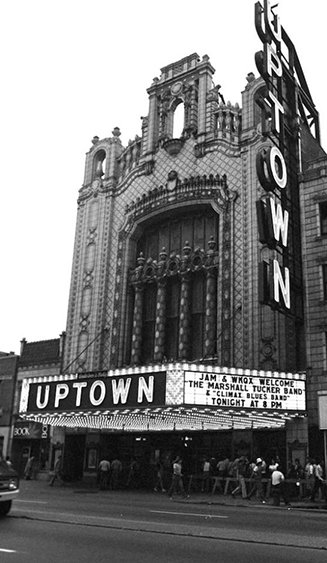
What I remember clearly is the absolute joy with which Bruce and the E Streeters played. You could see it in their faces. It practically radiated from them. They loved every second of what they were doing, and they never wanted to stop. They fed off the emotion of the audience, and the audience fed off the wonder of their musicianship. Bruce was almost manic—bouncing around stage like a pinball, but always in control of the music. At one point, he climbed a huge stack of amps and crouched there for a few seconds like a tiger ready to pounce. At another point, he leaped into the audience. He stopped a song in mid-note and shouted, “Will the young lady who has her teeth buried in my leg…please…DON’T STOP!” And the audience screamed with laughter!

Of course, I have to include the famous story of “Double Shot of My Baby’s Love”.

There were actually three famous Springsteen concerts at Notre Dame—1976, 1978 and 1981. As I recall from the 1978 show, Bruce told the following story:

At the 1976 show, in the course of that one concert, Bruce and the E Streeters played their entire catalog. But Bruce wanted to keep playing. So he shouted out to the audience, “Anybody got any requests?”

Some guy in the front row yelled, “Do you guys know ‘Double Shot of My Baby’s Love’?”

Now, any other famous musician probably would have said, “Screw you, pal” and gone on to do his own stuff. Instead, Bruce turned to his band and said, “What do you think? You guys want to try it?” So they huddled up onstage, figured out a rudimentary chord progression, and then crashed through the song like a good garage band. And the audience loved it!

Back to the 1978 show. Bruce concluded his story with the famous line, “This is the only place in the known universe where we play this song.” He then added, “So when we heard we were coming back here…We Rehearsed!”

And they swung into “Double Shot”, complete with fairly decent doo-wop choreography. And the Notre Dame audience roared with delight. It was nice to know that Bruce and the boys didn’t take themselves too seriously.

Near the end of the concert, Bruce again stopped a song in mid-note and screamed like a repentant sinner, “I’m just a prisoner…of rock & roll!” When the song ended, he collapsed on stage, flat on his back. Two of his roadies came onstage, wearing doctors’ lab coats. One put a stethoscope in his ears, listened to Bruce’s heartbeat, and shook his head in sorrow. Then the two roadies loaded the limp Bruce onto a stretcher and started to cart him offstage. The audience growled its disapproval. Clarence Clemons grabbed one of the roadies by his coat and dragged the whole lot of them back onstage. Of course, Bruce sprang up from the stretcher, resurrected, and the band thundered into yet another encore. When the show was finally over, the entire band literally had to drag Bruce offstage.

As I left the ACC, I wondered what time it was. I guessed it was a little after 11 PM. When I looked at my watch, however, I was stunned to see that it was almost 1 AM! Bruce Springsteen and the E Street Band had put on a 4 hour show! For me, the show had flown by in a heartbeat.

Maybe it was Springsteen’s blue-collar, “give ‘em their money’s worth” work ethic. Maybe it was the ferocious energy of the music and the crowd. Maybe it was Springsteen’s story-telling ability. Maybe it was Clarence Clemon’s saxophone, thundering like the Voice of God Himself. Maybe it was losing myself in the ecstasy of singing “Born to Run” with thousands of other Domers. Whatever the reason, it was the best damn concert I have ever attended. No other experience even comes close. The “90 minutes and done” pop stars of today should learn a lesson from The Boss. Play like there’s no tomorrow.
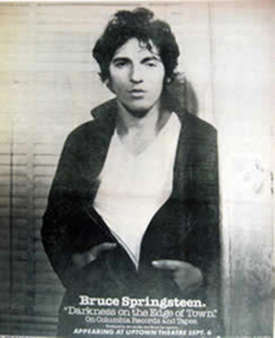
Jack Connolly

Springsteen Summer Tour 2012 Book Sale: Last Week!
Discover the Limited Edition Bruce Springsteen book, The Light in Darkness.
The Light In Darkness is a collector’s edition, we are almost sold out. Less than 225 copies remain. A great companion piece to The Promise box set, it focuses on the 1978 Darkness on The Edge of Town album and tour.
Read about the iconic concerts from fans who were there- the Agora, Winterland, Roxy, MSG, Capitol Theatre, Boston Music Hall, The Spectrum and over seventy more!

Share on TwitterShare on TumblrSubmit to StumbleUponDigg ThisSubmit to redditShare via email
Link to this post | Leave a comment

Bruce Springsteen South Burlington, Vermont and Montreal 1978 – Rock and Roll Memories

Jym Wilson

Bruce_Springsteen_vermont3Bruce_Springsteen_Vermont6Bruce_springsteen_vermont8

Bruce_Springsteen_Vermont2I’ve been listening to Bruce Springsteen’s music since the fall of 1975 when I joined a group of friends huddled around an AV department record player in the waiting room outside the high school guidance dept. offices to listen to Born to Run. To this day I can remember how his songs spoke to me and told me that there was a world outside of South Burlington, Vermont that I needed to get to ASAP.

Fast-forward to 1978. I had been listening to Springsteen closely for three years. A friend from New Jersey had introduced me to the first two records. Then Darkness came out and finally, he was coming to town.

Nov. 4, 1978 changed the way I knew music could be performed live. I was a 20-year-old part-time lab tech for The Burlington (Vt.) Free Press who liked to take photos, especially of rock concerts. I had been to a few shows at the University of Vermont’s Patrick Gymnasium but this one had the biggest anticipatory buzz that I’d ever encountered. I went to the side door the press was supposed to enter through, entirely certain that the prerequisite phone calls I had made and my press pass would get me in. But no. Someone at the door told us “No photos tonight. We can give you handout, (photos).” But our tickets would still be good. So one lens went down one boot, another in the other boot and the camera goes around the back and under the jacket. Through the door and to my seat. While waiting for the show to begin, a friend from high school appeared at my side. “I’m sitting with you,” she announced, dropping into my lap. Did I mention that mine was a fourth row seat?

Bruce_Springsteen_vermont7Bruce_Springsteen_Vermont5Bruce_Springsteen_vermont1Bruce_Springsteen_VermontIn most ways the show was a blur. I’d shot rock ‘n’ roll before but never anything like this. Bruce seemed to never stop moving. This was more like shooting a basketball game. This was way before auto-focus cameras, let alone digital cards with the capacity of hundreds of photos. At the same time, especially from such a close vantage point, it was as intimate as a small club. The guy was playing right at us. And then he jumped into the crowd and was carried hand-over-hand past me. Total mayhem. I’ve looked at the negatives. Nothing is sharp.

The band played on. Bruce took us down Thunder Road. Told stories about Growing Up. Sent us out into the Night. Danced until Quarter ‘till Three.

12_BRUCE-SPRINGSTEEN-Montreal-1
Four nights later I would have an entirely different Bruce experience at the Montreal Forum. This time I was going with four friends packed into a Mazda GLC. No credentials but still carrying a camera and this time color slide film. This one was for me. Bull shit my way past security about not having a press pass. Up, up, up to the seats known as the oxygen section. Lights down. Show starts. Work the color aspect of the show. One friend, actually a pretty crazy casual acquaintance, nudges me, chin tilts towards the stage and says,”let’s go.” And we’re off. Like Bruce jumping the gates at Graceland we will not be denied. Jumping barricades, pushing past security guards, making our way to the front. And then, there we are. Front row. Standing on chairs with dozens of screaming fans. This won’t last. I start shooting fast. Bruce is sitting on top of Roy’s piano. Bang. Danny, Steve and Clarence share a mike. Bang.  Bruce is climbing on top of the speakers and Clarence is tilting his horn up at him. Bang. Security is trying to clear out people who don’t belong, (me,) so it’s finish the roll and scoot so I don’t have to worry about getting tossed from the venue.

15_BRUCE-SPRINGSTEEN-Montreal-4Back to my seat. Enjoy the show.  Make a few more frames, taking advantage of the distance from the stage and the light.

Bruce_springsteen_montreal_78Since the ’78 tour I’ve photographed Bruce in concert one time, in 1999 in DC where I live now. The reunion tour. Great show, good photos. I’ve seen him without my cameras on quite a few other occasions and have a ticket to see him this September, 2012. He always sets a high bar. It’s always fun. Sometimes great. Sometimes transporting. But those ’78 shows changed the way I think about a lot of things. There’s a reason it’s called work. Success takes a lot of it. But if you love what you do sometimes you get to call it playing.

21_BRUCE-SPRINGSTEEN-Montreal

Jym Wilson is the senior photo editor for the Life section at USA TODAY. He lives in Washington DC and is very glad that one of Bruce’s 1978 concerts is available on DVD.

Share on TwitterShare on TumblrSubmit to StumbleUponDigg ThisSubmit to redditShare via email
Link to this post | Leave a comment

American Madness Becomes Darkness on The Edge of Town, And More.

Peter Watts, 1001 Albums You Must Hear Before You Die.

Thanks to a legal dispute with former manager Mike Appel, Springsteen had three years to bask in the stellar success of Born To Run, and to contemplate its follow-up. The resulting album, Darkness On The Edge Of Town, is a very different beast from its predecessor.

Springsteen_Clarence_.jpgLike Dylan before him, Springsteen withdrew from fame, moving to a farm in New Jersey so he could refocus on “life in the close confines of the small towns I grew up in.” He wanted to “write about the stress and tension of my father’s and mother’s life that came with the difficulties of trying to make ends meet.” (The album was originally to be called “American Madness,” after a Frank Capra movie about the Depression.) Fatherhood is one of the album’s themes (“Adam Raised A Cain”); struggle another (“Streets Of Fire,” “Factory”). These are songs about small-town frustration, sometimes sexual (“Candy’s Room”), sometimes social (“The Promised Land”).

Being Bruce, the angst is tempered with romance, particularly for the road — many songs involve driving, either for escape, for thrills, or both — but musically, this is a much more subdued affair than Born To Run. Clarence Clemons’ sax is rarely heard. Instead, Springsteen’s guitar and Roy Bittan’s measured, melancholic piano set the tone.

Uplifting, downbeat, bleak, and mad as hell, Darkness… is a spellbinding B-movie epic to follow the blockbuster of Born To Run.

Billboard, 1978.

On this long awaited effort, Springsteen eschews the tight dense sound of his acclaimed “Born To Run” to put the emphasis on his unique throaty singing style. While more sparse, the music is equally powerful, with the seven-man band behind Springsteen aided by the studio prowess of the producers along with Steve Van Zandt, Jimmy Iovine and Charles Plotkin. Springsteen’s lyrics continue their exploration of doom and adolescent angst as perceived is small New Jersey towns. This is the type of album that grows with each listening. Best cuts: “Adam Raised Cain,” “Factory,” “Prove It All Night,” “Darkness On The Edge Of Town.”

Paul Gambaccini, The Top 100 Rock ‘n’ Roll Albums of All Time, Harmony Books, 1987.

The delayed release of this album served notice that Springsteen, like Stevie Wonder, would not churn out product by any set schedule. Three years had passed since his previous work, Born to Run. In truth, the gap would have been shorter had he not been absorbed for the better part of the year in a legal scuffle with his former manager.

Also like Stevie Wonder, Springsteen did not merely record enough tracks to fill an album, but wrote many songs and selected numbers that would work together to produce the effect he desired. As with Stevie, some numbers were given to other artists, some retained for future albums, and several consigned to seemingly interminable limbo.

The effect Bruce and his producers did create with this album was intense and powerful, too strong for AM radio. Though several tracks were outstanding, none emerged as hit singles, “Prove It All Night” and “Badlands” peaking in the mid-third of the Hot 100. In 1987, Darkness on the Edge of Town was chosen by a panel of rock critics and music broadcasters as the #59 rock album of all time.

Bill Shapiro, Rock & Roll Review: A Guide to Good Rock on CD, 1991. 

Springsteen_Phoenix78_.jpgFrom the cover photos to the contents, it’s clear that this is the statement of a changed man; the boyish beliefs have been supplanted by hard won knowledge of the “real” world. (Obviously, reflection of two years of court battles with his first opportunistic manager which kept him out of the recording studio where he might have capitalized on the resounding acclamation accorded Born to Run.) Darkness on the Edge of Town echoes with the honed down gritiness of material that reflects more the reality than the romance of his beloved road. Highlighted by Bruce’s painfully potent vocal outpourings and his slashing guitar, it includes some of his strongest material, “Promised Land,” “Badlands,” “Adam Raised a Cain” and the title cut.

John Floyd, The All-Music Guide to Rock, 1995.

On this, the flip side of Born to Run, the idealism of those characters turns into stark terror once they hit adulthood. This is where Springsteen’s reputation as a working-class mouthpiece is based, but there’s much more here than that.

Gary Graff, Musichound Rock: The Essential Album Guide, 1996.

Coming after a long legal battle to extricate himself from a management deal, Darkness on the Edge of Town is indeed darker than Born to Run but not without redemptive hope in songs such as “Badlands” and “The Promised Land.” This may well be Springsteen’s best batch of songs, though the production is criminally flat.

Zagat Survey Music Guide – 1,000 Top Albums of All Time, 2003.

After a three-year absence imposed by legal battles with his former manager, Bruce returned with a blistering tour de force that really showed off his band. Though the production is a little rough, this cathartic record is tight and direct with some of his most resonant songs. Turning to the troubles of adulthood, it offered a brooding, stark version of life for his characters and yet hope shines through — “I believe in the promised land,” indeed.

Nevin Martell, VH1′s 100 Greatest Albums, 2003.

For anyone who might have thought Bruce Springsteen couldn’t sustain the creative arc and evolutionary path attained on his breakthrough album, Born to Run, Darkness on the Edge of Town proved them soundly wrong. With this astounding album, the New Jersey native took his bar-band boogie from the boardwalk to sold-out shows across the States and let everyone know that he would forever be “The Boss.”

Springsteen_capitol_.jpgWith a title that hints at the invisible corners in life that some can’t see into and others choose not to see at all, Darkness‘s lyrics represent a streetwise poeticism that is lofty without being highbrow and straightforward without being simplistic. From the badlands to the Promised Land with the wastelands and the heartland in between, Springsteen travels across the American dream as his cast of outsiders, dreamers, and quiet failures yearn for redemption, wisdom, and escape. On “Prove It All Night” he sings “Everybody’s got a hunger, a hunger they can’t resist / There’s so much that you want, you deserve much more than this,” epitomizing that basic sense of hope that his song writing of this period captured so eloquently. You got the sense when you listened to Springsteen that he wanted the same things as his tortured characters. So, when he sang “For all the shut down strangers and hot rod angels rumbling through this promised land / Tonight my baby and me, we’re gonna ride to the sea” in “Racing in the Street,” you knew that he too was gonna drive to the sea if it was the last thing he did. And you loved him for it.

Kicking up a notch the wall-of-sound aesthetic he had so successfully employed on his previous LP, Darkness on the Edge of Town takes out all the exuberance and joy from the mix and leaves the listener to contemplate the music’s sombre underbelly. This set of material ranks as one of the great examples American song writing and helped place Bruce Springsteen in the pantheon alongside the likes of Bob Dylan and Johnny Cash. And that is where he remains decades later, still standing as one of the most vital and influential rock ‘n’ roll artists of all time.

Darkness on the Edge of Town was voted the 68th greatest album of all time in a VH1 poll of over 700 musicians, songwriters, disc jockeys, radio programmers, and critics in 2003.

Springsteen Summer Tour 2012 Book Sale
Discover the Limited Edition Bruce Springsteen book, The Light in Darkness.
The Light In Darkness is a collector’s edition, we are almost sold out. Less than 225 copies remain. A great companion piece to The Promise box set, it focuses on the 1978 Darkness on The Edge of Town album and tour.
Read about the iconic concerts from fans who were there- the Agora, Winterland, Roxy, MSG, Capitol Theatre, Boston Music Hall, The Spectrum and over seventy more!

Share on TwitterShare on TumblrSubmit to StumbleUponDigg ThisSubmit to redditShare via email
Link to this post | Leave a comment

The Follow Up To Born to Run- Darkness On The Edge Of Town

Springsteen_badlands_.jpgThomas Nassiff: Absolute Punk

Following up Born To Run is something that seems like a monumental task, but given the pressure Bruce Springsteen experienced in earlier parts of his career, it probably didn’t seem like such a tall mountain to climb. When Springsteen released Born To Run, Columbia Records basically treated it as the 25-year-old’s last chance to write something that could make them some money. Luckily, Springsteen churned out one of the most fantastic records of all time, launching himself into stardom as a household name and a worldwide presence. Need further evidence as to his importance other than his extensive world touring after the record? On Oct. 27, 1975, both Time and Newsweek put Springsteen on their respective covers, with Time calling him “Rock’s New Sensation.”

The 1978 follow-up to Born To Run was Darkness On The Edge Of Town, a hard-hitting, ten-track album that showed Springsteen’s progression as a musician. This time, Springsteen had a different kind of pressure, and following up a phenomenal record might have been a relief compared to the negative energy associated with the Born To Run sessions when he was essentially writing to save his career. Springsteen and The E Street Band kick off Darkness in killer fashion, with the dominating “Badlands.” Springsteen has always made his mark on opening songs, and “Badlands” proves to still be a phenomenal live song. Clarence Clemons’ saxophone parts in the track are some of his E Street Band highlights, and the lyricism is predictably incredible: Poor men wanna be rich, rich men wanna be kings, And a king aint satisfied till he rules everything, I wanna go out tonight And show them what I’ve got.”

“Candy’s Room” gave fans something different from The Boss. Whereas most of Springsteen’s early work is full of weaving storytelling and drawn-out musicianship, “Candy’s Room” is an under-three-minute track that was one of Springsteen’s catchiest at the time – second to probably only “She’s The One.” The guitar solo in the bridge is to-the-point, and it’s about as rock’n'roll is anything can be. “Candy’s Room” also kicks off the most important chunk of Darkness, as it is followed by “Racing In The Street” and “The Promised Land.”

Springsteen_Prove_It_.jpg“Racing In The Street” is a piano-led ballad that got a good amount of attention in live shows following the release of Darkness but was put on the shelf by Springsteen until more recent tours. While alternate versions are better than the album version, the song still has great imagery to it and is one of the best low-key Springsteen tracks. Meanwhile, “The Promised Land” made its way to become one of the more celebrated tracks in The Boss’ catalog, as many diehards I’ve met proclaim it as their favorite song. The lyrics here are worth noting as well, as Springsteen smoothly delivers, “I’ve done my best to live the right way / I get up every morning and go to work each day / But your eyes go blind, and your blood runs cold / Sometimes I feel so weak I just wanna explode / Explode and tear this whole town apart / Take a knife and cut this pain from my heart / Find somebody itching for something to start.” Later in the song, we’re hit with another great pre chorus: “Gonna be a twister to blow everything down / That ain’t got the faith to stand its ground / Blow away the dreams that tear you apart / Blow away the dreams that break your heart / Blow away the lies that leave you nothing but lost and brokenhearted.”

In typical Springsteen fashion, the last two songs on the record deliver a shock as well, and the one-two punch of “Prove It All Night” and the title track just make you want to flip your record over and start again from the beginning. Springsteen’s flailing vocals in the title track provide one of my personal favorite moments from The Boss, and the guitar line in the track is tough to beat.

Springsteen_Cobo_Detroit_.jpgAs interesting as Darkness is as a whole, it’s also extremely interesting to look back at the material that didn’t end up being used for the record. In order to keep the theme of the album intact, Springsteen scratched some songs that actually went on to become well-known singles for other artists – “Because The Night” for Patti Smith, “Fire” for Robert Gordon, and “This Little Girl” for Gary U.S. Bonds are a few examples. Still other songs would wind up on the double-disc release of The River.

Darkness On The Edge Of Town would be the best record for a lot of artists, but not for Bruce Springsteen. While the record isn’t as good as Born To Run, it was extremely important for the group that the record wasn’t overlooked. It certainly led to some different times with double-disc release of The River, which is why the first four Springsteen records are where I’d recommend any prospective fan to begin their journey into The Boss’ life work.

Share on TwitterShare on TumblrSubmit to StumbleUponDigg ThisSubmit to redditShare via email
Link to this post | Leave a comment

Darkness on the Edge of Town at 30+

Springsteen_Badlands_.jpgJeff Vaca

“Occasionally, a record appears that changes fundamentally the way we hear rock & roll, the way it’s recorded, the way it’s played. Such records – Jimi Hendrix’ Are You Experienced, Bob Dylan’s “Like a Rolling Stone,” Van Morrison’s Astral Weeks, Who’s Next, The Band – force response, both from the musical community and the audience. To me, these are the records justifiably called classics, and I have no doubt that Bruce Springsteen’s Darkness on the Edge of Town will someday fit as naturally within that list as the Rolling Stones’ “(I Can’t Get No) Satisfaction” or Sly and the Family Stone’s “Dance to the Music.”

So began Dave Marsh’s Rolling Stone magazine review of Darkness on the Edge of Town, published in July of 1978. Thirty years later, we are armed with the knowledge that Marsh has been Springsteen’s greatest critical champion, his biographer, and his friend. But does that necessarily render his 1978 opinion invalid? Even then, Marsh had to know the gamble he was taking. In 1978 he was already known as a close friend of Jon Landau, the rock critic turned producer who, over time, would become Springsteen’s manager and advisor, and in all likelihood the single most important person to the development of his career. In fact, Marsh and Landau had been together at the 1974 Springsteen show which became legendary because of what Landau wrote about it: “I saw rock and roll future, and its name is Bruce Springsteen.” In effect, Marsh was placing every ounce of his credibility on the chopping block – had the album proven to be a stiff, few people would have taken him seriously again.

springsteen_fox_theatre_atlanta_.jpgMarsh needn’t have worried. In 2008, the relevant question is not “Is Darkness on the Edge of Town a great album?,” but rather “How great an album is Darkness on the Edge of Town?” And the answer is that Marsh was correct – Darkness today stands as a landmark of rock history, as well as the most important album that Bruce Springsteen has made. And here’s where I take a deep breath, gaze over the precipice, and jump – it is his best album.

There’s a Pete Townshend quote about Darkness that I remember, because it is a pretty good summation of what the album is about. If I remember correctly, it went something along the lines of “what Bruce Springsteen is singing about on his new album, that’s not fun – that’s f*cking triumph, man.” But what Townshend said is only partly true, because while triumph is a part of the story, it’s not the only part. When the last notes of the last song are played out, you’re still not certain how things are going to end– the protagonist is defiant, but could very well be trapped at the same time, with a final chapter left to be written at some point in the future.

The tone is set at the very beginning, in the first words of “Badlands”:

Lights out tonight
trouble in the heartland
Got a head-on collision
smashin’ in my guts, man
I’m caught in a cross fire
that I don’t understand
But there’s one thing I know for sure girl
I don’t give a damn
For the same old played out scenes
I don’t give a damn
For just the in betweens
Honey, I want the heart, I want the soul
I want control right now

“I want the heart, I want the soul, I want control right now.” And there you have it, in a nutshell. From that point on, the album depicts a life’s journey, and the battles – simple or otherwise – which must be fought, sometimes on a daily basis, to keep from “dying little by little, piece by piece,” as he later sings in “Racing in the Street.” As the album progresses, each individual song raises the ante, making clear just how high the stakes are. The music’s intensity is like nothing Springsteen had previously recorded (even Born to Run, great as that album was), and the lyrics match that intensity, verse by verse and word for word:

In the darkness of your room
your mother calls you by your true name
You remember the faces, the places, the names
You know it’s never over it’s relentless as the rain

Adam Raised A Cain

Nothing is forgotten or forgiven,
when it’s your last time around,
I got stuff running ’round my head
That I just can’t live down

“Something in the Night” (a particular favorite of mine, for what should be obvious reasons)

I’ve done my best to live the right way
I get up every morning and go to work each day
But your eyes go blind and your blood runs cold
Sometimes I feel so weak I just want to explode
Explode and tear this whole town apart
Take a knife and cut this pain from my heart
Find somebody itching for something to start

The Promised Land

I’m wandering, a loser down these tracks
I’m dying, but girl I can’t go back
‘Cause in the darkness I hear somebody call my name
And when you realize how they tricked you this time
And it’s all lies but I’m strung out on the wire
In these streets of fire

Streets of Fire

Everybody’s got a hunger, a hunger they can’t resist,
There’s so much that you want, you deserve much more than this,
But if dreams came true, oh, wouldn’t that be nice,
But this ain’t no dream we’re living through tonight,
Girl, you want it, you take it, you pay the price

“Prove It All Night”

And, finally:

Tonight I’ll be on that hill ’cause I can’t stop
I’ll be on that hill with everything I got
Lives on the line where dreams are found and lost
I’ll be there on time and I’ll pay the cost
For wanting things that can only be found
In the darkness on the edge of town

Darkness on the Edge of Town

Springsteen_New_Haven1_.jpgBy this point, it should be clear that the journey is not over. But there is hope, there is faith, and there is the drive to sustain both through the long days and nights yet to come – in the battle against what critic Greil Marcus would later call “a long, uncertain fight against cynicism.”

It would be criminal to praise Springsteen’s songwriting on this album without also giving due praise to the band which gives the songs their life. Simply put, the band is amazing. There are enough great musical moments on Darkness to last most bands a lifetime, whether it be the late Danny Federici’s heartbreaking organ on “Racing in the Street,” Roy Bittan’s beautiful piano introduction to “Something in the Night,” or the general brilliance of the rhythm section throughout. Though the Big Man is featured less on this album than on others, when his time comes on “The Promised Land” and “Prove It All Night,” he is there to deliver. And while the production by Springsteen, Landau and Steve Van Zandt has been criticized by some over the years for being too muddy, I think that’s unfair – the instrumentation throughout is clear as a bell, and the album has a sound that is entirely appropriate to the depth and gravitas of the material.

But in the end, what takes Darkness from being simply outstanding to that rare level of greatness which few albums reach are the four songs that serve as the album’s bookends – on Side 1, “Badlands” and “Racing in the Street;” on Side 2, “The Promised Land” and “Darkness on the Edge of Town.” All four are among the best songs Springsteen has written, and it is no accident that two of them – “Badlands” and “The Promised Land” – remain, thirty years later, the moral and emotional centerpiece of his live concerts.

Dave Marsh wrote that the promise of Bruce Springsteen was “That someday, Bruce Springsteen would make rock & roll that would shake men’s souls and make them question the direction of their lives. That would do, in short, all the marvelous things rock had always promised to do.” Since 1978, Springsteen has made good records, he has made excellent records, and he has made great records. But in terms of the impact that Marsh described, Springsteen has never topped Darkness on the Edge of Town. And for that reason, it is his best album.


Share on TwitterShare on TumblrSubmit to StumbleUponDigg ThisSubmit to redditShare via email
Link to this post | Leave a comment

Greetings From Asbury Park – 2009

Steven B. Rogers

I am presently sitting on a bench in front of Madam Marie’s small shop on the Asbury Park boardwalk from which she has for years dispensed Tarot readings, fortunes and advice. It is a Sunday afternoon. The place is closed; I guess she is taking the day off. Bruce Springsteen, who got his start in this “city by the sea,” turned 60 years old this past week! Who would have thought it possible? And the guy keeps rocking! So I guess there is hope for all of us who are quickly approaching that benchmark in our own lives.

springsteen_cover_.jpgI discovered Springsteen in the summer of 1978, when I was working in a record store in College Park, Maryland; a second job while I was teaching and completing my doctoral program at the University of Maryland. Darkness on the Edge of Town, his fourth album, had just been released and each afternoon, after punching the time-clock, I slid the black vinyl disk (remember them?) out of its cardboard sleeve, put it on the turntable behind the cash register, and set the needle down on the last track on the A side – “Racing in the Streets.” This song in particular, but the entire album really, captured my imagination. Who was this thin, scruffy rocker from the Jersey Shore, and why did his music and lyrics resonate with a guy who had grown up in the white bread suburbs of Chicago? But then again, in the late 60s and early 70s, my generation, even those of us who had led relatively sheltered lives, had begun to question that which we always assumed to be true. What was this so-called “American dream,” and why was it out of reach to a growing number of Americans? I recognized these very same questions in many of Springsteen’s lyrics and I began to look to his songs for the answers I had not yet discovered for myself.

Springsteen_Promised-Land_.jpgAlthough Bruce Springsteen and the E Street Band had already been on the music scene for a few years, it was Darkness on the Edge of Town that caught my ear . . . my attention . . . my imagination. It would be years before I would more fully appreciate his earlier songs. Darkness on the Edge of Town eclipsed all that went before. Not even Born to Run, recorded three years earlier, had resonated with me as it had others who saw Springsteen as “the new Dylan,” the new poet of blue collar America. But now I listened to his music and his lyrics . . . stories about real people . . . people I might have met somewhere along the way. Springsteen and the band were searching for a way out . . . a last chance power drive to find the promised land. I was not quite there yet, I guess, but Darkness on the Edge of Town changed all of that. “Occasionally a record appears that changes fundamentally the way we hear rock and roll, the way it’s recorded, the way it’s played,” wrote Dave Marsh in a review of the album appearing in a July 1978 issue of Rolling Stone. “One ought to be wary of making such claims, but in this case, they’re justified at every level.” Marsh hit the nail squarely on the head. This record was nothing less than a commentary on the veracity of the American dream. It clicked with me . . . finally!
Now, over thirty years later, I have spent this weekend on the Jersey Shore where I have been participating in a symposium co-sponsored by Virginia Tech and Penn State at which over 200 educators, journalists, historians, musicians and musicologists from more than thirty states and nine foreign countries have assembled to celebrate Springsteen’s life and music on the occasion of his having reached geezerdom. This is a follow-up to the original symposium held back in September 2005. Having spoken on the subject of Woody Guthrie and John Steinbeck and their influences on Springsteen’s social conscience, this time around I was invited to participate in a panel where I spoke to the influences of Jack Kerouac on Springsteen as a narrative poet while also chairing another session exploring Springsteen’s sense of place; a fascinating topic given the fact that we were meeting at the epicenter of his life and music.

Springsteen_Streets_.jpg
It was not all academic exchange, however. There was a tribute to Danny Federici, the former E Street Band organist, led by Bob Santelli of the Grammy Museum and featuring Vini Lopez, Springsteen’s original drummer, and Tinker West, a former Springsteen manager and sound engineer. And how could there be any celebration of, or tribute to Springsteen, without music? Lots of music, played where he emerged as a dominant voice of the Jersey Shore Sound . . . an interesting synthesis of early rock & roll and rhythm and blues with not a little doo wop thrown in for good measure. Although the Boss did not materialize in our midst – he was up the road in New York City talking with Elvis Costello at the Apollo Theater and preparing for a series of stadium dates at the Meadowlands – several musicians who have played with Springsteen over the years were there: Joe Grushecky and the House Rockers out of Pittsburgh; Lisa Lowell, who sings with the Seeger Sessions Band; Joe d’Urso and Joe Rapolla, who co-host the “Songwriters by the Sea” series, Jen Chapin (the late Harry Chapin’s daughter) with her bassist husband Stefan Crump, and Scott Kempner of Del-Lords and Dictators fame, all of whom covered some of Springsteen’s songs. There were thoughtful and meditative acoustic performances, including one featuring Grushecky, who discussed his collaboration with Springsteen over the years while premiering an acoustic version of “Code of Silence,” as well as loud, hell-bent rock and blues performed by Grushecky, Gary “U.S.” Bonds, gasoline rocker Willie Nile, and others at the Stone Pony, that seminal Jersey Shore club just a couple of blocks south of where I am sitting here on the boardwalk and where Springsteen played early in his career and where he still shows up from time to time to jam with his friends. We were also treated to an evening reception at a gallery here on the Asbury Park boardwalk featuring a photo exhibit by Danny Clinch, Springsteen’s photographer. Later that evening Danny showed up at The Stone Pony where Joe Grushecky coaxed him to the stage to belt out a couple of tunes on the harmonica with the Houserockers.

asbury_park_.jpgAsbury Park has changed a great deal since I first came here 45 years ago. It was the summer of the New York World’s Fair on Flushing Meadow and my family and I spent a couple of days at the shore before heading home to Wisconsin. Back then it was a thriving beach resort with its boardwalk anchored on either end by the Convention Center and the Casino and its brightly lit amusement rides, concession stands and arcades. All this changed on July 4, 1970 when racial tensions culminated in riots that left much of the area destroyed or abandoned, and to this day it has not regained its glory days of the past. The Convention Center has managed to rise from the ashes, the linchpin for efforts to revitalized the area. The Casino, or what is left of it, remains a skeletal reminder that there is still much work to do.

This weekend I have wandered around the places and among the people Springsteen has been writing and singing about since his earliest recordings; the Jersey Shore is very much his native ground. A few miles up the shore from Asbury Park is Long Branch. In 1974, when Springsteen was on the cusp of success, he left his hometown of Freehold, west of here, and settled into a small cottage at 7½ West End Court, just a short walk from the beach. Here, from May 1974 until late 1975, Springsteen lived and wrote the eight songs that would be his breakout album, Born to Run. I was able to find the place and counted myself lucky. Back in July, Bob Dylan, who was also looking for the Springsteen cottage, was stopped by two very young Long Branch police officers and briefly detained because he could not provide any identification. When success finally came, Springsteen was able to move out of this tiny cottage and it would have been easy to never look back. Yet regardless of the fame and fortune attendant his career over the past four decades, Springsteen has never lost sight of his roots and the family, friends and places who made him what he is today. In his song “Youngstown,” he chides those who have grown “rich enough to forget my name.” Springsteen has never forgotten his native ground and the people who inhabit it. Walk around Asbury Park. You will hear his songs everywhere you look.


Share on TwitterShare on TumblrSubmit to StumbleUponDigg ThisSubmit to redditShare via email
Link to this post | Leave a comment

Darkness on the Edge of Town: Wikipedia

Wikipedia

Springsteen_Clarence_.jpgDarkness on the Edge of Town est un album de Bruce Springsteen sortie en 1978 et produit par Jon Landau, Bruce Springsteen et Steven van Zandt.

Springsteen_Darkness_1978_.jpgSuite à Born to Run le Boss dédie cet album à certains de ses proches souffrant pour mener une vie décente et productive. L’ambiance est sombre, le ton est percutant et saisissant dès la pochette, les textes marquants et travaillés, Springsteen n’hésitant pas à crier comme pour exprimer son désir de révolte et de soutien. Le Boss est très heureux de cet album, peut-il en être autrement quand on veut rendre hommage à ceux qu’on aime et qu’on découvre en situation difficile ? Toutefois, il est erroné de penser que ce disque induit la déprime : bien que contrastant légèrement avec l’air enlevé de Born to Run, il se dégage de cette introspection, de cette quête de vérité spirituelle, un héroïsme, une bravoure. Certains disent que c’est l’album dont Springsteen peut être le plus fier même si ce n’est pas le plus connu comparé à Born to Run et à Born in the U.S.A. On retrouve aussi des références à ses valeurs catholiques, à l’amour ; dans l’ensemble Bruce Springsteen tente d’insuffler une énergie dans un contexte délicat, un moyen de gérer l’espoir même si cela n’est pas facile : c’est là l’effort à faire. On sent qu’il veut servir de porte-parole, et faciliter l’identification des gens qui l’écoutent en quête de réconfort.

Springsteen_leather_jacket_.jpgMusicalement, les cuivres sont plus rares, la guitare est plus présente, le son des compositions rend le son plus proche du rock  et le tempo plus lent, méditatif et nostalgique, en harmonie avec le thème abordé.

C’est à cette période que Steve Van Zandt rejoint définitivement le E Street Band.

Share on TwitterShare on TumblrSubmit to StumbleUponDigg ThisSubmit to redditShare via email
Link to this post | Leave a comment