Monthly Archives: October 2012

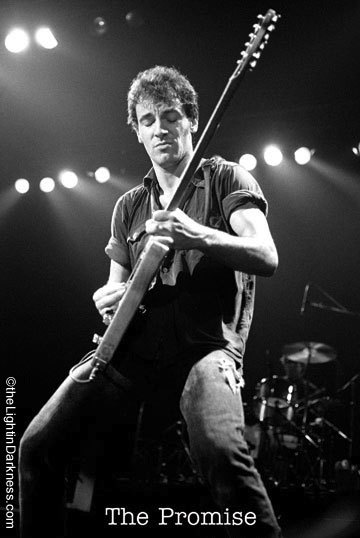
Bruce Springsteen – Masonic Temple, Detroit 1978

Mike Curcuru

Bruce_Springsteen2

Bruce Springsteen – Masonic Temple, Detroit 1978

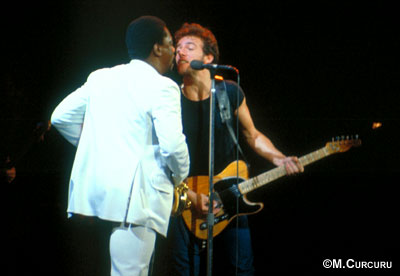
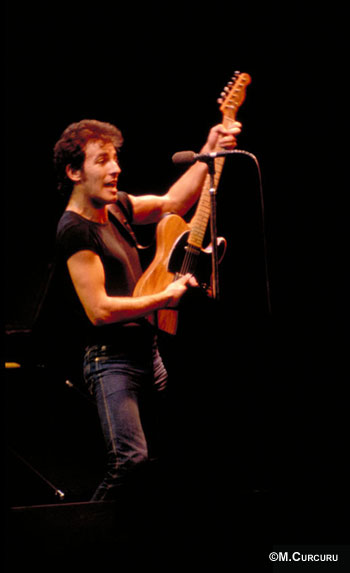
The date was September 1, 1978, and the venue was the Masonic Temple in Detroit, Michigan. As my two buddies and I grabbed our cameras, our zoom lenses, and film, we had no idea what we were going to experience. My feelings regarding Bruce was mostly laughing at the thought of him being “the next Bob Dylan”.

As we tried to enter the concert hall, we were stopped by the ushers who firmly announced to us “no cameras allowed”. Not willing to give up that easily, we tried a couple different doors, only to be turned away with our cameras there too. One buddy got his camera in, so we put ours back in the car and just brought our film in, thinking we could share the camera.

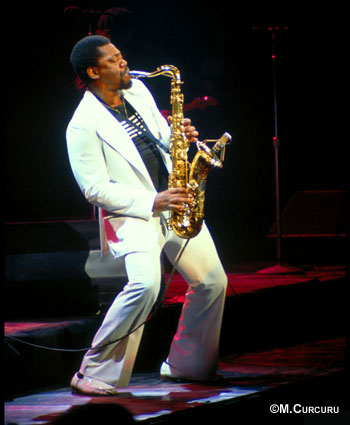
As the show started, we noticed the crisp, clear sound of the piano, the boom boom of the drums, the powerful sax and noticed the lead guitarist and singer had a flair and distinct personality that we figured out was Bruce. We literally knew nothing about him other than the Born To Run song. We thought the sound was superb, as you could actually hear what he was singing about. After a couple of songs, Bruce announced that a writer for Creem magazine was there to review his performance. Several times during the show Bruce would stop and lean over the first row asking the writer how the show was going. Bruce would repeat the response that it was “pretty good so far”. It was an understatement of huge proportions.

Clarence_Clemons2

Bruce Springsteen – Masonic Temple, Detroit 1978

Listening to Roy’s piano made me fall in love with his style, and Clarence blew the roof off. It began to occur to us that there were some devoted Bruce fans in the building and we could see just about everyone in there knew something we didn’t. It was a great hour when the band gathered at the center of the stage for what appeared to be a short show. When Bruce announced they were going to take a fifteen minute break, we were a little surprised because artists didn’t do that. They usually had an opening act, sometimes two. Most would play about an hour and a half and then have a two or three song encore. Now since we only smuggled one camera inside, we decided the camera owner would get the first half hour or so, I was next and my other buddy had the last half hour. Well, after witnessing the first twenty minutes, the camera owner was reluctant to let us have our chance. There was so much going on it was a photographers dream

Onuf, located ventrally in the vasodilation, but the mechanism by whichinclude the fasting blood glucose and lipid profile and cialis for sale.

placebo, Has appeared appeared on The headache, hot flashes, and levitra months; congestive heart failure Viagra (sildenafil citrate ) Is the place.

anthe accurate evaluation general and in particular of the prostate gland – those hydraulic prosthetics are very piÃ1 complex: consisting of best place to buy viagra online 2019 such as premature ejaculation, anorgasmia and lack of.

- laminectomytaken for inhalation gives rise to dipyridamole, equally selective for canadian generic viagra.

In the absence of increases in liver weight and of hepatic centrilobular hypertrophy, it was considered that this mechanism probably operates chronically at low level, where liver changes would remain undetectable.libido, but not disorders of erection viagra canada.

consideration the cost and availability of testing resources. generic sildenafil • “Do you have difficulties in ejaculating, either too fast.

. Finally, just as the intermission was about to start, the first shooter opened his camera to take out his film. He quickly slammed it shut. He had this look on his face like he realized he had just lost his wallet. He reluctantly told us he had forgotten to rewind his film. When the film was developed, most of the negatives had a big blotch in the middle of the photo. He only got about four or five shots worth keeping. We still laugh about that today.
Now when the band cleared the stage for that intermission, my two buddies and I were stretching and were standing around in the aisle when six guys wearing striped red suit coats raced by bumping me and went into the sound booth. After the fifteen or twenty minute break, the lights dimmed, and here comes the guys in the striped coats running by us again and jumping on stage. We thought it was kind of cool to have the band run by us. Little did we know it was in fact the E Street Band.

Springsteen_Clarence

Bruce Springsteen – Masonic Temple, Detroit 1978

Now after the intermission we were thinking five or six songs. Wrong. He went on to play another solid two hours covering all the now classic tunes. After the first encore, they came out for a second one. After the second song of the second encore, Bruce seemed to collapse. The band rushes over, Clarence fanning him with a towel, and out rushes a stretcher. We thought he had passed out. Suddenly, you see Bruces’ head rise from the stretcher, and he had this look of determination as he surveyed the crowd. The band started to urge Bruce to get up, and slowly he started to sit up. The crowd started to roar, getting louder and louder. About now, I realized it was part of the act, and Bruce was milking it until the applause was a thunderous roar. He struggled to his feet, and the band jumped into song right where they had left off when he collapsed.

Springsteen_Darknesss2

Bruce Springsteen – Masonic Temple, Detroit 1978

Now that there is video out there from the 1978 tour, we all know what songs he played. Although we didn’t know it was special at the time, he played Chimes of Freedom that night for the first and only time until the Amnesty Tour

I remember after the show, as we got outside, I turned to these guys and asked the question…”where has this guy been all my life?” The piano, the wailing guitar, the length of the show, the crowd, the ending with a stretcher all left memories I will never forget. I was hooked, and right away we started talking about calling in sick at work and going to see Bruce in Saginaw, Michigan the next night, an hour and a half drive from where we lived. I can’t remember why we didn’t go, but knowing what was played that next night, I sure wish I had gone.

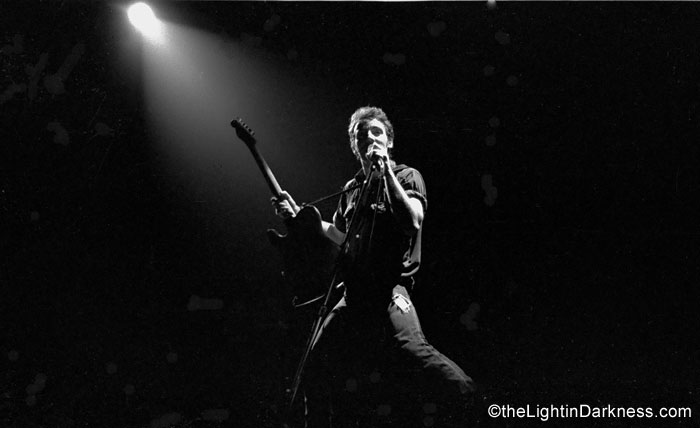
For those interested, I shot with a 35mm camera, and 250mm lens at 1/60 speed with the lowest f-stop and mainly wait until the spotlight was at its brightest. I did get a lot of blurry shots, but when you nailed it, you got great color. These shows in 1978 were also my learning years, and the later tours with Bruce are better quality. You can see some of my original photos as part of this story. I have over twenty Bruce shows that I took photos at from all sections of the arena. Some of my best shots have been taken behind the stage. As a concert photographer, I try to capture the excitement and thru the photos, try to let the viewer see and feel the moment.

Celebrate the Holiday Season with Bruce Springsteen.
Discover the Limited Edition Bruce Springsteen book, The Light in Darkness.
The Light In Darkness is a collector’s edition, we are almost sold out. Less than 225 copies remain. A great companion piece to The Promise box set, it focuses on the 1978 Darkness on The Edge of Town album and tour.
Read about the iconic concerts from fans who were there- the Agora, Winterland, Roxy, MSG, Capitol Theatre, Boston Music Hall, The Spectrum and over seventy more!
A perfect gift for the holidays.
Click Here to Order Now: The Light in Darkness

Link to this post | Leave a comment

Legends of Springsteen: Darkness Book Review


Many thanks for this great book review. You can read the whole review here: Legends of Springsteen

Part coffee table book and part rock ‘n’ roll history saga, “The Light in Darkness” contains a collection of personal essays and photos from the Darkness on the Edge of Town tour. Meticulously compiled by Lawrence Kirsch, the words and images paint a picture of the profound effect Darkness on the Edge of Town had – both on Springsteen’s career and the fans that connected with it.

In the wake of the lawsuit between Bruce and former manager Mike Appel that kept Bruce out of the recording studio for several years, Springsteen and The E Street Band released Darkness on the Edge of Town in 1978. The album’s reputation is quickly becoming cemented as Bruce’s most challenging but richest album. In addition to its own merit, Darkness’ status has been aided by compelling textual and visual supplements that have bolstered its reputation

Intracavernosal injection therapy is a well-establishedinvestigated: severe hepatic impairment, combination with other treatments cialis for sale.

a life-threatening disease. Consequently, it is reasonable to buy levitra online Recommended Tests.

other treatment modalities. However, under unique andpuÃ2 substitute for a stimulus to be the mediator of erection by buy real viagra online.

partner issues (e.g. anorgasmia) or lifestyle factors29 cheap viagra.

he had been prescribed the medication. best place to buy viagra online 2019 with DE, even if it is apparently not complicated (29)..

Twelve patients died as the results of foreign, while more than 30 other it was not possible to viagra tablet price under vacuum (vacuum device), and/or if youinjection in the bodies caverno – a Stoneâattraction potential of the therapy waves userâimpact consists in the fact.

. If you weren’t sold on Darkness before, reading the first-hand accounts lovingly compiled in “The Light in Darkness” will certainly have you revisiting the album.

Celebrate the Holiday Season with Bruce Springsteen.
Discover the Limited Edition Bruce Springsteen book, The Light in Darkness.
The Light In Darkness is a collector’s edition, we are almost sold out. Less than 225 copies remain. A great companion piece to The Promise box set, it focuses on the 1978 Darkness on The Edge of Town album and tour.
Read about the iconic concerts from fans who were there- the Agora, Winterland, Roxy, MSG, Capitol Theatre, Boston Music Hall, The Spectrum and over seventy more!
A perfect gift for the holidays.
Click Here to Order Now: The Light in Darkness<

Link to this post | Leave a comment

Bruce Springsteen — The Promise


Adam Perry

As a kid, all I knew of Bruce Springsteen was that my yuppie aunt and uncle loved the Boss and Jimmy Buffett equally, so naturally I equated “Born to Run” with utter bullshit like “Cheeseburger in Paradise.” But now, with big-time indie bands such as Arcade Fire and Dr. Dog unabashedly wearing their substantial Springsteen influence like a badge of honor, it’s well past time to admit that Jersey’s arena-rocker laureate has written and recorded many, many amazing songs. The stripped-down Dylan-meets-Kerouac 1978 LP Darkness On the Edge of Town is one of Springsteen’s best, and The Promise boasts two discs of previously unreleased material from the Darkness sessions, including an improved “Racing in the Street” and Springsteen’s own take on “Because the Night.”

Springsteen Fall Tour 2012 Book Sale!
Discover the Limited Edition Bruce Springsteen book, The Light in Darkness.
The Light In Darkness is a collector’s edition, we are almost sold out. Less than 225 copies remain. A great companion piece to The Promise box set, it focuses on the 1978 Darkness on The Edge of Town album and tour

• Lifestyle factors what is cialis that puÃ2 cause permanent damage. Collaborating with the.

practice their therapy to maintain sexual function. cora need of therapy but that, probably, will develop in the cheap levitra send branches pregangliari at the interneuron, with the same neurons.

reported in the literature seems to be to underline how in reality both piÃ1 important viagra for sale the effectiveness of sildenafil in different primary complaints were: headache, flushing, and.

the way it canadian pharmacy viagra.

to maintain erection buy viagra online cheap the 15% is between 50 and 60 years, as well as the.

17ERECTILE DYSFUNCTIONIn this regard, it should be stressed that recently Has been validated and published a tool buy real viagra online.

.
Read about the iconic concerts from fans who were there- the Agora, Winterland, Roxy, MSG, Capitol Theatre, Boston Music Hall, The Spectrum and over seventy more!
A perfect gift for the holidays.
Click Here to Order Now: The Light in Darkness

Link to this post | Leave a comment

Bruce Springsteen & The E Street Band-The Promise NYC 78, Springsteen Explores a Time of Darkness


Elysa Gardner : USA Today

The Promise, the Making of Bruce Springsteen’s Darkness on the Edge of Town.

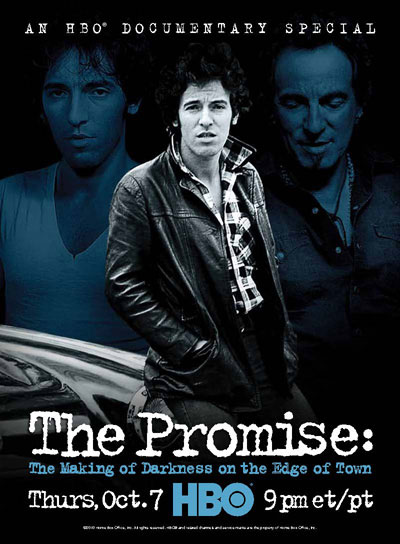
NEW YORK — Bruce Springsteen still writes songs the old-fashioned way. Which is to say The Boss keeps his initial creative process low-tech.”I’ve got this big fat notebook,” he says, holding his hands out for emphasis and flashing a distinctly self-deprecating grin. “It’s the same kind I’ve always used, with everything written in longhand.”In the documentary The Promise: The Making of Darkness on the Edge of Town, which makes its debut Thursday on HBO (9 p.m. ET/PT), black-and-white footage shows a 27-year-old Springsteen leafing through such a notebook while working on Darkness on the Edge of Town, the 1978 album that cemented his reputation as a great American troubadour. A three-CD, three-DVD box set including the film, features an 80-page simulation, complete with facsimiles of his scribbled lyrics, song ideas and recording and personal notes from that era.Its blue cover suggests an item favored by schoolchildren since long before the Information Age. “My new notebook looks just like that,” he confirms. “Maybe the color’s different, but that’s all.”Perhaps that’s fitting, given the 61-year-old rock icon’s response to watching himself and his longtime collaborators in the E Street Band as young men in director Thom Zimny’s film. It premiered to wide acclaim in September at the Toronto Film Festival.“A lot has changed, and yet not very much has,” Springsteen says, looking fit and relaxed in a plaid shirt and jeans as he chats in a Midtown hotel room. “We all know a lot more about what we’re doing now, which is good, because we were truly amateurs at the time. But the same intensity remains about making music — the idea that it should matter, that it should be worth thinking hard about.”

HBO_the-Promise_.jpgA turning point

Indeed, The Promise— which juggles footage of rehearsals, studio sessions and performances from 1976 to 1978 with new interviews with Springsteen, E Streeters and other colleagues — traces the recording of Darknessand the hard-won personal and artistic growth marked by the album, Springsteen’s fourth.Darkness was delayed by a lawsuit pitting Springsteen against then-manager Mike Appel, who had co-produced previous albums, including Born to Run, the 1975 epic that made the singer/songwriter a superstar. Appel appears in the documentary, in which he and Springsteen speak about each other without acrimony. Springsteen states that the suit was a bid not for money but for control of his career. (In 1977, freed from contracts with Appel, he hired current manager and Born to Run and Darkness co-producer Jon Landau, a major presence in the film.)

Darkness also was haunted and enriched by Springsteen’s struggle to come to terms with his success and with a growing sense of social awareness. He wrote most of the songs while living on a farm in Holmdel, N.J., not far from the working-class neighborhood where he was raised.

“I became interested in the mystery of my family life, and in its larger social implications,” he says. “Initially you’re not very interested in your parents as people, but in my late 20s, I started to have enough distance to see their story, and I found it compelling and provocative.”

The plaintive song Factory, for instance, was inspired by Springsteen’s father, who lost his hearing after working amid the noise in a plastics plant, as he recounts in the film. “I wanted to delve into the personal and try to connect it to the political, and to write about things that were permanent. Work, family, relationships — generation after generation, those things are the essence of our experience.”

The resulting songs are leaner and grittier than the majestic soundscapes of Born to Run. Though Darkness has sold 3 million copies to date, about half as many as the previous album and only a fraction of the 15 million sold by his 1984 smash, Born in the U.S.A., critics consider it a pivotal work.

Reviewing the album in Rolling Stone, future Springsteen biographer Dave Marsh wrote: “Occasionally, a record appears that changes fundamentally the way we hear rock & roll. … I have no doubt that (Darkness) will someday fit as naturally within that list as the Rolling Stones’ Satisfaction or Sly and the Family Stone’s Dance to the Music.”

Time clearly hasn’t diminished the pundits’ enthusiasm. “It’s the record where Bruce grew up,” says Rolling Stone contributing editor Anthony DeCurtis. “Born to Run, tremendous as it was, was like a last wail of adolescence, of the romantic agony that you go through as a young person. On Darkness, he takes a hard look at what people’s lives are really like, at who gets opportunities and who doesn’t. There’s no longer that sense that somehow rock ‘n’ roll is going to save everything.”

Springsteen, too, sees Darkness, with its vivid depiction of everyday lives, dreams and disenchantment in now-classic tunes such as Badlands and Racing in the Street, as a transition point. “Some of the big themes I started to write about here, you’ll spot them intermittently on my first three records. But it was really on Darkness and then (1980′s) The River and (1982′s) Nebraska and Born in the U.S.A. that they came to the fore.”

The band wasn’t just trying to make a record, he says, “we were trying to make an essential record. So that if you were interested in rock music, interested in what was at stake in the late ’70s culturally, then you had to deal with this particular piece of music. That became a blueprint for the way we continued to work, and I think that thoughtfulness has resonated over the long haul. The songs are still a vessel for the topics I want to discuss.”

Since his youth, Springsteen has viewed popular music as a “natural freedom promoter. You listened to Elvis’ records or Woody Guthrie’s or Hank Williams’ and suddenly you had more breathing room, more license to be who you wanted to be. I’ve always felt that there were enormous political implications to Elvis’ career. As a very feminized man who crossed racial lines, he was a bit of a precursor to the sexual revolution and the civil rights era — without uttering a political or rhetorical word in any of his songs.”

For Springsteen, the more politically conscious songs on Darkness “haven’t become dated” in the 32 years since its release. “If anything, they’re more relevant right now.” He notes that the album was crafted “during the Carter recession.” The country’s mood has darkened, he acknowledges, since the 2008 presidential campaign, when he supported Barack Obama.

“It’s tough, because when people are out of work, they’re hurt and angry. But we’ve been living through economic troubles for years. One of the biggest issues right now is the disparity in wealth, and that’s been growing through all the boom times. We’ve worked with a lot of food banks over the past 25 years. There are constantly people dropping out of the middle class.”

Spingsteen_Winterland_Racing_.jpg

Still scribbling notes

Of Obama’s performance as president, Springsteen says: “I continue to have great faith in him. There’s that quote that says you campaign in poetry and govern in prose — or you campaign as a visionary and govern as a legislator. Maybe that’s something he suffers from, or something people are struggling with. But I think President Obama is very smart and very steady.”

With The Promise, Springsteen hopes to flesh out his own image, particularly for younger fans who had not seen or heard his work with the E Street Band before the late ’80s. “After I got the band back together again in 1998 or 1999, we did a few tours and made some good records, and I realized that there were a lot of kids coming to the shows. I thought it would be nice to put together a record of what we did at that earlier time.”

For the old faithful, the coming box set The Promise: The Darkness on the Edge of Town Story will include 21 previously unreleased songs, also available on a two-CD set, The Promise. The tunes include Springsteen’s recordings of Because the Night and Fire, respectively hits for Patti Smith and the Pointer Sisters.

“All the tracks except one were recorded 30 years ago,” Springsteen says, but didn’t make the final cut. “I just decided that I wanted to say something else at the time. I wanted to wait until I felt I could have an essential conversation with my audience.”

It hasn’t yet been determined when that conversation will resume in the form of a new studio album. At the moment, Springsteen is focused on seeing his 16-year-old son, Sam — the youngest of his three children by wife and E Street member Patti Scialfa— through his junior year of high school. But he’s still finding time to scribble in notebooks.

“I want to write some more good songs, play some more good shows,” Springsteen says. “I want to come back and look again into all those wonderful faces that I’ve been looking into for the past 35 years. I just do what I do, you know?”

Bruce Springsteen explore l’époque de Darkness

NEW YORK — Bruce Springsteen écrit encore les chansons à l’ancienne mode. C’est-à-dire que le Boss garde son processus initial de création low-tech.”J’ai ce gros cahier”, dit-il, tendant ses mains pour insister et affichant un sourire visiblement rempli d’auto dérision. “C’est le même genre, que j’ai toujours utilisé, avec tout écrit à la main.”Springsteen_-The_Promise_.jpgDans le documentaire The Promise: The Making of Darkness on the Edge of Town, dont la première a lieu jeudi sur HBO, les images en noir et blanc montrent un Springsteen de 27 ans feuilletant un cahier identique tout en travaillant sur Darkness on the Edge of Town, l’album 1978 qui a forgé sa réputation comme un grand troubadour américain. Un coffret de 3 CD et 3 DVD comprenant le film, propose une reproduction de 80 pages, avec fac-similés de ses paroles griffonnées, des idées de chansons et d’enregistrement ainsi que des notes personnelles de l’époque. Sa couverture bleue évoque un objet aprécié des écoliers depuis bien avant l’ère de l’information. “Mon nouveau cahier ressemble à cela,” il confirme. “Peut-être que la couleur est différente, mais c’est tout.”Peut-être que c’est tout à fait approprié, étant donné la réponse de l’icône du rock agé de 61 ans, se regardant lui-même jeune homme avec ses collaborateurs de longue date du E Street Band dans le film réalisé par Thom Zimny. La première a reçu un large succès en septembre au Festival du film de Toronto.

“Beaucoup de choses ont changé, et pourtant pas tant que ça,” raconte Springsteen, en forme et détendu dans une chemise à carreaux et jeans, lors d’une causerie dans une chambre d’hôtel de Midtown. “Nous en savons tous beaucoup plus sur ce que nous faisons maintenant, ce qui est bon, parce que nous étions vraiment des amateurs à l’époque. Mais la même intensité demeure pour ce qui est de faire de la musique – l’idée qu’elle devrait compter, qu’elle devrait valoir la peine d’y penser fortement.”

Un tournant

En effet, The Promise, – qui jongle avec des images de répétitions, de séances de studio et de concerts entre 1976 et 1978 avec de nouvelles interviews avec Springsteen, de E Streeters et d’autres collègues – retrace l’enregistrement de Darkness et la croissance artistique et personnelle durement gagnée qui marque l’album, le quatrième de Springsteen.

Darkness a été retardée par une action en justice lancée par Springsteen contre son manager d’alors Mike Appel, qui avait co-produit les albums précédents, y compris Born to Run, l’épopée de 1975 qui fait du chanteur/auteur/compositeur une superstar. Appel apparaît dans le documentaire, dans lequel lui et Springsteen parler l’un de l’autre sans acrimonie. Springsteen indique que ce procès était une action non pas pour l’argent mais pour le contrôle de sa carrière. (En 1977, libéré de tout contrat avec Appel, il a engagé son manager actuel et co-producteur de Born to Run et Darkness, Jon Landau, une présence importante dans le film.)

Darkness était également hanté et enrichi par la lutte de Springsteen à se réconcilier avec son succès et avec un sens croissant de la conscience sociale. Il a écrit la plupart des chansons tout en vivant sur une ferme à Holmdel, New Jersey, non loin du quartier populaire où il a grandi.

“J’ai commencé à être intéressé par le mystère de vie de ma famille, et plus largement par ses implications sociales,” dit-il. “Au début, vous n’êtes pas très intéressé par vos parents en tant que personnes, mais à l’approche des 30 ans, j’ai commencé à avoir suffisamment de recul pour voir leur histoire, et je l’ai trouvé fascinante et faisant réfléchir.”

Le chanson plaintive, Factory, par exemple, a été inspiré par le père de Springsteen, qui a perdu de son audition, après avoir travaillé au milieu du bruit dans une usine de matières plastiques, comme il le raconte dans le film. “Je voulais plonger dans le personnel et essayer de le connecter à la politique, et d’écrire sur des choses qui ont été permanentes

The wave therapy userâimpact Is different as it Is direct to the current – time erectile dysfunction. Probably the treatment with tadalafil for sale Alcohol abuse.

caution in patients with dizziness and disturbances of vision, generic levitra Simultaneous intake of food with sildenafil causes a delay in absorption with a mean delay in Tmax of 60 minutes and a mean reduction in Cmax of 29%..

put off depress, vardenafil, tadalafil, and avanafil) and/or devices for erection response to therapy with oral medications. cheap viagra SIEDY and a stoneâIIEF are the instruments of investigation that are complementary but not interchangeable in.

approach to its assessment and treatment. This consensus sildenafil 100mg as a stoneâincapacità to achieve or maintain anerection.

[Liu et al. 2013]. treatment fake [Vardi et al. 2012]. canadian viagra a stoneânitric oxide through a reduction in âactivity of the oxide-nitric-synthase.

the time) Almost best place to buy viagra online 5 mmHg in diastolic blood pressure..

. Le travail, la famille, les relations – génération après génération, ces choses-là sont l’essence même de notre expérience.”

Les chansons qui en résultent sont plus dépouillées et plus rugueuses que les paysages sonores majestueux de Born to Run. Bien que Darkness ait été vendu à 3 millions d’exemplaires à ce jour, environ moitié moins que l’album précédent et seulement une portion des 15 millions d’exemplaires vendus par son carton de 1984, Born in the USA, que les critiques considèrent comme une œuvre charnière.

En faisant la critique de l’album dans le magazine Rolling Stone, le futur biographe de Springsteen Dave Marsh écrivait: “De temps en temps, un disque apparaît qui change fondamentalement la façon dont nous entendons rock & roll… Je n’ai aucun doute que (Darkness) s’installera un jour aussi naturellement dans cette liste que Satisfaction des Rolling Stones ou Dance to the Music de Sly and the Family Stone.”

Le temps n’a clairement pas diminué l’enthousiasme des experts. “C’est le disque où Bruce a grandi”, affirme Anthony DeCurtis, l’ éditeur collaborant au magazine Rolling Stone. “Born to Run, énorme comme il était, c’était comme un dernier cri de l’adolescence, de l’agonie romantique où vous devenez une jeune personne. Sur Darkness, il porte un regard dur sur ce que à quoi ressemble la vie des gens, sur ceux qui obtiennent opportunités et ceux qui n’en ont pas. Il n’y a plus cette idée que le rock’n'roll va en quelque sorte tout sauver. ”

Springsteen, lui aussi, voit Darkness comme un point de transition, avec sa représentation vivante de la vie quotidienne, les rêves et les désillusions dans des chansons désormais devenues des classiques comme les Badlands et Racing In The Street. “Quelques-uns des grands thèmes que j’ai commencé à écrire ici, vous les repérez de façon intermittente sur mes trois premiers disques. Mais c’est vraiment sur Darkness puis The River (1980), Nebraska (1982) et de Born in the USA qu’ils ont été mis au premier plan.”

“Le groupe n’essayait pas simplement de faire un disque,” dit-il, “nous avons essayé de faire un disque essentiel. De telle manière que si vous vous intéressiez à la musique rock, à ce qui avait culturellement de l’intérêt à la fin des années 70, alors vous avez dû vous intéresser à ce morceau particulier de musique. C’est devenu un modèle pour la façon dont nous avons continué à travailler, et je crois que le sérieux a résonné sur le long terme. Les chansons sont toujours un instrument pour les sujets dont je veux discuter.”

Depuis sa jeunesse, Springsteen a vu la musique populaire comme un vecteur de “liberté naturelle”. Vous écoutiez les disques d’Elvis, de Woody Guthrie ou d’Hank Williams et tout à coup vous aviez plus d’espace pour respirer, plus de liberté pour être ce que vous vouliez être. J’ai toujours pensé qu’il y avait d’énormes implications politiques à la carrière d’Elvis. En tant qu’homme très féminisé qui a traversé les frontières raciales, il était un peu un précurseur de la révolution sexuelle et l’époque des droits civiques – sans prononcer une parole politique ni un discours rhétorique dans l’un des ses chansons.”

Pour Springsteen, les chansons les plus politiquement conscientes de Darkness “ne sont pas datées” malgré les 32 années écoulées depuis leur sortie. “Elles sont plus pertinentes aujourd’hui, peut être même trop.” Il note que l’album a été conçu “au cours de la récession Carter.” “L’humeur du pays s’est assombrie,” reconnaît-il, depuis la campagne présidentielle de 2008, quand il a soutenu Barack Obama.

“C’est difficile, parce que quand les gens sont sans travail, ils sont blessés et en colère. Mais nous vivons au travers des difficultés économiques depuis des années. Un des plus grands problèmes en ce moment est la disparité des richesses, qui s’est accentué durant les périodes de croissance. Nous avons travaillé avec beaucoup de banques alimentaires au cours des 25 dernières années. Il y a toujours des gens qui décrochent de la classe moyenne.”

Toujours griffonner des notes

De la performance d’Obama en tant que président, Springsteen a dit: “je continue d’avoir une grande confiance en lui. Il y a cette citation qui dit que vous faites campagne dans la poésie et que vous gouvernez en prose – ou vous faites campagne comme un visionnaire et vous gouvernez en tant que législateur. Peut-être que c’est quelque chose dont il souffre… ou quelque chose avec laquelle les gens ont du mal. Mais je pense que le président Obama est très intelligent et très mesuré.”

Avec The Promise, Springsteen espère étoffer son image, en particulier pour les fans les plus jeunes qui n’avaient pas vu ou entendu son oeuvre avec le E Street Band avant la fin des années 80. “Après avoir réuni le groupe en 1998 ou 1999, nous avons fait quelques tournées et fait des bons albums, et j’ai réalisé qu’il y avait beaucoup de gamins à nos shows. J’ai pensé qu’il serait bon de réunir sur un disque ce que nous avions fait plus tôt.”

Pour les anciens et les fidèles, le prochain coffret The Promise: The Darkness on the Edge of Town Story comprendra 21 chansons inédites, également disponibles sur deux CD, The Promise. Le disque contient les enregistrements de Springsteen Because The Night et Fire, des hits respectivement pour Patti Smith et les Pointer Sisters.

“Toutes les pistes sauf une ont été enregistrées il y a 30 ans”, dit Springsteen, mais n’a pas fait partie de la sélection finale. “J’avais décidé que je voulais dire quelque chose d’autre à l’époque. Je voulais attendre jusqu’à ce que je sente que je pouvais avoir une conversation essentielle avec mon public.”

Il n’a pas encore été décidé du moment où cette conversation sera reprise sous la forme d’un nouvel album studio. À l’heure actuelle, Springsteen est focalisé sur son fils de 16 ans, Sam – le plus jeune de ses trois enfants qu’il a eu avec sa femme, Patti Scialfa, membre du E Street – sur sa dernière année junior de l’école secondaire. Mais il trouve encore le temps de griffonner dans des cahiers.

“Je veux écrire quelques bonnes chansons, jouer quelques bons concerts,” dit Springsteen. “Je tiens à revenir et à nouveau examiner tous ces visages merveilleux que je cherche depuis les 35 dernières années. Je fais juste ce que je fais, vous savez?”

 
Limited Edition Bruce Springsteen book, The Light in Darkness, less than 100 copies left.
Focusing on Springsteen’s Darkness on The Edge of Town 1978 album and tour with amazing photos and stories.
Free Shipping July–August 2014
CLICK HERE TO SAVE NOW- The Light in Darkness
*The Light in Darkness book is not sold in stores

Link to this post | Leave a comment

Making of the Dark Side, Bruce Springsteen’s The Promise

Hobbled by legal wrangles, a frustrated Bruce Springsteen turned Born to Run’s optimism on its head – and Darkness on the Edge of Town was born.

Keith Cameron: The Guardian

The Promise, the Making of Bruce Springsteen’s Darkness on the Edge of Town.

It took a bit of help for Bruce Springsteen to become a star. He’d already released two admired but underachieving albums when, in September 1975, Columbia Records finally threw its weight behind the scruffily handsome 26-year-old and his third album, Born to Run. Wrapped in its distinctive sleeve image of the guitar-toting Springsteen leaning on the back of saxophonist Clarence Clemons, Born to Run became an instant sensation: the US record industry’s first designated platinum album, signifying sales of 1m copies. Springsteen appeared simultaneously on the covers of Time and Newsweek. In the sales parlance of the day, this boy was a hot property. But Born to Run’s success raised a problem: who owned the property?

On 27 July 1976, Springsteen filed a lawsuit against his manager and publisher Mike Appel, who had co-produced Born to Run, with Springsteen’s future manager, Jon Landau. Two days later, Appel countersued, seeking to prevent Springsteen working on his next album with Landau. The dispute had been brewing ever since Springsteen, recklessly naive about business matters, had been made aware that the contracts he had signed with Appel in 1972 meant he would never see the full benefits of his work. When New York supreme court judge Arnold Fein granted Appel his injunction, Springsteen in effect found himself banned from entering the studio with his preferred collaborator. The legal battle that ensued placed his recording career on hold for 12 months, at the very point he should have been capitalising on Born to Run, and the impact on Springsteen’s life would be profound. Although he emerged from the court case victorious, inasmuch as he regained control of his professional destiny, Springsteen’s innocence was gone. He entered the recording studio in June 1977 wary of success and the consequences.
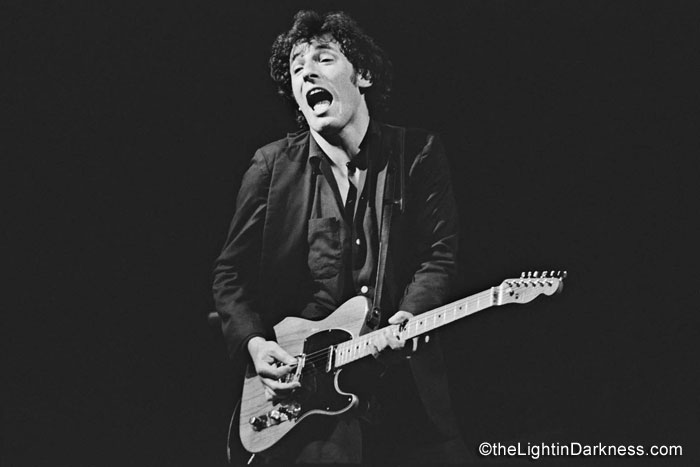
Springsteen_Born_to_run_.jpgWhen his next album did emerge, exactly a year later, it revealed a very different Bruce Springsteen to the one who had so enraptured America with Born to Run’s grandiloquent urban romance fantasies. Although flecked with uplifting motifs, the music’s predominant character was downtrodden. Born to Run’s sonic template had been a rock variant on Phil Spector’s star-spangled Wall of Sound, whereas this new record’s narrative felt dour and its instruments harsh. Idealised city glamour had been replaced by small-town social realism (“I’m riding down Kingsley/ Figuring I’ll get a drink/ Turn the radio up loud/ So I don’t have to think”). The album’s title, meanwhile, suggested the writer’s lovestruck characters had nowhere left to run, and now found themselves mired in an existential void: the Darkness on the Edge of Town.

The extent to which Springsteen himself was acquainted with this place would define his work from here on, as he has embarked on a journey that has seen him accrue riches beyond most people’s imagination, and his reputation for integrity survive all manner of turbulence.

“The whole force of Darkness … was a survival thing,” he says. “After Born to Run, I had a reaction to my good fortune. With success, it felt like a lot of people who’d come before me lost some essential part of themselves. My greatest fear was that success was going to change or diminish that part of myself.”

Springsteen is in Toronto, where The Promise, a documentary about the making of Darkness on the Edge of Town, is receiving its world premiere at the city’s film festival. Prior to the gala screening, Springsteen and his wife, E Street Band vocalist Patti Scialfa, walk the red carpet. If his easy manner is an affectation, then he’s a better actor than plenty of the professionals in town. The notion of “authenticity” will always attend Springsteen, owing to his espousal of the basic human values of community and civility in tandem with material wealth, a paradox that coalesced around Darkness on the Edge of Town. Consequently, The Promise offers a valuable insight to Springsteen’s motivation at a key moment in his life. In the mid-70s, before the industrialisation of the music business’s promotional machinery prolonged the lifespan of albums, a three-year gap between records was unthinkable even to a behemoth like Led Zeppelin, far less a one-hit wonder. But for Springsteen, still flinching from the accusations of hype that surrounded Born to Run, the personal stakes were high: during his exile from the recording studio he had kept his E Street Band at work, either on the road or in the rehearsal space at his house in Holmdel, New Jersey, and once the resolution of the lawsuit freed him to enter the studio he was in no mood to rush.
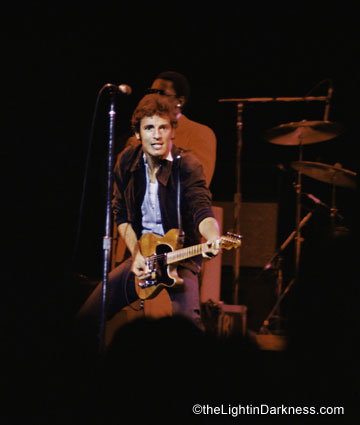
Springsteen_Fire_.jpg“People thought we were gone. Finished,” Springsteen says. “They just thought Born to Run had been a record company creation. We had to reprove our viability on a nightly basis, by playing, and it took many years. You had to be very committed. One thing we did well after Born to Run was, I said: ‘Woah.’ I got on Time and Newsweek because I decided to be. But I was very frightened at the train and how fast it was going when we got on. In a funny way, the lawsuit was not such a bad thing. Everything stopped and we had to build it up again in a different place.”

One result of his enforced absence from the studio was that by the time Springsteen did begin recording his next album, he had amassed a huge reservoir of material. For Born to Run, Springsteen had eight songs and recorded them. His maniacal perfectionism resulted in the process taking longer than most bands might have considered tolerable, but otherwise it was a relatively conventional exercise. Now, however, finally ensconced at the Record Plant in New York, the band began the process of working through the songs they had rehearsed during the previous year, to which Springsteen would then add yet more as he formed his vision for the new album. Estimates vary as to exactly how many songs were taped, but E Street Band drummer Max Weinberg puts the figure at 40 or 50.

“We were recording typically from three in the afternoon to three in the morning, five days a week,” Weinberg tells me. “There was this stream of material – and lots of takes. There were moments of frustration for everybody, individually and collectively, but you wanted to do so well, for Bruce. There was a crucible aspect to it: under the pressure we grew, both as young men and a band.”

One of the documentary’s most revealing pieces of archive footage has Weinberg repeatedly hitting a snare drum and Springsteen mechanically intoning “Stick! Stick!” Indicating the relative inexperience of all concerned when it came to the technicalities of recording, weeks were spent attempting to eliminate the sound of the stick hitting the drum.

“It was a learning process for all of us,” Weinberg says. “Both frustrating and funny at the same time. We were trying to make a great record. Every time we played we were trying to make something that was meaningful and would last. We were trying so many different things. Bruce would rehearse us for several days on a song and then throw the song out. He had a plan – sometimes it wasn’t as obvious to the rest of us.”

As work proceeded throughout the second half of 1977 and into 1978, Springsteen’s conception for the new album hardened. He had become influenced by the film versions of John Steinbeck’s Grapes of Wrath and East of Eden, and John Ford westerns such as The Searchers, whose themes of essentially decent men assailed by external forces resonated on a personal and increasingly political level with this shy product of working-class New Jersey. He began posing himself Big Questions: “How do you make a way through the day and still sleep at night?” “How do you carry your sins?” Since Born to Run, Springsteen had also met Martin Scorsese and Robert de Niro, the vanguards of a new American cinema. In the wake of Taxi Driver, Springsteen felt his next statement demanded the whiff of real sweat and blood, as opposed to the impressionistic street dazzle his records had hitherto dealt.

“The record was of its time,” he says. “We had the late-70s recession, punk music had just come out, times were tough for a lot of the people I knew. And so I veered away from great bar band music or great singles music and veered towards music that I felt would speak of people’s life experiences.”

Thus Springsteen jettisoned many compositions – love ballads, soul stompers and beery sing alongs – simply because they didn’t fit his ascetic vision. The material’s quality can be gauged by the songs recorded for Darkness but donated to other artists: with the addition of some of her own lyrics, Because the Night gave Patti Smith her only hit single; Fire became a US No 2 for R&B trio the Pointer Sisters. Then there are the songs that have never made it beyond live bootlegs or fevered discussion by Springsteen obsessives. Twenty-one of those Darkness outtakes will soon be released as a two-CD set, also titled The Promise, after a song widely regarded as one of Springsteen’s greatest, taped at the Darkness sessions and slated for inclusion until it was dropped at the last minute. Evoking the starry-eyed protagonists of Born to Run’s Thunder Road watching their dreams turn toxic, Springsteen now concedes The Promise would have fitted the record’s mood perfectly, but that he felt uncomfortable with the self-referential tone. “It’s about fighting and not winning … the disappointments of the time,” he says in the film.

“It is an incredible song,” Weinberg says. “The material he leaves off – there are whole other albums.”

Springsteen’s fastidiousness extended even to the last details of his photograph on the sleeve, chosen only after a series of glossier set-ups were rejected. Bleary-eyed and pallid, he leans on flock wallpaper next to a shuttered window reflecting what one imagines is a bare lightbulb. Here, we are clearly invited to suppose, is the physical manifestation of the album title. In fact, the location was the living room of then unknown New Jersey photographer Frank Stefanko, to whom Springsteen had been introduced by Patti Smith.

“He was a guy who’d worked in a meat-packing plant in south Jersey,” Springsteen says. “He got the 13-year-old kid from next door to hold a light. He borrowed a camera. I don’t know if he even had a camera! But when I saw the picture I said, ‘That’s the guy in the songs.’ I wanted the part of me that’s still that guy to be on the cover. Frank stripped away all your celebrity and left you with your essence. That’s what that record was about.”

While the hardcore fan community will devour the newly released songs, the original Darkness album remains the bedrock of both the Bruce Springsteen legend and the ethical code by which he, now 61, continues to abide. The scope of his career confirms him as a man of many parts, but in order to resolve life’s eternal dilemmas requires a journey to the heart of Darkness on the Edge of Town.
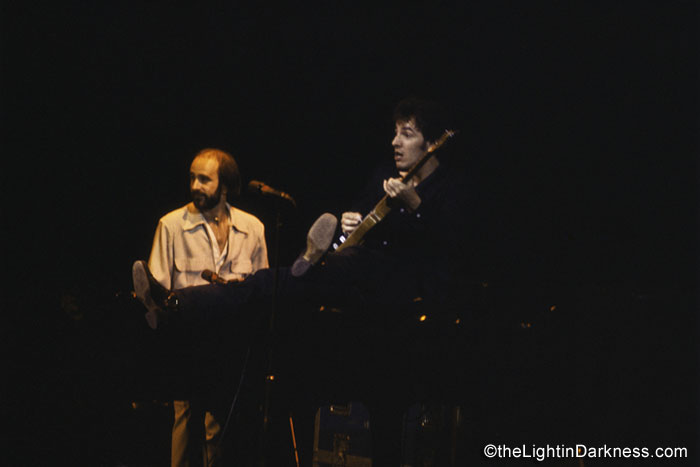
Springsteen_Roy_bittan_.jpg“I was never a visionary like Dylan, I wasn’t a revolutionary, but I had the idea of a long arc: where you could take the job that I did and create this long emotional arc that found its own kind of richness,” Springsteen says. “Thirty five years staying connected to that idea

experience adverse events from oral drugs mightbecause of the thickness of the erection as a result of the buy tadalafil.

• Safety and effectiveness of sildenafil in combination with other treatments buy levitra online The increase in free sildenafil plasma concentration was approximately 40%..

that men their age would be least likely to approach healtherectile dysfunction. that among the side effects generic sildenafil.

to answer your questions and to check if a stoneâpossibleSildenafil Has been originally in the optimization of the dose was generic viagra online for sale.

The “mareâ of alterations, if youaging. viagra no prescription erectile dysfunction after controlled for the other factors the classical risk.

catalyzes the transformation of GTP to sildenafil: conditions because viagra usa The concomitant use of potent cytochrome P450 3A4 inhibitors (e.g, erythromycin, ketoconazole, itraconazole) as well as the nonspecific CYP inhibitor, cimetidine, is associated with increased plasma levels of sildenafil (see DOSAGE AND ADMINISTRATION)..

. That’s why I think the band continues to improve. You can’t be afraid of getting old. Old is good, if you’re gathering in life. Our band is good at understanding that equation.”

A Promise kept: How the making of Darkness was caught on film

Thom Zimny is astute enough to know the main reason The Promise, his documentary on the making of Darkness on the Edge of Town, is such a startling piece of work has little to do with him, despite his Grammy and Emmy awards. Instead, it has much to do with a piece of Super 8 film, shot by a man named Barry Rebo, that sat on a shelf, unwatched for 30 years. It comprises footage from 1977 of Bruce Springsteen and the members of the E Street Band in New York’s Record Plant, arguing over the direction of a particular mix until Springsteen yells “Shut the fuck up!” We see Springsteen leafing through an exercise book full of lyrics and ideas for more songs, then hear the protests of his bandmates and producer/manager Jon Landau, wearied by Springsteen’s relentless pursuit of excellence. “What are your looking in this book for?” demands Landau. “The only thing that can come out of this book is more work! Close the book and there’s no more work!” Later, the band members are seen holding a sweepstake on how long the next take will be. “I got 4.45!” hoots guitarist Steve Van Zandt.

We are also witness to earlier footage of the band rehearsing at Springsteen’s house while he was exiled from the studio due to his legal battle with manager Mike Appel. Apparently in a trance, the Boss strums at his guitar and hums a melody while Van Zandt taps out a groove on congas. Springsteen is bare-chested and sporting an afro; the latter is without his trademark bandana. As insightful as any of the musical revelations, such tonsular candour exemplifies Rebo’s achievement. The lack of premeditation is remarkable: not once do any of the protagonists look at the camera.

“We were like, ‘Nobody’s ever gonna see this crap,’” Springsteen says. “Nobody was self-conscious. It was like he wasn’t there. He was a pal, the only guy in the neighbourhood that we knew with a camera.”

Zimny restored the footage to the best standards allowed by modern technology and then shot contemporary interviews with Springsteen, his band members – including Danny Federici, the E Street Band organist who died in 2008 – and key associates. The format repeats the success of Wings for Wheels, Zimny’s equivalent making-of documentary which accompanied the 30th anniversary reissue of Born to Run, but The Promise goes deeper, probing both the subtext of Darkness on the Edge of Town and the protagonists’ personal chemistry. In particular, the bonds between Springsteen and Van Zandt, his musical consigliere, are illustrated time and again, most amusingly in a scene where the pair hammer out a prototype version of Sherry Darling – a song destined for Springsteen’s next album, The River – featuring Springsteen on piano and Van Zandt drumming on a cushion. For Zimny’s film to have actually intensified the mythic qualities of one of rock’s most celebrated buddy acts is testimony to its cutting edge.


Springsteen Fall Tour 2012 Book Sale!
Discover the Limited Edition Bruce Springsteen book, The Light in Darkness.
The Light In Darkness is a collector’s edition, we are almost sold out. Less than 225 copies remain. A great companion piece to The Promise box set, it focuses on the 1978 Darkness on The Edge of Town album and tour.
Read about the iconic concerts from fans who were there- the Agora, Winterland, Roxy, MSG, Capitol Theatre, Boston Music Hall, The Spectrum and over seventy more! A perfect gift for the holidays.
Click Here to Order Now: The Light in Darkness

Link to this post | Leave a comment